Joe Spector | Founder & CEO, Dutch
Joe Spector immigrated to the U.S. as a child refugee from Uzbekistan, went on to build Hims into a multi-billion-dollar public company, and is now applying the telehealth playbook to pets with Dutch. In this combined interview, he unpacks the realities of building at massive scale, spending $10M/month on marketing, navigating regulation, raising hundreds of millions in capital, and why pet telemedicine is still in its earliest innings.
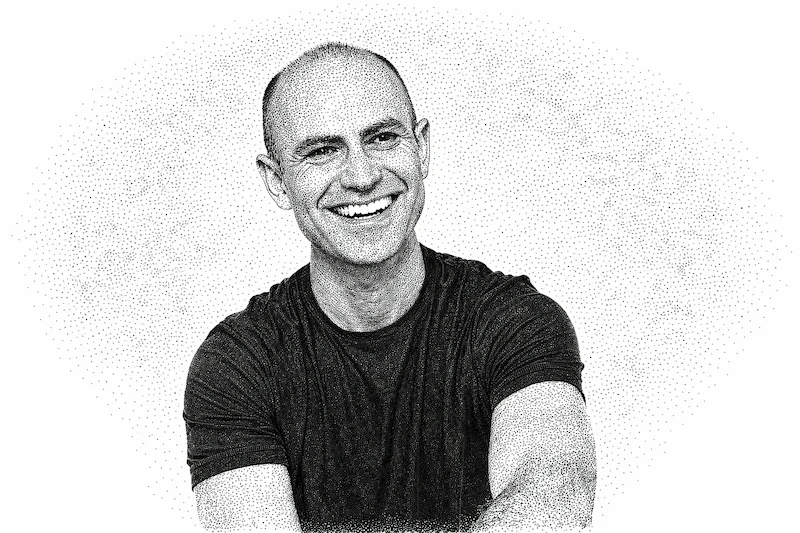
This week we speak with Joe Spector, the founder & CEO of Dutch and Hims. Joe’s journey — immigrating to the U.S. as a child from Uzbekistan, building a multi-billion-dollar public company, and now tackling pet telehealth — is nothing short of incredible.
This interview combines both parts of our conversation, covering Joe’s early life, the rise of Hims, and his current work building Dutch at the intersection of veterinary care, regulation, and technology.
You immigrated from Uzbekistan to the US when you were 10 years old. Why did you have to flee Uzbekistan and what was your experience like when you reached the US?
My parents and I fled Uzbekistan because we’re Jewish and we were facing mounting anti-Semitism, which is unfortunately a story as old as time for Jews wherever they live. Specifically, anti-Semitism meant losing a job, college admissions rejections, and housing discrimination just to name a few.
In the US, our initial label was “legal aliens” and we certainly felt that way. Everything was foreign and every experience was new. We lived on welfare and in subsidized housing. My highly educated dad had to work for cash at a flea market doing manual labor. I was called a communist by the playground kids. Good thing I couldn’t understand most of what they said since I didn’t know any English. The experiences during those years have taught me resilience and survival. I have seen what it’s like to lose everything and rebuild again and again.
You’re the founder of Hims & Hers, a massive multi-billion dollar brand, that (seemingly) came out of nowhere. How did you come up with the idea and what was it like running a massive company with over 1000 employees?
Hims was an overnight success that was 15 years in the making. I spent years in Silicon Valley working on failed startup ideas. All these experiences led me to Hims. The idea came out of the success that DTC men’s health category experienced from startups such as Harry’s and Dollar Shave Club. There was increased interest in telemedicine. Last, but not least, Viagra was about to go generic. Out of this primordial soup, Hims was born.
Initial smoke tests, along with my intuition, told me this would be a huge idea. At the time, human telemedicine had a ton of regulations that made it quite limited and I was excited to break down those barriers.
We made many mistakes along the way, but the overall success of the business propelled us further despite any shortcomings. When things are going great, mistakes get easily overlooked. There was so much momentum once we launched and we were too busy growing revenue to get easily dissuaded by the challenges, which was very exciting. When I started Dutch, I was better positioned to avoid some of the mistakes we made at Hims.
You guys were spending a ton of money on marketing, 10 million dollars a month at one point. What were the channels you found the most success in?
This was pre-iOS 14.5 privacy update so definitely on Facebook. We also had great success running ads in the NYC subway – I still run into people who remember those campaigns.

You managed to build a multi-billion dollar company, take the company public, and ring the bell on the stock exchange. Could you have imagined this being a 10-year-old immigrant setting foot in the US?
Absolutely not! Being poor and a foreigner, my worldview was very small. What I did know was that America is the land of opportunity. In the Soviet Union, Jews were not even second-class citizens, so it didn’t matter how hard you worked or how smart you were, there was a built-in limit. My parents instilled in me a sense that in America, there’s at least a correlation between hard work and success.
There are many stories of successful immigrant entrepreneurs in the US. What is it about the US, in your opinion, that fosters this entrepreneurial environment?
The image of America as the land of opportunity is renowned throughout the world. In America, there are also no structural barriers to entry to becoming an entrepreneur. For example, there are no rules that preclude specific groups from going to college, asking for VC dollars, or starting a business.
There’s also something special about immigrants. As an immigrant, I’ve had to survive, persevere, and figure things out on the fly. These are crucial skills to being an entrepreneur.

How important is branding in your opinion – from the naming to the logo, aesthetics, URL, UI, UX, etc.? How much attention should founders invest in this?
Like the saying goes, “shit in, shit out.” Don’t expect customers to take you seriously if your brand is sloppy. The next question customers will ask is: is the service also sloppy?
Explain Dutch. What do you do? What’s your special sauce and differentiator?
Dutch is a solution for pet parents’ health needs. We have a network of veterinarians who are there for you day and night at an affordable price. Several things make us different: in most states, our vets are available to write a prescription and actually solve your pet’s problem, we have almost round-the-clock availability of vets, and the cost of $11/month is an amazing deal for round-the-clock vet care.
You went from human pharmacy to animal pharmacy, applying the telehealth model to veterinary services. What did you see in the pet vet space that needed change?
In sum, lack of access and a lack of affordable care options. The cost of care is egregiously expensive because most of the expenses are being paid out of pocket. There was very little virtual access prior to Dutch and as a result, the majority of pets were getting zero care for years.

It’s been 3 years since you launched Dutch. How has it been different from your first 3 years at Hims?
Dutch launched in much earlier innings of pet telemedicine so we’ve had to create new paths for the first time whereas Hims arrived after human telemedicine had already gained traction.
There’s a lot more consumer education that still needs to be done and several states still don’t allow telemedicine.
The VC environment is very different. Hims raised over $500MM in 3 years. That just does not exist today (unless you’re an AI company). Overall, I think it’s a good thing because we are building a business that’s thoughtful about our burn rate and getting to profitability.
Why have you gotten pushback from “big vet” associations?
The purpose of any business association is to look out for the interests of its members. They’re not necessarily looking out for the interests of consumers or pets. They wrongly believe that telemedicine will wipe out the need to see in-person veterinarians. This is clearly not accurate.

What is the process of finding and training vets to work on the platform?
There’s a lot of demand from veterinarians to find remote opportunities. Telemedicine provides flexible work schedules, which is rare in the profession. We’ve published an extensive overview of our training process.
How were you able to acquire the domain dutch.com, and why did you put so much emphasis on it?
The world of domains is super shady. A domain name won’t make or break a company, but long-term it matters. Years of negotiations helped me land this one.
How do you navigate regulatory frameworks across different states?
Hire amazing lawyers. Be careful who you listen to. Make sure your service genuinely helps people. Be prepared to have thick skin.
What do you attribute the massive success of Hims to? What are three replicable factors?
Strong acquisition engine.
Sticky, must-have prescriptions.
Over-investment in brand experience.
I’m sure this is one of your biggest headaches — but one you’ve probably already dealt with at Hims. How do you navigate regulatory frameworks and ensure compliance with industry standards, given how fragmented the industry is state by state?
Hire amazing lawyers — you have to be careful who you listen to. For example, the industry associations will state or interpret the law in ways that are either inaccurate or favorable to their point of view, but that may not be the letter of the law. The devil’s in the details.
Make sure that at the end of the day, your service is helping people. Legislators and regulators are more likely to look favorably on something when there are clear benefits to consumers.
Be prepared to have the thickest skin ever. When navigating a new field, there’s not a pre-existing playbook. That’s part of the “fun”.
How important is it to be the face of your brand?
It’s both important and not important. Consumers want trust, but the brand must be bigger than the founder.
What advice do you have for founders trying to raise capital?
Solid fundamentals always attract capital. Alignment matters more than pedigree. Be honest with yourself and your investors.
If you were on a tight budget but wanted to get the word out, how would you do it?
Look for symbiotic partnerships that already have distribution and trust.
What are the biggest differences between generalist and pet-focused investors?
Pet-focused investors understand industry nuance. General investors focus on metrics like CAC, LTV, and payback.
Other Interviews
More conversations with founders, operators, and investors building the future of pet care.