Subscribe
Pet Food & CPG
8 min read

Terri Rockovich | Co-Founder & CEO of Jinx

Terri Rockovich, co-founder and CEO of Jinx, explains how personal frustration with dog food led to one of the fastest-growing pet food brands in retail—scaling to 7,500+ doors, landing Walmart and Target, partnering with Chris Evans, and pacing toward $70M+ in annual revenue by rethinking kibble for modern dogs.
Written by
Roy Ben-Tzvi
Published on
January 13, 2026

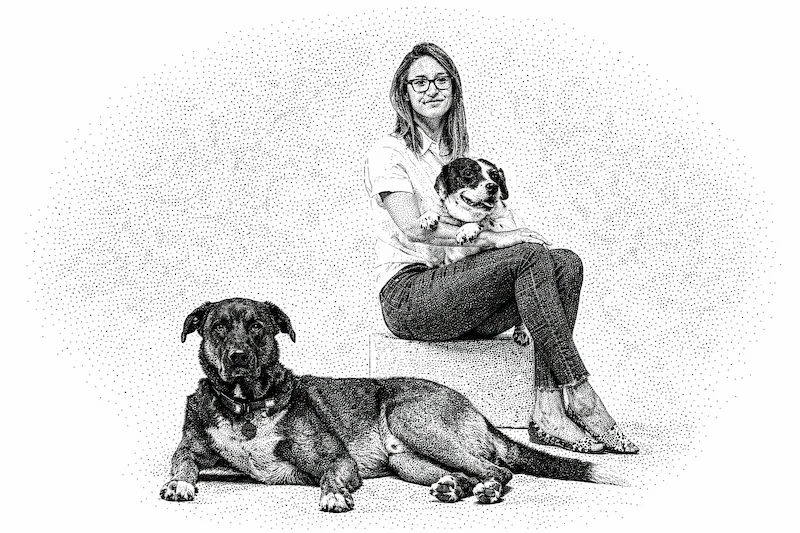
We spoke with Terri Rockovich, co-founder and CEO of Jinx.

Inspired by her own struggles finding a food brand that worked for her dogs, Terri set out to rethink how dog food is formulated, priced, and distributed. In this conversation, she shares how her background in high-growth consumer startups shaped Jinx, why the brand shifted from DTC to mass retail, and how they’re building one of the fastest-growing pet food brands in the country.

You’ve always loved animals, not just dogs, but all animals, even from a very young age, did you ever think this passion would become a career?

I wanted to be a veterinarian from a very young age. When I got to college and started playing Division One soccer, I realized that I was going to have to pick a major that was more accommodating to my schedule.

As I started to pursue a business career, I really didn’t think I would end up in the pet industry until I adopted a dog who had a host of health issues… in addition to a sensitive tummy and a picky palette.

It was during my time caring for Blitz that I became really frustrated with the nutrition options in the category. How could there be so many choices, but nothing was working for my dog?

That’s when I teamed up with my former co-workers and we decided to solve for the shared frustrations we had as pet parents: Why is everything that’s good for your dog so expensive? How can we simplify the purchasing, delivery, and feeding experiences? What does it take to make a proportionally appropriate diet for modern dogs that also tastes delicious for the end user?

Before Jinx, you had spent years working in startups such as Casper, ModCloth, and Outdoor Voices. How much did that experience help you when you finally branched out and launched your own company?

Working for so many fast-paced, hyper-growth brands really allowed me to build a playbook of what worked vs what didn’t work. I took meticulous mental notes on the moves that founders were making, and what resulted in sound business decisions. The hardest lesson that these companies endured was: DO NOT spend your way to growth and DO NOT throw money at problems just because you have a high cash balance in your bank account.

There were also incredibly unique ways to approach team management via authentic leadership styles and how to build a brand that felt different in a very congested and consolidated space. These were all tactics and techniques that we kept in mind as we were going through the formation, launch, and growth stages of Jinx.

Originally you launched as DTC but quickly shifted to retail and found a lot of success there. You are currently at 7,500+ retail stores including: Walmart, Target, Albertsons, Safeway, Shoprite, Giant, Stop & Stop, and more... and you are one of the fastest-growing pet food brands in retail, pacing to land over $70m in revenue this year. Why did you decide to shift to retail?

The subscription commerce environment is a lucrative one, especially for replenishable products that are hard to buy in-store (too many options, often out of stock in your dog’s favorite recipe or the size bag that you need, heavy to transport home).

We loved the direct-to-consumer model because it allows for trying the product with a risk-free guarantee, buying your dog’s main meal and any complementary treats in a single destination, and then subscribing to a recurring shipment of your dog’s goodies in a hassle-free style.

The DTC business grew handsomely through the pandemic, but softened when retail started to open back up and had very unpredictable customer acquisition costs.

The movement to retail was a natural one, securing an exclusive launch with the largest retailer in the world (Walmart) and a series of staggered launches into other mass-format stores over the course of the next 24 months. We have successfully been able to 10x our business from an eCommerce-only model in 2021 to a focused distribution strategy in 2023.

As a follow-up question, what plan did you execute that made you find so much success in this channel?

We chose to bypass the specialty and independent channels and go directly to the mass market, with a thoughtful go-to-market launch plan… including a little help from one of our most notable and appealing investors: Chris Evans and his dog, Dodger.

We started small, launching 1,000 doors at Walmart, and steadily grew our retail footprint over time as we collected data and learned what products had the best customer reception at the shelf.

We continued to work closely with our retailers to bring new innovation into the aisles, and build out an in-store brand ambassador team that would help the pet parent decipher all of the in-aisle options. These are the types of product offerings and service features that we so badly desired by dog parents.

You are the first pet brand to enlist an A-list celebrity (Chris Evans) as an endorsement partner (and investor). Tell us about that.

Chris started as an investor, and when we sent his dog (Dodger) product to try… he loved it so much that he wanted to figure out a way to work together in a more multi-dimensional capacity.

Chris embodies everything we admire as dog parents: he has an enduring love for Dodger and treats him like he’s part of his family. During our first meeting and then eventually our first creative production together, it was obvious how much Chris adored his pup, and how so many pet parents can relate to that undeniable companionship.

While there is a shift to raw/gently cooked food, 90% of pet parents still buy kibble. How do you approach a market with so many legacy brands owned by a few major players?

We chose the hardest category to build equity in (food) with the most saturated food format (kibble). We did this because we knew there was white space, and a need for a better-for-them brand in the largest food category in all of pet.

Our proportionally appropriate diet, clean ingredient labels, and added focus on important health aspects like gut health, allow us to compete with brands across all food types. Since our dogs cannot talk to us (if I had a genie wish, this would definitely be it) we need to evaluate the appropriateness of what we are feeding them by their stool quality. It’s the most objective way to decipher if your dog is processing their diet well – and we can confidently say that our digestibility, palatability, and stool quality scores compete with the most well-known legacy brands and the most-coveted brands in the specialty channel.

Subscribe to newsletter

Join our newsletter to stay up to date on features and releases.

Thank you! Your submission has been received!
Oops! Something went wrong while submitting the form.

By clicking Sign Up you're confirming that you agree with our Terms and Conditions.

Pro
Keep Reading

Other Interviews

More conversations with founders, operators, and investors building the future of pet care.

Learn more
Dr. Linda Black | CEO of Gallant
Pet Health & Wellness
12 min read

Dr. Linda Black | CEO of Gallant

How Gallant's CEO rebuilt after the founder's death and engineered a 30-million-dose breakthrough that could make them the first company to win FDA approval for off-the-shelf stem cell therapy in veterinary medicine — with $40 million raised and a proprietary manufacturing process that turns discarded tissue into treatments accessible to every clinic.

Learn more
Learn more
Jake Chambers | Co-Founder, Pupsentials
Retail & E-Commerce
7 min read

Jake Chambers | Co-Founder, Pupsentials

How Pupsentials went from a garage experiment to a $9M run rate by going fully in-house, turning down demand, and obsessing over product quality and customer experience.

Learn more
Learn more
David Servodidio | Co-Founder, VetVerifi
Pet Tech
7 min read

David Servodidio | Co-Founder, VetVerifi

Vet clinics, groomers, boarding facilities, apartments—all require vaccine records, yet none of them actually talk to each other. VetVerifi is building the infrastructure layer that fixes that broken system—and it’s turning a daily pet-parent headache into a venture-backed category.

Learn more
View all interviews