
Why Pet Subscription Boxes Struggle to Keep Customers Past Month Three
Pet subscription boxes look compelling on paper: recurring revenue, emotional engagement, a growing market. But BarkBox's public filings reveal the brutal reality. Monthly churn runs 5-8%, CAC payback takes nearly four months, and better retention can't fix a model where most customers leave before you profit.
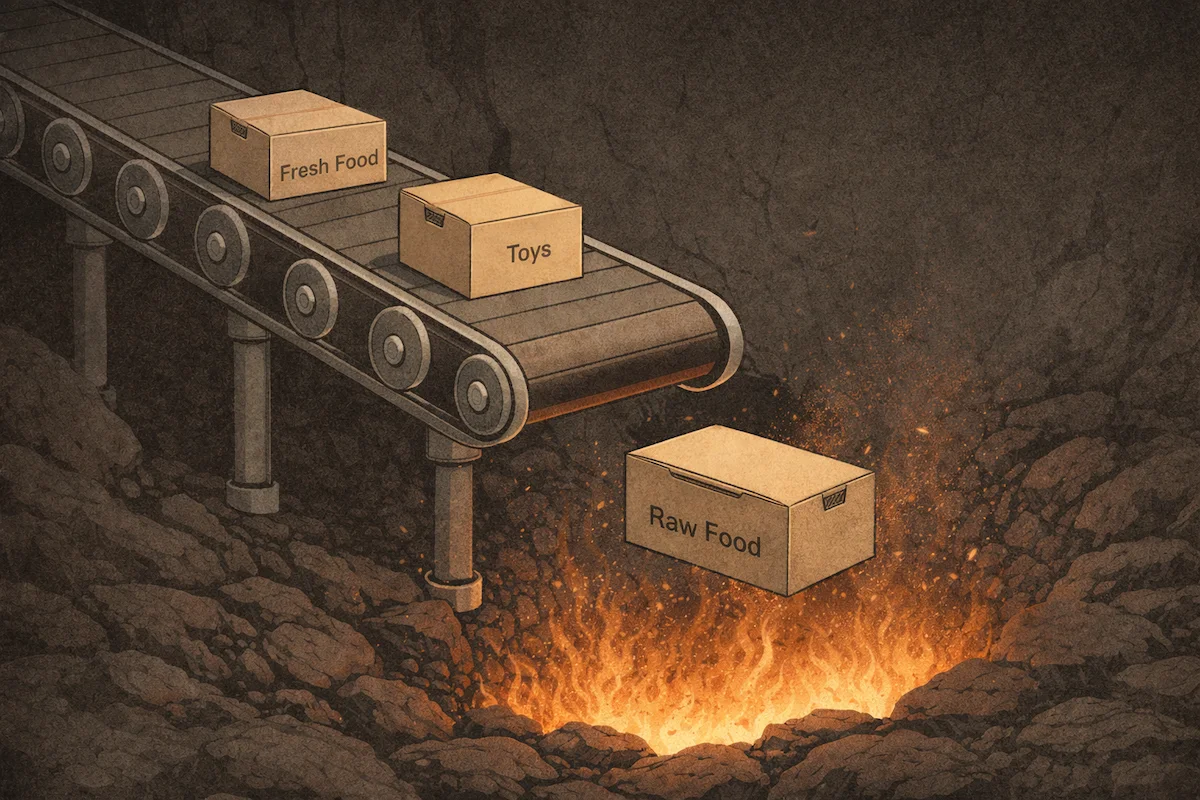
BarkBox loses between 5.3% and 8.9% of its subscribers every month. Run that math forward and more than half of today's customers will be gone within a year. That's the company that invented the category. That's the company with three million social followers and a decade of brand building. And they still can't keep customers subscribed.
The pet subscription box business looks compelling on paper. Predictable recurring revenue. High emotional engagement. A category growing at 12.8% to 18.5% annually. But the math that makes investors excited is the same math that breaks most operators. Acquiring a customer is expensive. Keeping them is harder. And the margin between survival and failure is thinner than most founders realize.
This isn't a marketing problem you can solve with better emails. It's a business model problem built into how subscription boxes work.
The Market That Attracts Everyone
Pet subscription box market size hit somewhere between $783 million and $2.1 billion in 2024, depending on which research firm you ask. The range tells you something about how fragmented and hard to measure this space is. Projections put it at $5.3 billion to $6.2 billion by 2033.
North America dominates with roughly $950 million and 45% of the global market. Asia Pacific is growing fastest at 15.8% to 16.2% CAGR, but from a smaller base.
The appeal for operators is obvious. Subscriptions mean predictable cash flow and higher customer lifetime value than one-time purchases. Pet owners are emotionally invested in their animals and willing to spend. Content practically creates itself when every box contains Instagram-worthy moments of dogs tearing into packages.
But these advantages come with a catch. The same emotional engagement that drives initial signups doesn't translate into long-term retention. Pet owners love the idea of monthly surprises. They love it less by month four when the novelty has worn off and the toy bin is overflowing.
The Numbers Most Brands Won't Share
BARK Inc. went public, which means we can see what subscription retention actually looks like with real numbers instead of optimistic projections.
Monthly churn runs between 5.3% and 8.9% based on their quarterly reporting. That's not a typo. At 8.9% monthly churn, you lose more than half your subscriber base in a year. Even at the better end of that range, annual churn exceeds 45%.
Customer acquisition cost sat at $51.47 in Q4 2021, and BARK reported achieving their "lowest customer acquisition costs since 2023" in fiscal 2026. Even "improved" CAC in this category is substantial. The lifetime value to CAC ratio looks healthy at 6.3x to 6.6x, but that ratio assumes customers stay long enough to deliver that lifetime value.
Here's what those numbers mean in practice. BARK's Q2 fiscal 2026 results showed DTC revenue down 19.9% year-over-year despite "improved subscriber retention for six months in a row." The revenue declined because fewer subscribers entered the quarter. Better retention couldn't overcome the deficit from previous churn. You can plug holes in the bucket, but if it's already half empty, you're still in trouble.
The broader industry confirms this pattern. Market research consistently cites high customer churn as the top challenge facing pet subscription operators. Well-designed loyalty programs can reduce churn by roughly 25% among participating customers. That's meaningful, but a 25% reduction from 8% monthly churn still leaves you at 6% monthly churn. The economics remain brutal.
Why Retention Collapses After Month Three
Pet subscription box retention fails for reasons that have nothing to do with product quality or customer service. The failure is structural.
The novelty cliff. Subscription boxes sell anticipation. The first box is exciting because everything is new. The second box is exciting because the first one was good. By the third or fourth box, the pattern is established. The customer knows roughly what they're getting. The surprise element that drove the initial purchase has evaporated.
Product accumulation. Every box adds more items to the household. Toys pile up. Treats compete with existing treats. Storage becomes a problem. Even customers who love their boxes start feeling overwhelmed by the volume. This is especially acute for toys. A dog doesn't need twelve toys. By box four, you're sending products that go straight into a donation pile.
Subscription fatigue. Your box isn't competing with other pet boxes. It's competing with Netflix, meal kits, beauty boxes, and every other subscription asking for monthly wallet share. The average American household carries between three and five active subscriptions. When budget pressure hits, discretionary subscriptions get cut. Pet boxes feel discretionary in a way that pet food doesn't.
Seasonal patterns. Pet subscription engagement drops roughly 30% during summer months. Families travel. Routines change. Dogs spend more time outdoors. The box that felt essential in January feels like clutter in July. Some of those summer cancellations never come back.
The "cancel and rejoin" behavior. Smart customers figure out that subscription boxes often offer their best deals to new and returning subscribers. Cancel after a few months, wait for a win-back offer, rejoin at a discount. This behavior destroys LTV calculations because it creates artificial churn that returns as artificially cheap acquisition. The numbers look different than the economics.
Three Models, Three Retention Profiles
Not all pet subscription boxes churn equally. The model you choose determines your retention ceiling.
Discovery and surprise boxes follow the BarkBox playbook. Monthly themed packages with toys, treats, and novelty items. High initial engagement, high sharing on social media, steepest churn curve. The value proposition is excitement and surprise. Once that excitement fades, so does the subscription.
This model works best when gifting is a significant use case. Gift subscriptions have defined endpoints by design. They also work when the novelty element genuinely persists. BarkBox invests heavily in themed monthly experiences and exclusive products specifically because commodity boxes would churn even faster.
Replenishment subscriptions operate differently. Chewy's Autoship is the clearest example. 53% of Goody Box subscribers reduced their physical store shopping, with 11% eliminating it entirely. The value proposition isn't excitement. It's convenience. Food shows up before you run out. Treats arrive automatically. The subscription integrates into household logistics rather than competing for discretionary spend.
Replenishment has lower engagement but better retention. Nobody posts Instagram stories about their kibble delivery, but they also don't cancel because the novelty wore off. The switching cost is inertia itself. Canceling means remembering to buy dog food again. Most people don't bother.
Personalized nutrition boxes combine elements of both models with higher complexity. The Farmer's Dog customizes every package based on individual dog characteristics like activity level, age, weight, and breed. This creates genuine switching costs. The formula is calibrated to your specific dog. Switching means starting over with a new provider who doesn't know your pet.
Personalization drives the highest retention potential but requires the most operational sophistication. You need data collection infrastructure, customization capability at scale, and the margin structure to support complexity. Premium pricing ($2.50 to $11+ per day depending on dog size) makes the unit economics work but limits addressable market.
Match your model to realistic retention expectations. If you're building a discovery box, don't project replenishment-level retention. The product doesn't support it.
What Actually Moves Retention
Pet subscription box retention tactics fall into two categories: things that work and things that sound good in pitch decks.
What works:
Personalization at signup reduces early churn significantly. Boxes calibrated to pet size, age, breed, and dietary restrictions feel tailored rather than generic. The data collection creates a small commitment that increases perceived value. Customers who invest time in customization are more likely to stick around.
Loyalty programs with meaningful rewards reduce churn by approximately 25% among participants. The key word is meaningful. Accumulating points toward discounts works. Accumulating points toward nothing doesn't. The program needs to feel like progress toward something the customer actually wants.
Flexible subscription management helps more than forced commitment. Letting customers skip months, pause temporarily, or adjust frequency reduces outright cancellation. Someone who can skip July might stay subscribed through August. Someone forced to choose between paying and canceling chooses canceling.
Product variety that addresses accumulation prevents the "too many toys" problem. Some boxes now include consumables that get used up, experiences rather than physical products, or charitable donations in place of items. The box delivers value without filling a closet.
What sounds good but underperforms:
More items per box. The instinct is to increase value by adding more. But more items accelerate accumulation and overwhelm. Customers often prefer fewer, better-curated items to more volume.
Heavier discounting on long-term commitments. Twelve-month prepaid subscriptions reduce churn mechanically by locking in customers. But they also train customers to wait for deals, compress margin, and create refund obligations when customers change their minds. BarkBox pricing drops from $35 monthly to $20 for twelve-month commitments. That 43% discount comes directly out of margin.
More "surprise." Doubling down on novelty when novelty is fading doesn't work. The customer has already experienced the surprise. Making it more surprising doesn't recreate the first-box feeling.
The delivery variable nobody controls well:
More than 75% of customers don't return after a poor delivery experience. Damaged boxes, late arrivals, and missing items create churn that has nothing to do with product quality or pricing. Logistics determines retention as much as marketing does.
The Unit Economics That Decide Survival
Understanding pet brand marketing strategy for subscription boxes requires starting with the math.
BarkBox pricing tiers illustrate the tension. Single-month boxes cost $35. Six-month commitments drop to $25 per box. Twelve-month brings it to $20. Analysis of box contents suggests roughly $40 in retail value per box, which leaves around $15 gross margin before overhead on the six-month tier.
Fifteen dollars per box sounds workable until you factor in the $51 customer acquisition cost. At $15 margin per box, you need three and a half boxes just to recover CAC. That means every customer needs to stay subscribed for nearly four months before you make a dollar of profit. Given monthly churn rates of 5-8%, a significant portion of customers never get there.
The discount trap makes this worse. Long-term commitments improve retention metrics but compress margin exactly when you need it. A customer locked in for twelve months at $20 per box generates less profit per month than a month-to-month subscriber at $35. If your retention problem is structural, you're trading margin for slightly slower churn rather than solving the underlying issue.
BARK's recent financials show what this looks like at scale. Revenue exceeded guidance at $107 million for Q2 fiscal 2026, but the company reported a net loss of $10.7 million and adjusted EBITDA of negative $1.4 million. Revenue growth doesn't mean the model works. It means you haven't run out of new customers to acquire yet.
The brands that survive pet subscription economics share common traits. They either achieve genuinely differentiated retention through personalization and switching costs, expand into higher-margin adjacent products (BARK now sells treats and food separately), or transition discovery subscribers into replenishment relationships. The pure-play discovery box with commodity products and no path to retention improvement is a business that looks better in a pitch deck than on a P&L.
The honest answer for operators evaluating this space: the retention problem isn't something you solve with better marketing. It's a constraint you either build around or get crushed by. Know which one you're doing before the money runs out.
Affiliated Products
Lorem ipsum dolor sit amet, consectetur adipiscing elit. Suspendisse varius enim in eros elementum tristique. Duis cursus, mi quis viverra ornare, eros dolor interdum nulla, ut commodo diam libero vitae erat.