The Farmer's Dog buys two years of Oprah, and fresh pet food enters its share-defense era
The Farmer's Dog announced a two-year partnership with The Oprah Podcast today, including a Winfrey-narrated mini-series and sponsored episodes. At $1.2B in annualized revenue and an estimated $4.2B valuation, the deal signals fresh pet food has entered its category-defense phase — with implications for Freshpet, the post-acquisition Ollie, and the next DTC raise.
A two-year branded content partnership with Oprah Winfrey is the kind of marketing commitment only a billion-dollar pet food company makes. The Farmer's Dog's deal with The Oprah Podcast, announced this morning, signals where fresh pet food has arrived: from category disruption to category defense.
The Farmer's Dog announces two-year Oprah Podcast partnership
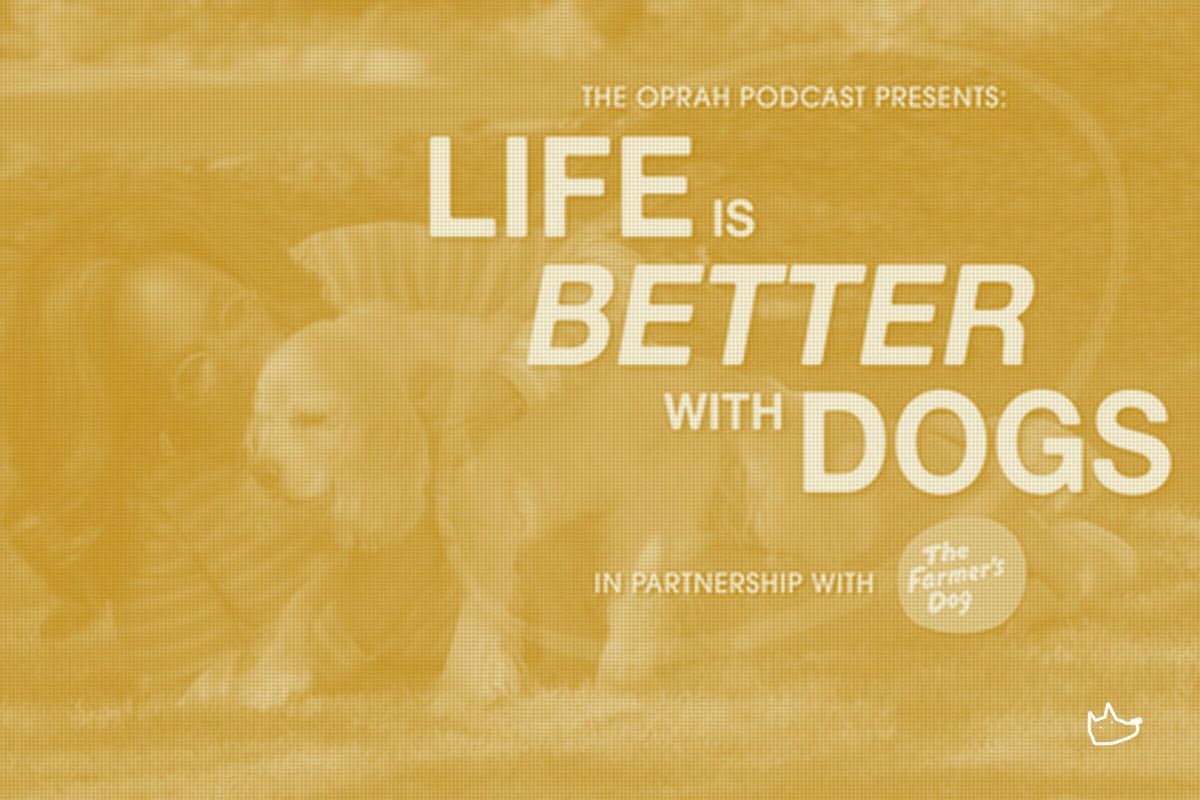
The Farmer's Dog and The Oprah Podcast launched "Life Is Better with Dogs," a custom mini-series narrated by Winfrey that will roll out over the next two years on Oprah's YouTube channel. The first episode dropped today, timed to National Pet Month.
Beyond the mini-series, The Farmer's Dog will sponsor multiple full episodes of The Oprah Podcast itself, including a conversation with dog cognition expert Dr. Alexandra Horowitz about her book Inside of a Dog. The first mini-series episode profiles Chad Brown, a U.S. Navy veteran whose PTSD recovery was anchored by his service dog Axe, and the announcement bundles in a separate commitment for The Farmer's Dog to feed 250 dogs belonging to military families and therapy-dog volunteers through the USO.
The deal terms aren't public. But branded content arrangements with Winfrey's media operation typically run in the seven-to-eight-figure range, and a two-year custom series with named-talent narration sits at the upper end of that band.
What's notable is the form, not just the price. This isn't a one-off ad. It's a multi-year content infrastructure — episodes, sponsorships, named-talent involvement, an editorial sub-brand ("Life Is Better with Dogs") that can live on independently. That structure is what marketers spend money on when they need to compound brand attention over years, not weeks.
It is also the inverse of the bet The Farmer's Dog made three years ago. The company's 2023 Super Bowl ad, "Forever," topped USA Today's Ad Meter and earned an Emmy nomination, with iSpot estimating the spot delivered the engagement equivalent of 505 typical ad units. The company sat out the 2026 Super Bowl entirely. The Oprah deal is what they're spending that money on instead.
Why fresh pet food's marketing arms race has officially begun
The Farmer's Dog hit $1.2 billion in annualized revenue in 2024, up roughly 50% from $800 million in 2023, and the company is generating north of $10 million in monthly net profits per PitchBook reporting. Secondary-market data pegs the current valuation around $4.2 billion, up from the $1.5 billion mark at the 2021 Series E. Those are mature-company numbers.
Mature-company numbers come with mature-company marketing problems. The Super Bowl playbook works once. After that, customer acquisition cost rises, the press cycle moves on, and the next $200 million of growth has to come from somewhere harder: building share against direct competitors, defending against new entrants, and keeping existing subscribers from churning to retail-shelf alternatives.
A two-year Winfrey narration deal targets all three. Editorial-style branded content has a longer half-life than ad units. It's harder for competitors to copy without looking derivative. And it positions the brand against a category-defining cultural figure rather than against another pet food.
That last point is where the operator implications get sharper. Freshpet, the only publicly-traded billion-dollar fresh pet brand, crossed $1.1 billion in 2025 net sales, posted 13% growth in Q1 2026, and raised its full-year 2026 net sales guidance to 8% to 11%. Healthy numbers — but a different growth curve than The Farmer's Dog's 50% trajectory. Freshpet's moat is retail distribution: roughly 30,400 branded refrigerated units across 39,000+ stores, with about 80% of sales attributed to that fridge network. The Farmer's Dog's moat is the direct relationship with the customer and subscription retention.
Branded content with a figure like Winfrey strengthens the DTC moat in a way Freshpet can't easily mirror. Retail-led brands compete for shelf and price. DTC-led brands compete for attention and intent. A two-year narrative arc that lives on YouTube, in podcast feeds, and in social cuts is a different competitive surface entirely.
The pattern matters for the next tier of fresh pet brands too. Ollie was acquired by Agrolimen in February 2026 in a deal reportedly valued north of $600 million, with Freshpet's early equity stake returning $95.5 million on an original $33.4 million check. The acquirer is a Spanish food conglomerate with the capital to fund this kind of marketing posture if it chooses to compete on The Farmer's Dog's terms. Spot & Tango, JustFoodForDogs, Open Farm, and the rest of the fresh and gently-cooked tier now know what the cost of competing in tier one looks like.
For operators outside the fresh category — kibble brands, treats, supplements — the takeaway is different. When a pet food brand can justify a multi-year Oprah relationship, the implicit message to private equity, retail buyers, and food-industry strategics is that pet has graduated to the same marketing economics as packaged goods. That changes how acquirers price assets and how categories adjacent to fresh food (functional treats, supplements, fresh-adjacent kibble) get valued.
How the next 18 months reveal whether this is a moat or a marketing peak
Three signals will tell the story.
Subscription growth and churn: The Farmer's Dog doesn't disclose subscriber counts, but private secondaries and any future IPO filing will eventually expose net adds and churn during the Oprah window. If the deal compresses CAC and stabilizes retention, it validates the strategic shift. If it doesn't move the numbers meaningfully, it's a vanity spend.
Freshpet's competitive response: Freshpet's marketing has historically leaned on the freezer-as-merchandising-asset and on owned-and-operated production capacity. If the company starts spending on celebrity-anchored content of its own — or partners with a retail-adjacent cultural figure — that's confirmation that the marketing surface has shifted. Watch for a marketing leadership change as the early indicator.
The next fresh pet raise. The next Series C-or-later fresh pet food round will price against The Farmer's Dog's new marketing cost structure. Founders pitching investors on fresh pet food now have to answer: how do you compete for share-of-attention against a brand spending Oprah money? That math will either compress the fundable surface area in fresh pet, or push the next generation of brands toward narrower verticals — fresh cat food, fresh-for-allergies, fresh-for-seniors — where the marketing arms race hasn't started.
The two-year window also coincides with the most plausible IPO timing for The Farmer's Dog. A profitable, $1B+ revenue, brand-anchored DTC pet company with Winfrey-tier marketing assets is a more legible S-1 than one without. Whether or not that's the intent, it's the position the deal leaves them in.
Related Analysis
Other News
More stories shaping the pet industry this week. From funding rounds and product launches to regulatory shifts and retail strategy, stay ahead of what's driving the market.

Zoom Room returns to franchising with 18.2% same-store sales growth
Zoom Room reported 12.0% and 18.2% same-store sales growth in Q2 and Q3 after pausing development in late 2025, and 15.1% for units open more than a year. It now resumes franchise sales with two quarters of operating data, and a 550-gym target that implies about 120 openings a year.
MPM Products recertifies as a B Corp under B Lab's audited new standards
The owner of Applaws, Reveal and Encore is one of 20 UK companies in the first cohort to certify under B Lab's rewritten standards, which add third-party assurance and a five-year cycle. With the EU's sustainability label rules applying from September 27th, 2026, B Lab says an assured B Corp badge now qualifies as a valid label.

Cat food owner hands North America to its marketing chief
MPM Products, the owner of Applaws, Reveal and Encore, has named global CMO Samantha Greenwood president of North America. The US brings in more than 40% of company revenue, and we read the pick as fitting Partners Group's cat-focused growth thesis in a pet food category APPA expects to grow about 2% in 2026.