What Pet Brands Get Wrong About China Sourcing
Every guide to China sourcing is written by someone who profits from your decision. This is what sourcing agents leave out: the 29% tariff impact, the trust deficit from the melamine scandal, and why the math doesn't work for everyone.
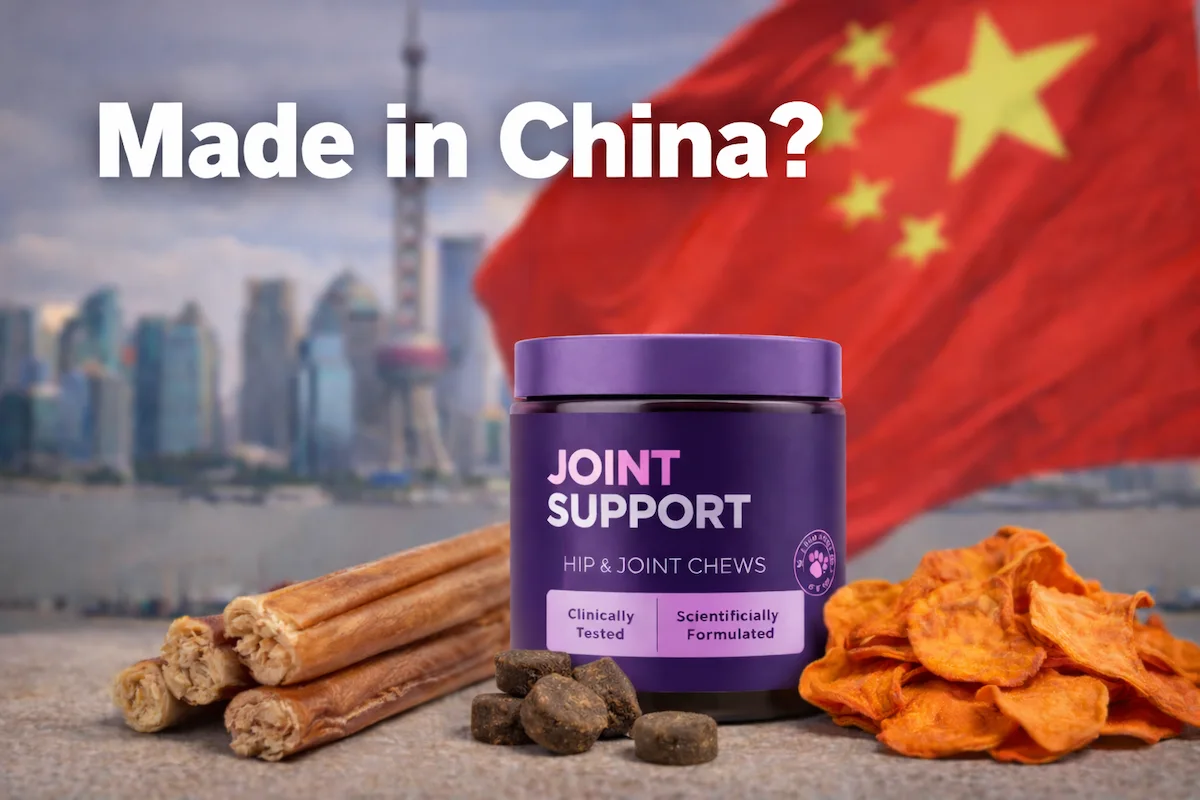
Search "how to source pet products from China" and you'll find dozens of guides. They all say the same thing: find suppliers on Alibaba, request samples, negotiate MOQs, ship. What they don't mention is that every one of those guides was written by someone who profits from your decision to source from China.
Sourcing agents, manufacturers, and B2B platforms dominate the search results. Their advice isn't wrong, exactly. It's incomplete in ways that cost founders money and, occasionally, their businesses.
This is what they leave out.
The Trust Problem Nobody Talks About
Pet product sourcing from China carries a trust deficit that other categories don't. In 2007, Chinese manufacturers deliberately laced wheat flour with melamine to make cheap ingredients appear protein-rich. The contaminated material entered pet food supply chains and killed hundreds to thousands of U.S. cats and dogs. When FDA investigators finally gained access to the responsible factories, they found the facilities had been closed and machinery dismantled.
This isn't ancient history. It's the context every pet brand importer inherits.
The melamine scandal didn't end China sourcing for the pet industry. But it fundamentally changed due diligence expectations. Retailers, distributors, and consumers now scrutinize supply chain origins in ways they didn't before. For food and treats especially, "Made in China" creates friction that "Made in USA" doesn't.
The sourcing guides don't mention this. They have no incentive to. Understanding the trust environment you're operating in matters more than finding the cheapest supplier.
The Real Math After Tariffs
Here's the calculation most guides skip entirely.
Section 301 tariffs add 7.5% to 25% on top of standard duty rates for Chinese goods. For many pet products, the total tariff impact reaches approximately 29%. That's not a rounding error. It's a margin killer.
Run the numbers on a hypothetical pet accessory. China manufacturing cost: $5. Standard duty: assume 5%. Section 301 tariff: 15%. Shipping and logistics: $1.50. Your landed cost isn't $6.50. It's closer to $7.50. The 50% arbitrage you thought you had is now 25%.
At 25% savings, you need to weigh that against longer lead times, larger capital requirements, quality control complexity, and the trust deficit mentioned above. The math still works for some products and volumes. For others, domestic sourcing wins on pure economics once you factor in the full picture.
The brands that get burned are the ones who plan around pre-tariff pricing. The brands that succeed build their models assuming tariffs are permanent.
What MOQs and Lead Times Mean for Cash Flow
Sourcing guides love to advertise "low MOQs available." Here's what that actually means.
Entry-level MOQs for first orders can run as low as 100 pieces with flexible suppliers. That sounds accessible until you realize it's typically limited to catalog items with no customization. The moment you want your logo, your colors, or any product modification, minimums jump. Standard MOQs for custom pet products run 500 to 3,000 pieces depending on the product category and supplier.
Lead times compound the problem. Manufacturing runs 15+ days for simple products. Add ocean freight at 3-5 weeks to the West Coast. Add customs clearance. Add domestic shipping to your fulfillment center. From order placement to inventory available for sale, you're looking at 8-12 weeks minimum.
Now multiply your MOQ by your landed unit cost. That's capital sitting in transit for two to three months before you see a dollar of revenue. For a 1,000-unit order at $7.50 landed cost, you've tied up $7,500 for a quarter.
Startup budgets of $2,000-5,000 can work for initial orders, but expect additional mold fees for custom products. And expect to repeat this capital cycle every time you reorder. Small brands with thin cash reserves feel this more acutely than guides suggest.
Quality Control Beyond "Get Samples"
Every guide tells you to request samples before committing to a production run. That's table stakes. It's also insufficient.
Samples don't predict production quality. Samples come from controlled conditions with attention that full production runs don't receive. The toys in your sample shipment were probably hand-picked by someone who knew they were going to a potential buyer. The 2,000 units in your production shipment were not.
Real quality control requires third-party inspection. Inspection services cost $200-350 per man-day depending on provider and location. You need pre-production inspection to verify materials, during-production inspection to catch issues early, and pre-shipment inspection to confirm the finished goods match specifications.
That's three inspections per order. At scale, the cost amortizes across larger volumes. For a 500-unit first order, it's a meaningful addition to your per-unit cost.
Beyond inspection, you need certification documentation. Products entering the U.S. market require compliance with relevant standards. Food and treats need FDA registration. Many products require RoHS certification for hazardous substance restrictions. REACH compliance matters if you're also selling into EU markets. Your supplier should provide these certificates. Your job is verifying they're legitimate and current.
The gap between "supplier says they're certified" and "supplier can provide valid documentation" is where problems live.
When China Sourcing Makes Sense
Despite the complications, China sourcing remains the right call for certain products and circumstances.
High-volume commodity products. If you're ordering 5,000+ units of pet toys, leashes, collars, or accessories where the design is standard and the margin game is volume, Chinese manufacturing economics still win. The tariff math changes when your baseline volumes spread fixed costs across more units.
Products without food safety concerns. Hard goods, textiles, and accessories don't carry the same trust deficit as consumables. A pet bed sourced from China doesn't trigger the same consumer skepticism as a treat sourced from China. The regulatory complexity is lower, and the margin for error is wider.
Repeat orders from vetted suppliers. The first order is always the riskiest. Once you've validated a supplier through multiple production runs, established QC protocols, and built a relationship, the risk profile changes. Long-term supplier relationships with proven track records are worth more than constantly chasing the lowest quote.
Brands with capital to handle inventory cycles. If tying up $10,000-50,000 in inventory for 90 days doesn't stress your cash flow, the model works. If that float would break you, it doesn't.
When It Doesn't
China sourcing creates more problems than it solves in several scenarios.
Food and treats. The regulatory complexity multiplies. FDA oversight intensifies. The trust deficit with consumers is real and persistent. The 2007 melamine scandal didn't just affect Chinese suppliers. It shaped American consumer psychology around pet food origins. For consumables, domestic manufacturing or trusted established importers typically make more sense than DIY China sourcing.
Low-volume or highly customized products. If you're ordering 200 units of a novel product design, MOQ requirements will either price you out or force you to commit to volumes you can't sell. The economics only work at scale. Sub-scale orders work better with domestic manufacturers who can handle smaller runs.
Brands without capital buffer. If a failed shipment, delayed customs clearance, or quality rejection would put you out of business, the risk isn't worth the savings. Domestic suppliers offer shorter lead times, smaller minimums, and faster iteration cycles. The unit cost is higher but the risk is lower.
First-time importers without agent relationships. Navigating Chinese manufacturing without an experienced sourcing agent or prior relationships is a recipe for expensive lessons. The platforms make it look simple. The execution is not. If this is your first import and you don't have a trusted guide, the tuition you'll pay in mistakes may exceed whatever you'd save versus domestic sourcing.
The right question isn't "can I source from China?" It's "should I, given my product, volume, capital, and risk tolerance?"
Understanding supply chain vulnerabilities at a deeper level helps frame this decision. The brands that build resilient operations are the ones who choose their sourcing strategy based on their specific situation, not based on what worked for someone else.
The guides written by sourcing agents will tell you that China sourcing is straightforward. It can be. But only for the right products, at the right volumes, with the right preparation.
The founders who succeed aren't the ones who found the cheapest supplier. They're the ones who understood the full cost of their sourcing decision before they made it.
Affiliated Products
Lorem ipsum dolor sit amet, consectetur adipiscing elit. Suspendisse varius enim in eros elementum tristique. Duis cursus, mi quis viverra ornare, eros dolor interdum nulla, ut commodo diam libero vitae erat.