Pet CBD Regulations: What Operators Need to Know in 2026
The FDA issued warning letters to pet CBD companies in June 2025. Section 781 takes effect November 2026. State requirements are multiplying. Pet CBD isn't becoming illegal—it's becoming regulated. Here's what operators need to know.
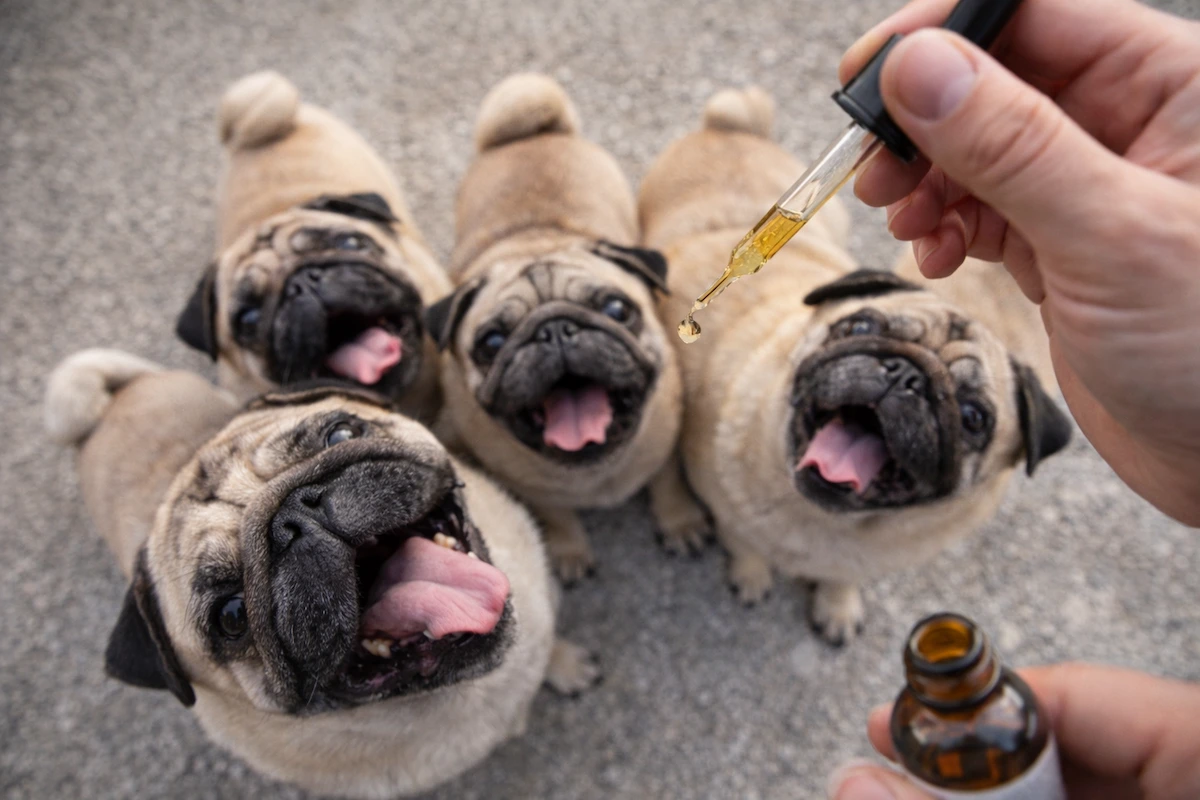
The FDA issued warning letters to CBD pet product companies in June 2025. Meanwhile, brands continued selling. Retailers continued stocking. And consumers continued buying.
That disconnect captures the pet CBD regulatory reality. The market exists in a gray zone where federal agencies haven't approved anything, enforcement happens selectively, and operators make calculated bets on compliance. The question isn't whether pet CBD is legal—it's what level of risk you're willing to accept and how to position for the regulatory changes coming in late 2026.
For operators who understand the broader pet food regulatory framework, CBD adds a specific layer of complexity. This is where that complexity actually matters for your business.
The Current State of Play
No cannabis-derived products are approved for use in animals in the United States. That's the FDA's official position, and it hasn't changed. The 2018 Farm Bill legalized hemp-derived CBD (containing less than 0.3% THC), but it didn't create a pathway for CBD in animal products. The FDA maintains that CBD is a drug ingredient—one that requires approval before it can be added to food or marketed with health claims.
Yet the market exists. The U.S. pet CBD market is estimated to reach $563 million by 2025, growing at nearly 40% annually. Brands operate openly. Retailers from independent pet stores to major chains carry products. Veterinarians in certain states discuss CBD with clients.
The enforcement gap explains this paradox. The FDA has authority but limited resources. They've focused enforcement on the most egregious violations: companies making explicit therapeutic claims, products with contamination issues, and operations with clear safety problems. Brands that avoid therapeutic language and maintain quality standards have largely operated without FDA interference.
That calculus shifted in June 2025 when the FDA issued warning letters to companies including Bailey's Wellness, HolistaPet, and CBD Dog Health. The violations: making therapeutic claims (products "intended to diagnose, cure, mitigate, treat or prevent disease") and selling CBD as an unapproved food additive. The agency gave companies 15 days to respond or face product seizure.
The pattern matches how the FDA approaches pet food generally: safety issues get attention, therapeutic claims trigger drug regulations, and general marketing operates in a lower-priority zone.
What's Coming: Section 781 and November 2026
The regulatory landscape is about to shift significantly. Section 781 of the Continuing Resolution redefines how hemp products are regulated at the federal level, effective November 12, 2026.
The key change: products will be defined by total THC content in the finished product, not just the source material. Under current rules, hemp-derived CBD is legal if the hemp plant contains less than 0.3% THC. Section 781 applies that threshold to the product itself.
For pet CBD operators, this has immediate implications.
Full-spectrum products face the highest risk. Full-spectrum formulations contain trace amounts of THC along with other cannabinoids. Many will exceed the new thresholds when measured in the finished product. Unless reformulated, these products likely become federally non-compliant in November 2026.
Broad-spectrum and isolate products have more runway. Products using CBD isolate or broad-spectrum extracts with THC removed should remain compliant, assuming accurate testing and proper manufacturing controls.
Testing methodology matters. How THC is measured—and at what stage of production—will determine compliance. Operators need clarity on testing protocols before November 2026.
The practical response: audit your current product line now. If you're selling full-spectrum pet CBD, start planning reformulation or prepare to exit those SKUs. If you're using isolate or broad-spectrum, verify your supply chain can consistently deliver THC-free material with documentation.
What FDA Actually Enforces
The June 2025 warning letters clarified FDA priorities for pet CBD. The enforcement pattern follows the same logic the agency applies to pet food generally: safety first, drug claims second, everything else third.
Therapeutic claims trigger immediate attention. If your marketing says CBD treats anxiety, reduces pain, or cures any condition, you've made a drug claim. The FDA regulates drugs. Your product becomes subject to approval requirements it almost certainly can't meet. This is the fastest path to an FDA warning letter.
Safety issues matter. Contaminated products, mislabeled potency, products containing undeclared THC above legal limits—these problems invite enforcement. The FDA's fundamental mandate is safety. Give them a safety reason to act and they will.
General wellness positioning operates in a lower-risk zone. Products marketed for "general wellness" or "calming support" without explicit therapeutic claims face lower enforcement priority. This isn't immunity—it's risk management. The FDA hasn't blessed this language. They've simply focused enforcement elsewhere.
Quality indicators provide some protection. Brands with third-party testing, accurate COAs, cGMP manufacturing, and NASC certification demonstrate good-faith compliance efforts. When the FDA exercises enforcement discretion—deciding which violations to pursue with limited resources—documented quality efforts matter.
The hierarchy is clear: avoid therapeutic claims, maintain rigorous safety standards, and build a compliance paper trail. That won't make you FDA-approved. Nothing will, currently. But it positions you favorably when enforcement attention arrives.
The State Patchwork: What Matters for Business
State-level regulation creates the practical framework for pet CBD operations. Requirements vary dramatically, and the variation affects where you can sell and how.
States with explicit pet CBD frameworks offer the most clarity. California, Colorado, and Washington have established testing and labeling requirements for hemp-derived CBD products. Operating in these states means meeting specific standards—but also getting regulatory acknowledgment that you can operate at all.
Veterinary recommendations are legal in five states. California, Colorado, Hawaii, Washington, and Wyoming explicitly allow veterinarians to discuss CBD with clients. This matters for B2B operators targeting vet clinics. In these states, the veterinary channel is a legitimate distribution opportunity. Elsewhere, vets face liability risks that make them reluctant partners.
Gray area states create uncertainty. Alaska, Arizona, Idaho, Montana, Nevada, New Mexico, Oregon, and Utah have ambiguous rules around veterinary CBD guidance. Operators can sell in these markets, but the veterinary channel is complicated.
Emerging registration requirements signal the trend. Illinois is implementing product registration requirements for hemp-derived CBD, potentially including age restrictions (21+) and retail licensing. Expect more states to follow. The direction is toward more regulation, not less.
Some states effectively restrict sales. Nebraska prohibits selling CBD products in stores despite allowing hemp cultivation—business owners risk fines or criminal charges. Idaho requires products to contain absolutely zero THC, which most CBD products can't guarantee. South Dakota has conflicting laws that create legal uncertainty.
The practical approach: focus initial distribution on states with clear frameworks. California, Colorado, and Washington offer large markets with defined rules. Expand carefully into gray-area states. Track emerging requirements in states like Illinois that signal where regulation is heading.
Compliance Requirements That Actually Matter
Regulatory survival in pet CBD requires documented compliance. Here's what matters most, prioritized by business impact.
NASC certification is increasingly table stakes. The National Animal Supplement Council provides third-party quality certification. Major retailers increasingly require NASC certification for pet CBD products. The certification process verifies manufacturing quality, label accuracy, and adverse event reporting systems. If you're targeting retail distribution, NASC certification isn't optional—it's the cost of shelf access.
COAs must be comprehensive and current. Certificates of Analysis from accredited third-party labs verify what's in your products. Essential testing includes:
- Cannabinoid potency (CBD, THC, and other cannabinoids)
- Heavy metals
- Pesticides
- Microbial contamination
- Residual solvents
Test every batch. Make COAs accessible to retailers and consumers. Dated, incomplete, or missing COAs are red flags that invite scrutiny.
Labeling requirements are tightening. Current best practices include clear cannabinoid content per serving, species-specific dosing guidance, THC content disclosure, and safety warnings. Avoid any language that implies therapeutic benefit. "Supports calm behavior" is different from "treats anxiety"—and that difference matters for enforcement risk.
Manufacturing standards matter for liability. cGMP (current Good Manufacturing Practice) compliance provides baseline protection. If your products cause harm and your manufacturing was substandard, liability exposure multiplies. Most pet CBD brands use contract manufacturers—verify your partners maintain cGMP standards and can document it.
The compliance priority stack: NASC certification first (for retail access), rigorous testing second (for safety and accuracy), compliant labeling third (for enforcement risk), documented manufacturing fourth (for liability protection).
The Veterinary Question
Veterinary distribution represents both opportunity and complexity for pet CBD operators.
In five states—California, Colorado, Hawaii, Washington, and Wyoming—veterinarians can legally discuss and recommend CBD products. This opens a professional channel with higher margins and implicit endorsement. Pet owners trust their vets. Vet-recommended CBD carries credibility that DTC marketing can't replicate.
The challenge: veterinary liability exposure. Even in states allowing CBD discussion, veterinarians recommending unapproved products accept professional risk. If an animal has an adverse reaction to a vet-recommended product, the veterinarian faces potential board complaints and malpractice exposure.
For operators, this means the B2B veterinary sale requires more than product quality. Vets need:
- Comprehensive COAs they can share with clients
- Clear dosing guidance backed by whatever research exists
- Adverse event reporting systems that protect them professionally
- Liability documentation that clarifies responsibility
The operators winning veterinary accounts invest in vet education and support materials, not just product sales. They make it easy for veterinarians to recommend their products with confidence.
Outside the five permissive states, veterinary distribution is harder. Vets in gray-area states may stock products but won't actively recommend them. That limits the channel's value. And in restrictive states, the veterinary channel doesn't exist.
What Operators Should Do Now
The pet CBD regulatory environment is transitioning. Here's how to position for what's coming.
Immediate: audit against Section 781. Review your product line against the November 2026 requirements. Identify which SKUs contain THC that may exceed new thresholds. Start reformulation planning now for products at risk. The brands that prepare early avoid the scramble when deadlines approach.
Short-term: nail compliance fundamentals. If you don't have NASC certification, start the process. If your testing program has gaps, close them. If your labels make claims that could be interpreted as therapeutic, revise them. These aren't competitive advantages—they're baseline requirements for sustainable operation.
Medium-term: build your safety dossier. The FDA has indicated that brands demonstrating safety data, pharmacovigilance systems, and robust quality programs will receive more favorable enforcement consideration. Start documenting adverse event reports. Compile any safety studies relevant to your formulations. Create the paper trail that shows you're a responsible operator.
Ongoing: monitor state requirements. The regulatory landscape is moving toward more structure, not less. Track requirements in your key markets. Build relationships with state regulators where possible. Being ahead of requirements is cheaper than scrambling to comply.
The pet CBD operators who survive regulatory tightening won't be the ones who found loopholes. They'll be the ones who built legitimate compliance infrastructure before it was mandatory.
Pet CBD occupies a regulatory gray zone that's gradually getting clearer—and more restrictive. The FDA hasn't approved anything. Section 781 will eliminate certain product categories. State requirements are multiplying.
None of this means the market disappears. It means the market professionalizes. Operators with NASC certification, rigorous testing, compliant labeling, and documented quality systems will navigate the transition. Operators cutting corners will face increasing enforcement risk and shrinking retail access.
The regulatory uncertainty that allowed the pet CBD market to emerge is ending. What comes next rewards operators who built compliance into their business model from the start.
For the broader regulatory context, see our pet food regulations guide and FDA enforcement overview.
Affiliated Products
Lorem ipsum dolor sit amet, consectetur adipiscing elit. Suspendisse varius enim in eros elementum tristique. Duis cursus, mi quis viverra ornare, eros dolor interdum nulla, ut commodo diam libero vitae erat.