AI in Pet Care: Which Applications Actually Work
The pet AI market is projected to hit $2.5 billion by 2033, but most applications fail. The pattern that works: AI that augments veterinary professionals wins; AI that tries to replace the vet visit loses. Here's how to separate signal from noise.

Every AI pitch deck in pet care tells the same story: massive market, underserved customers, technology that changes everything. The U.S. pet AI market will hit $2.5 billion by 2033, up from $515 million in 2024, according to Grand View Research. Impressive numbers. But the interesting question isn't whether AI is coming to pet care — it's which applications actually work.
Most don't.
Not because the technology fails, but because the business models do. After tracking funding rounds, product launches, and the quieter story of what happens 18 months later, a clear pattern emerges: AI that augments veterinary professionals wins. AI that tries to replace the vet visit loses. Understanding this distinction is worth more than any market research report.
The AI Gold Rush in Pet Care
Pet care AI investment follows a familiar hype cycle. Every startup adds "AI-powered" to its pitch. Every incumbent announces an AI initiative. The broader pet tech market hit $15.6 billion in 2025, with projections reaching $19.1 billion by 2026, according to Global Market Insights. AI represents a fraction of that — but it's the fraction attracting the most attention.
The problem with attention: it doesn't distinguish between applications that create value and applications that create funding stories. Market research reports treat all AI equally. A nutrition chatbot and a veterinary diagnostic tool both count toward the $2.5 billion projection, even though one works and the other demonstrably doesn't.
What operators need isn't another list of AI pet products. It's a framework for separating signal from noise. Here's how the landscape actually breaks down.
Where AI Actually Delivers Value
Three categories of AI in pet care have demonstrated real utility — not just funding announcements, but products that work and business models that hold.
Predictive Health Monitoring
Wearable pet health devices existed before AI. What's different now is the pattern recognition. Instead of displaying heart rate and activity levels, modern wearables flag anomalies before symptoms appear.
PetPace collars track temperature, pulse, respiration, activity, and posture — then run that data through algorithms trained on millions of readings. The collar uses acoustic sensors, thermometers, and 6D accelerometers to detect everything from fever to pain indicators. Whistle focuses more on GPS tracking and basic activity monitoring, positioning itself as a location-first device rather than a health monitoring platform. The value proposition isn't the data itself. It's the interpretation layer that tells an owner "your dog's behavior changed in ways that historically precede GI issues."
The business model works because it combines hardware margin with recurring subscription revenue. Owners pay for the collar, then pay monthly for the insights. Retention depends on one thing: whether the predictions prove accurate often enough to justify the cost.
The limitation matters too. These devices don't diagnose — they flag. Every alert still requires veterinary validation. The smartest players in this space position themselves as early warning systems, not replacements for professional care. That distinction determines whether regulators and veterinarians view them as useful tools or dangerous overreach.
Veterinary Diagnostics and Imaging
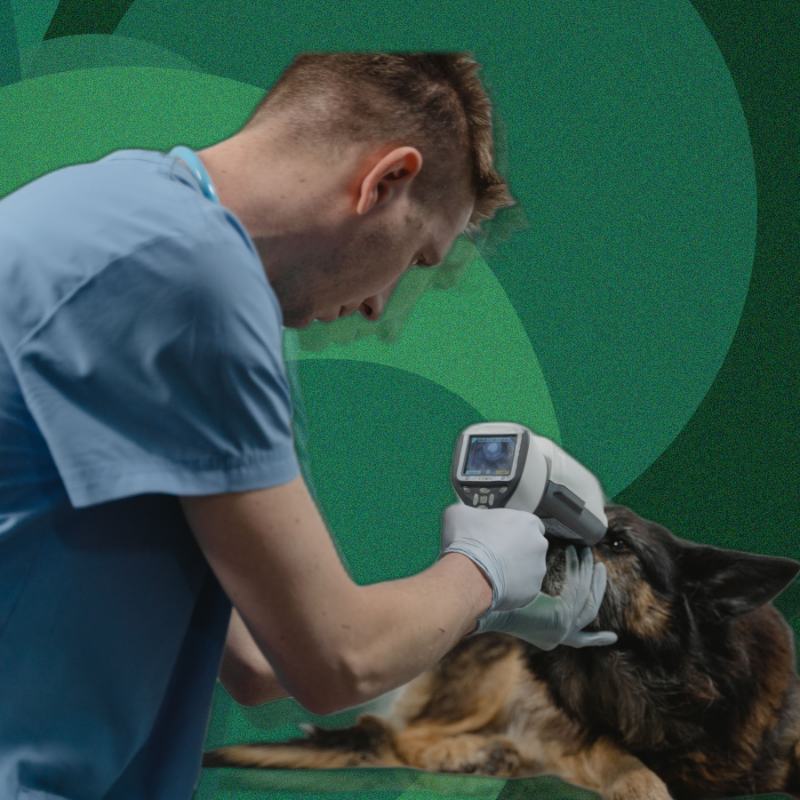
This is where AI delivers the clearest value. Analyzing pathology slides, interpreting X-rays, processing blood work — tasks where AI can be faster and more consistent than human analysis.
Zoetis Vetscan Imagyst examines fecal samples and identifies parasites with diagnostic sensitivity of 90.7-95.5% and specificity of 96-98.8% — performance comparable to expert parasitologists. IDEXX has integrated machine learning across multiple diagnostic platforms, including SediVue Dx for urine analysis, inVue Dx for cytology, and ProCyte Dx for blood work. These aren't consumer-facing products. They're workflow tools that make veterinary practices more efficient.
The adoption reality is more complicated than the press releases suggest. A 2024 AAHA and Digitail survey found 70.3% of veterinary professionals express concern about AI reliability and accuracy. That skepticism isn't irrational — it reflects the gap between "AI detected something" and "AI detected the right thing with enough certainty to act on it." The trust problem in veterinary AI isn't technical. It's about professional liability. A vet who misses something carries the responsibility. A vet who relies on AI that misses something still carries the responsibility.
The winners here are the companies embedding AI into existing workflows rather than asking vets to change how they practice. IDEXX and Zoetis succeed because they're selling to practices that already use their equipment. The AI is an upgrade, not a replacement.
B2B Software and Operations
The least glamorous category is also the most promising. AI applied to veterinary practice management, client communication, and operational efficiency.
Tandem raised $10 million in pre-seed funding in February 2025 for an integrated pet healthcare platform combining mobile clinics, telemedicine, and an AI-powered operating system called Laika. The pitch isn't "AI for pets" — it's "AI for vets," automating scheduling, records, and routine communications so practice staff can focus on medicine instead of administration.
PetScreening raised $80 million in Series B funding in March 2025 for AI that helps property managers verify pet policies and manage animal-related risk. Again, the pet is almost incidental. This is enterprise software that happens to process pet data.
Petfolk raised $36 million in Series C in October 2024 for AI-enabled veterinary clinics. The model combines physical locations with technology that handles intake, triage, and follow-up.
The pattern across B2B plays: they solve problems veterinary practices and adjacent businesses actually have, rather than problems startups imagine pet owners might have. The customer is a business that measures ROI, not a consumer making emotional decisions about their pet.
Where AI Falls Short
The hype categories are easier to fund but harder to sustain. They share a common flaw: building for pet owner anxiety rather than genuine utility.
AI Pet Nutrition Advisors
A 2023 Tufts University Petfoodology experiment tested AI chatbots on pet nutrition questions. Every single one provided misinformation. Google Bard, Bing Chat, ChatGPT — all gave advice that veterinary nutritionists flagged as incorrect or potentially harmful.
This isn't a technology problem. It's a training data problem. General-purpose AI models learn from the internet, and the internet is full of pet diet mythology. Raw feeding advocates, grain-free enthusiasts, and supplement sellers all produce content that AI absorbs without the ability to distinguish evidence-based nutrition from ideology.
The companies trying to build AI nutrition advisors face an impossible task: create something accurate enough to be useful without the specialized training data and veterinary oversight that would make it accurate. Most split the difference by being vague enough to avoid liability while specific enough to seem valuable. That's not a product. It's a liability waiting to happen.
Consumer AI Apps
Pet emotion detection. Behavior analysis. AI training coaches. The app stores are full of them, and retention data tells the real story: high download numbers, terrible engagement.
Lupa raised $4 million in seed funding in January 2025 — but notably, it pivoted to become a veterinary practice management platform rather than a consumer app. The pitch now is AI that automates admin tasks for clinics, not emotion detection for pet owners. That pivot tells you something about where the value actually lies.
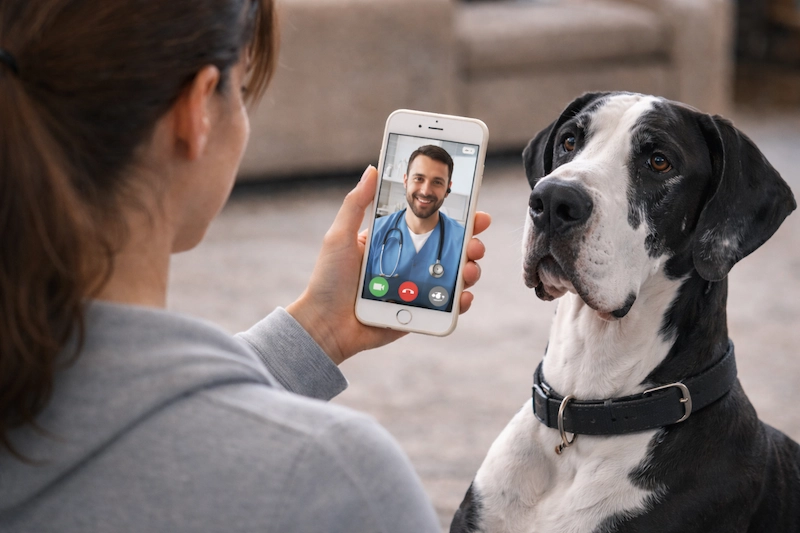
Why doesn't AI pet guidance stick with consumers? Because it's competing with a relationship pet owners already have — with their veterinarian. When something is actually wrong with a pet, owners want a professional, not an app. When nothing is wrong, they don't need either. The use case for a consumer AI pet app is the narrow window where something might be slightly concerning but not enough to warrant a vet visit. That's not a big enough market to build a company on.
AI-First Hardware Without Moats
When "AI-powered" is marketing copy rather than product differentiation, the business faces commoditization risk within a product cycle or two. Smart feeders, automated litter boxes, and pet cameras all claim AI features, but those features are increasingly table stakes.
The AI in most consumer pet hardware is thin: motion detection, portion control algorithms, pattern recognition that's been available for years. Calling it AI makes for better marketing but doesn't create defensibility. When Chinese manufacturers can ship the same features at half the price within 18 months, "AI-powered" stops being a differentiator.
The companies that avoid this trap have proprietary data advantages — health monitoring devices with years of outcome data, or platforms with enough users to train models competitors can't replicate. Without that moat, AI hardware becomes AI commoditized hardware.
The Regulatory Wild West
The FDA doesn't require pre-market approval for veterinary medical devices. That means AI-powered pet health products can reach market without proving they work, don't harm, or do what they claim.
For operators evaluating AI pet products, this regulatory gap means buyer beware. A device that "detects early signs of illness" might have been validated against thousands of clinical cases or might be running pattern matching that's never been tested on real animals. There's no requirement to disclose which.
The veterinary licensing question looms larger. When does AI-generated pet health advice cross from information into diagnosis? State veterinary practice acts weren't written for algorithms. A chatbot that tells an owner "your dog probably has allergies" may be practicing veterinary medicine without a license — or it may be providing information no different from a pet health website. The legal ambiguity hasn't been tested, which creates risk for companies operating in this space.
Smart operators want to see validation data, clinical partnerships, and clear positioning about what the AI does and doesn't do. The absence of regulation makes this due diligence more important, not less.
What Operators Should Watch
The emerging plays worth tracking share a common thread: they make veterinary professionals better at their jobs rather than trying to route around them.
Traini raised $7.5 million in December 2025 for a "Cognitive Smart Collar" that claims 94% accuracy in translating dog emotions using physiological monitoring. The pitch — understanding pet emotions through heart rate, temperature, and movement analysis — could go either way. If they're building data that helps vets understand pet stress and behavior, that's useful. If they're selling owners on the idea that an app knows what their dog is feeling better than they do, that's a consumer novelty play with retention problems built in.
VEA won the 2025 Purina Pet Care Innovation Prize for AI that assists veterinarians with clinical workflows — predicting diseases, generating diagnostic plans, and streamlining documentation during exams. Not replacing vets. Not going direct to consumers. Augmenting the professional. That's the pattern that works.
Dannce.ai raised $2.6 million in November 2024 for computer vision that analyzes movement using markerless pose tracking. The technology originated at Harvard and Duke for human neurological applications, but the underlying approach — detecting subtle gait changes and movement patterns that humans miss — could translate to veterinary applications for mobility and pain assessment.
The filter is simple: AI that creates efficiency for veterinary professionals has buyers who measure ROI and make rational purchasing decisions. AI that promises pet owners peace of mind competes with the relationship they already have with their vet — and usually loses.
The founders who understand this distinction will build the companies worth watching. The ones who don't will add to the growing pile of pet AI startups that raised money, got coverage, and quietly shut down when the retention numbers came in.
Affiliated Products
Lorem ipsum dolor sit amet, consectetur adipiscing elit. Suspendisse varius enim in eros elementum tristique. Duis cursus, mi quis viverra ornare, eros dolor interdum nulla, ut commodo diam libero vitae erat.