Pet Tech Startups: Separating Signal from Hype
Most pet tech coverage lists who's funded. This analysis examines which business models actually work — from wearables to insurance to veterinary tech — and identifies the patterns that separate survivors from well-funded failures.
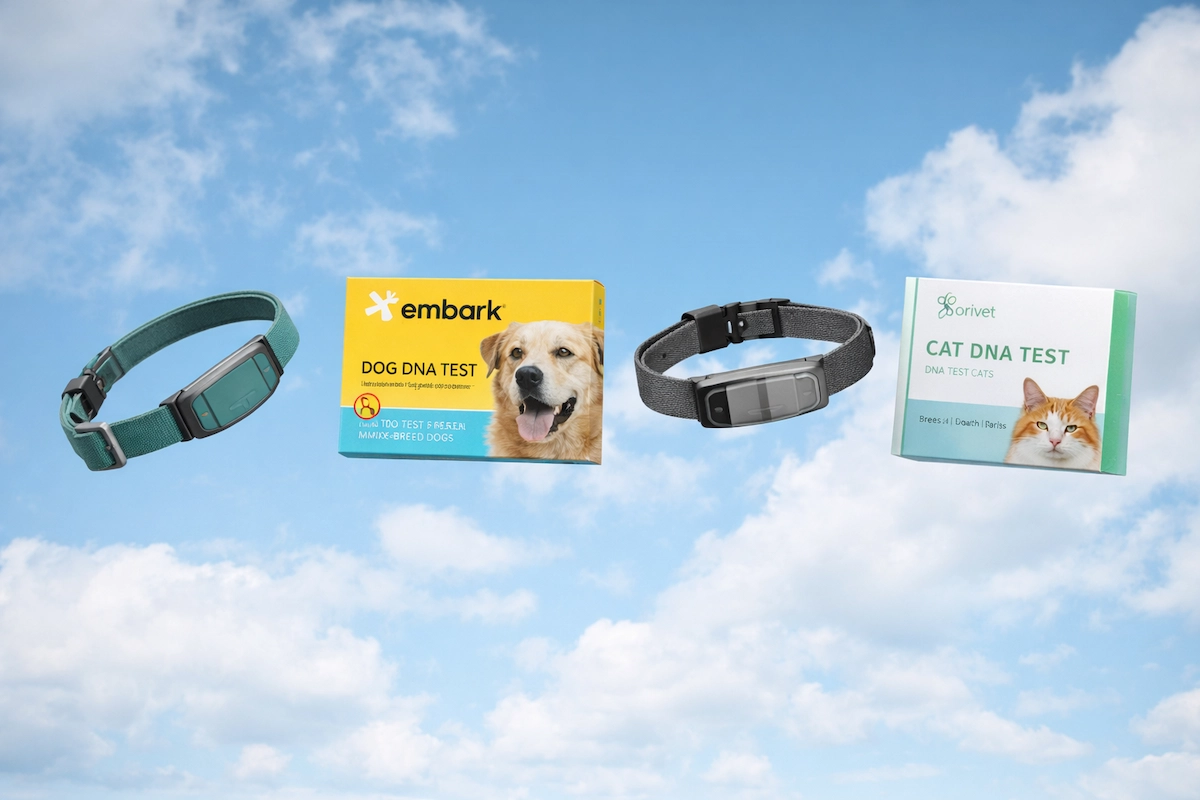
Embark hit a $700M valuation selling DNA tests. Pets.com burned $70M in advertising to generate $619K in revenue. Same industry, same decade of origin, opposite outcomes. The difference wasn't the technology — it was the business model.
Pet tech startups raised billions over the past five years, but the category resists easy analysis. Directories list hundreds of companies without distinguishing between sustainable businesses and well-funded experiments. Listicles celebrate funding rounds without asking whether the underlying economics work. For operators evaluating opportunities — whether as founders, investors, or acquirers — the interesting question isn't who exists. It's who survives.
This is a pattern recognition exercise. Which pet tech categories have viable business models? Which are structurally advantaged? And which are repeating the mistakes that killed the last generation of pet startups?
The Landscape Right Now
Pet tech startups operate in a market projected to reach $14-16 billion in 2025, growing at a 12-15% CAGR toward $16-19 billion by 2026. But aggregate market size obscures more than it reveals. The money concentrates in specific segments — wearables, insurance, veterinary technology — while other categories struggle to find sustainable unit economics.
The operator's question isn't how big the market is. It's where margin and defensibility exist within it.
Three dynamics shape the current landscape. First, hardware commoditization: as GPS chips, sensors, and Bluetooth modules get cheaper, differentiation shifts from technology to software and services. Second, recurring revenue pressure: investors learned from the D2C bloodbath that one-time purchases don't build durable businesses. Third, distribution fragmentation: unlike pet food, where retail and e-commerce channels are well-defined, pet tech startups must often build their own go-to-market infrastructure.
For a broader view of what's driving capital into pet businesses, see our analysis of pet industry investors.
The Categories Worth Watching
Not all pet tech is created equal. Some segments have structural advantages; others have structural problems that funding can't solve.
Wearables and GPS: The Hardware-to-Subscription Play
Pet tech wearables and GPS trackers command roughly 45% of the total pet tech market, making them the largest single segment. The pet wearables market reached $4.2 billion in 2025 and is projected to hit $4.7 billion by 2026, with smart collars representing 45% of that category.
The business model question that separates winners from commodity products: are you a hardware company or a subscription company?
Fi and Whistle represent the subscription thesis — hardware at cost (or near it), margin in monthly plans. This works when the software creates genuine lock-in: proprietary health algorithms, social features, integrations with vet records. It fails when competitors offer equivalent functionality without recurring fees, which happens as components commoditize.
The commoditization risk is real. The GPS modules, accelerometers, and Bluetooth chips that power smart collars are the same across most products. Manufacturing is contract-based, often in the same Shenzhen facilities. When the hardware becomes interchangeable, differentiation depends entirely on software, brand, and distribution — and most pet tech startups underinvest in all three.
The winners in this category share a pattern: they treat hardware as customer acquisition cost, not margin center. They obsess over churn metrics. And they build features that make the device more valuable over time, not less.
Pet Insurance and Wellness: The Sleeper Category
Pet insurance represents one of the most structurally attractive opportunities in pet tech. North American written premiums exceed $5 billion, yet penetration sits below 3% of pet-owning households. For comparison, UK penetration exceeds 25%. The runway is massive.
Recent funding reflects investor enthusiasm: Dalma raised $21.8M in Series B (March 2025), Napo closed $15.2M Series B (2025), Companion Protect took $20.3M, and Wagmo secured $12.5M Series A.
Why might this category have the best unit economics in pet tech? Insurance is fundamentally a data and distribution business. Customer acquisition costs are high, but lifetime values are higher — policies renew for years, premiums increase with pet age, and cross-selling opportunities (wellness plans, telehealth, pharmacy) compound over time.
The distribution problem defines the competitive landscape. Direct-to-consumer acquisition is expensive and getting more so. The smarter play: employer benefits channels, where companies like Wagmo have built partnerships that significantly reduce acquisition costs. When pet insurance shows up as an HR benefit alongside dental and vision, price sensitivity decreases and retention increases.
The startups winning here aren't building better insurance products. They're building better distribution.
Veterinary Tech and Telehealth
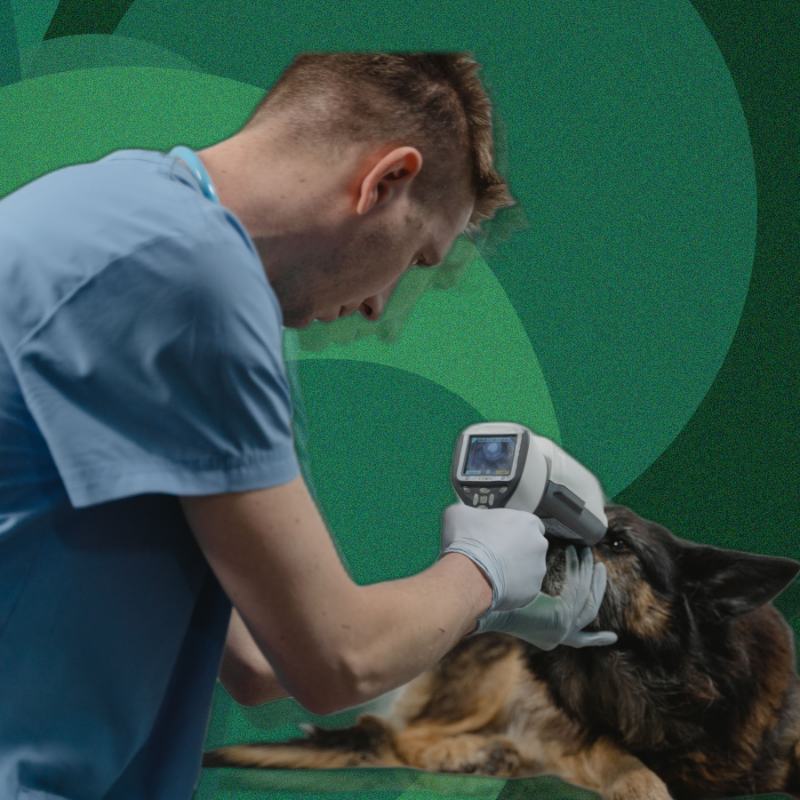
Healthcare applications account for 36% of pet tech spending, roughly $4.4 billion. This includes everything from practice management software to telemedicine platforms to diagnostic tools.
Petfolk's $36M Series C in November 2024 signals continued investor interest in veterinary care delivery. The company operates a hybrid model: owned clinics with technology infrastructure designed for efficiency and experience. It's the One Medical playbook applied to pets.
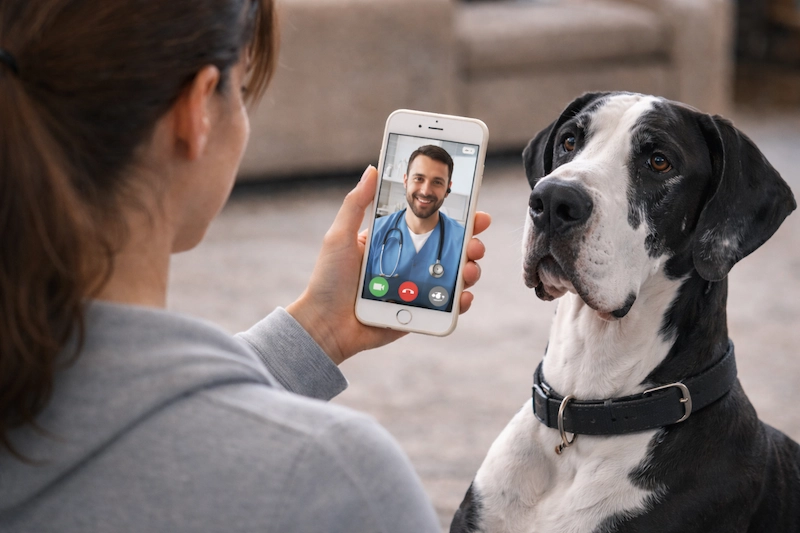
The post-COVID telehealth story is more complicated. Dutch, Pawp, and others raised significant capital on the thesis that pet owners would embrace virtual vet visits. Some of that thesis proved out — telemedicine works for triage, prescription refills, and follow-up consultations. But the limitations became clear: you can't perform a physical exam over video, and most pet health issues require hands-on diagnosis.
What stuck: telehealth as a feature within broader veterinary relationships, not a replacement for them. The standalone telemedicine play struggled; the integrated model (clinics plus tech plus telehealth) shows more promise.
Consolidation is the story to watch. Private equity has been rolling up veterinary practices for years. The technology layer that enables multi-location management, standardized care protocols, and centralized patient records becomes increasingly valuable as consolidation continues.
DNA Testing and Diagnostics
Embark's $700M valuation in 2021 represents either the ceiling or the floor for pet genomics — depending on where you think the real business is.
The consumer pitch is breed identification: find out if your rescue is part husky. That's a one-time purchase with limited repeat potential. The more interesting business is health screening and the data it generates.
Embark and competitors like Wisdom Panel have built databases of millions of dog genomes. That data has value beyond individual test kits — pharmaceutical research, breed health studies, predictive algorithms for veterinary care. The question is whether pet owners, who pay for the test, will accept their data being commercialized, and whether the revenue from data licensing justifies current valuations.
The breed identification market is probably saturated. Every curious dog owner who wanted to know their mutt's heritage has likely tested by now. Growth depends on converting DNA testing from curiosity purchase to routine health screening — a harder behavioral shift.
AI and Software Platforms
Pure software plays in pet tech fall into two buckets: consumer-facing AI and B2B platforms.
Consumer AI — think apps that analyze pet behavior or provide training guidance — faces the classic consumer app problem: high download rates, terrible retention, unclear monetization. Lupa Pets raised $4M in Seed funding (November 2024) for an AI veterinary advisor. Whether consumers will pay for AI pet health guidance when free alternatives (and actual veterinarians) exist remains unproven.
B2B software is a different story. PetScreening's $80M Series B (March 2025) validates the enterprise wedge: the company sells to property managers, solving the operational headache of pet policies in multifamily housing. GoChip targets municipalities and enterprises with animal identification infrastructure.
The pattern: B2B pet tech startups with clear buyers and defined problems outperform consumer plays with diffuse value propositions. Property managers will pay to reduce liability and streamline operations. Individual pet owners are harder to monetize.
The Patterns That Predict Success
After analyzing hundreds of pet tech startups, certain patterns distinguish the survivors from the well-funded failures.
Recurring revenue beats one-time purchase. This isn't unique to pet tech, but the category learned it the hard way. Smart collars that sold as hardware died; those that converted to subscription models survived. DNA tests face ceiling constraints that subscription health monitoring doesn't.
The logistics moat matters. In categories where physical products move — pet food, medications, supplies — the companies that built distribution and fulfillment infrastructure created defensibility that pure software couldn't match. Chewy's competitive advantage isn't its website; it's the fulfillment network that enables two-day delivery on 50-pound bags of kibble.
"Pet humanization" isn't a business model. Every pitch deck cites the pet humanization trend. But "people spend more on pets" doesn't automatically translate to "people will pay for this specific product." The startups that succeed identify specific behaviors that demonstrate willingness to pay — and build for those behaviors, not abstract trends.
Distribution is strategy, not afterthought. The most common failure mode: building a technically impressive product, then discovering that customer acquisition costs exceed lifetime value. The winners figure out distribution first. Wagmo went after employer channels. PetScreening sold to property managers. Fi built retail partnerships before scaling D2C.
B2B often beats B2C. Consumer pet tech is crowded, noisy, and expensive to market. B2B plays — software for veterinarians, platforms for property managers, tools for pet retailers — have clearer buyers, longer contracts, and more predictable revenue.
The Overhyped Categories
Some segments attract funding disproportionate to their business model viability.
The cautionary tale everyone knows: Pets.com raised $82.5 million in its IPO, spent $70 million on advertising (including a Super Bowl spot), and generated $619,000 in revenue before shutting down. The company sold pet supplies at a loss, assuming scale would eventually solve unit economics. It didn't.
Modern equivalents don't announce themselves as obviously. But the pattern repeats: pet startups that raise on market size rather than demonstrated business model, that assume customer acquisition costs will decrease as they scale (they usually don't), that confuse funding for validation.
Categories to approach with skepticism:
Consumer pet social networks. The idea resurfaces every few years. Pet owners will share photos, connect with other pet owners, discover products. In practice, they already do this on Instagram and TikTok, for free. Dedicated pet social apps can't escape the gravitational pull of general-purpose platforms.
AI-first consumer products without clear utility. An app that tells you your dog looks happy isn't solving a problem pet owners will pay to solve. The AI capabilities are impressive; the business model is absent.
Hardware without service layer. Standalone pet tech devices that don't connect to recurring revenue — one-time purchase toys, gadgets, accessories — face the same margin pressure as any consumer electronics. Competitors can always build cheaper.
What Operators Should Actually Watch
The pet tech category is consolidating. The proliferation of startups over the past five years will give way to fewer, larger players as funding tightens and winners emerge.
Three signals worth tracking:
Insurance distribution evolution. The company that cracks mass-market pet insurance distribution — whether through employers, veterinarians, or pet retailers — will build a dominant position. Watch for partnerships that dramatically reduce customer acquisition costs.
Veterinary consolidation rollup. As private equity continues acquiring veterinary practices, the technology infrastructure that enables multi-location management becomes increasingly strategic. Acquisitions of vet tech platforms by consolidators would validate this thesis.
Hardware-to-subscription conversion rates. In wearables, the companies that successfully convert hardware purchasers to recurring subscribers — and retain them — will separate from the commodity pack. Watch churn metrics more than unit sales.
For operators evaluating pet tech opportunities, the framework is simple: business model first, technology second. The graveyard of pet tech is filled with impressive products that couldn't find sustainable economics. The survivors built businesses, not just products.
Explore more industry analysis across all sectors on The Underbite insights hub.
Affiliated Products
Lorem ipsum dolor sit amet, consectetur adipiscing elit. Suspendisse varius enim in eros elementum tristique. Duis cursus, mi quis viverra ornare, eros dolor interdum nulla, ut commodo diam libero vitae erat.