Subscribe
Pet Food & CPG
10 min read

Dylan Munro | Co-Founder & COO, Spot & Tango

Spot & Tango grew from 12 boxes a week to 200 million meals served and an estimated $130M in revenue — 95% subscription, zero retail. Co-founder and COO Dylan Munro on why the company spent tens of millions building its own factory, how vertical integration cut UnKibble's cost nearly in half, and why frugality still governs a business investing at scale.
Written by
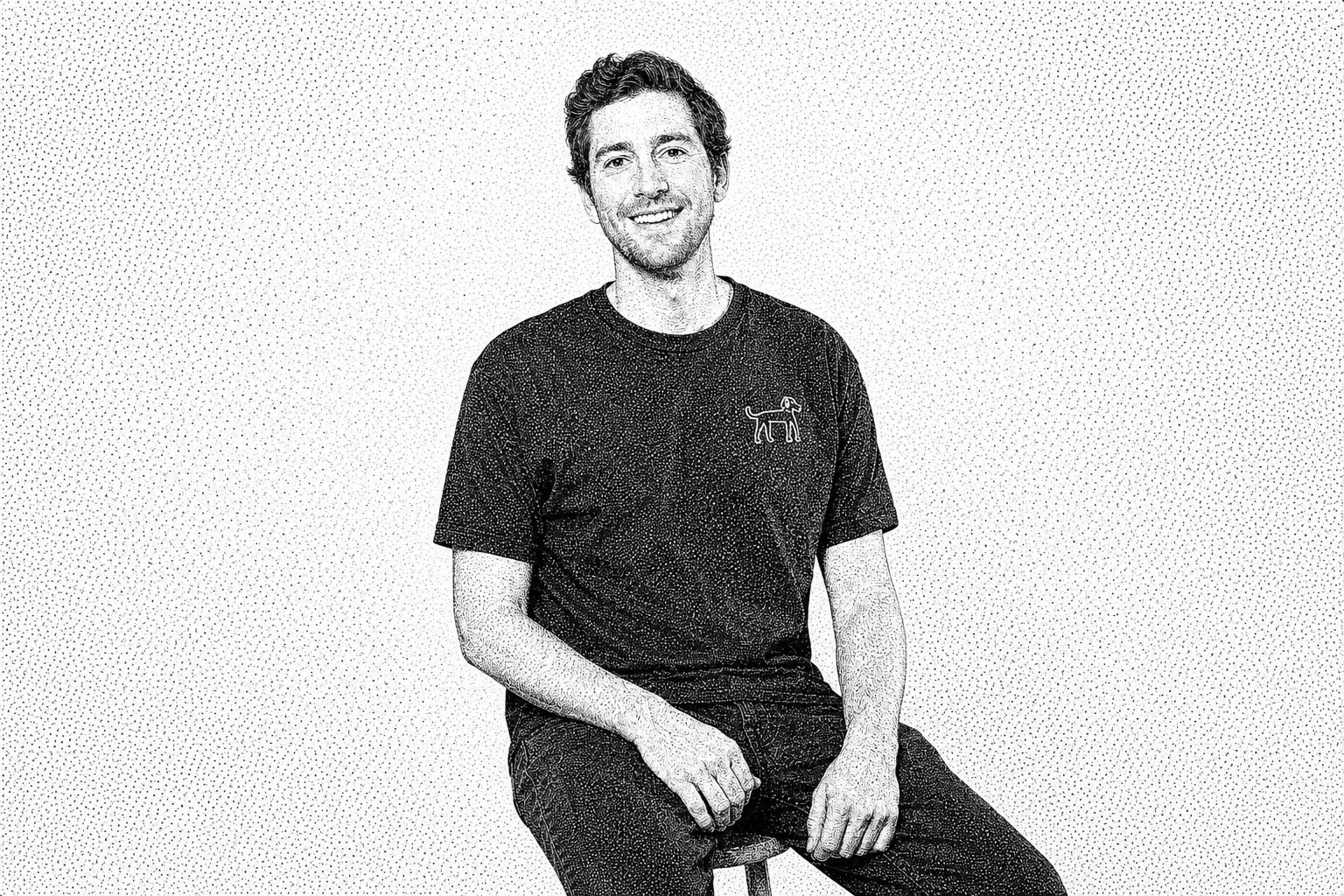
The Underbite
Published on
June 24, 2026
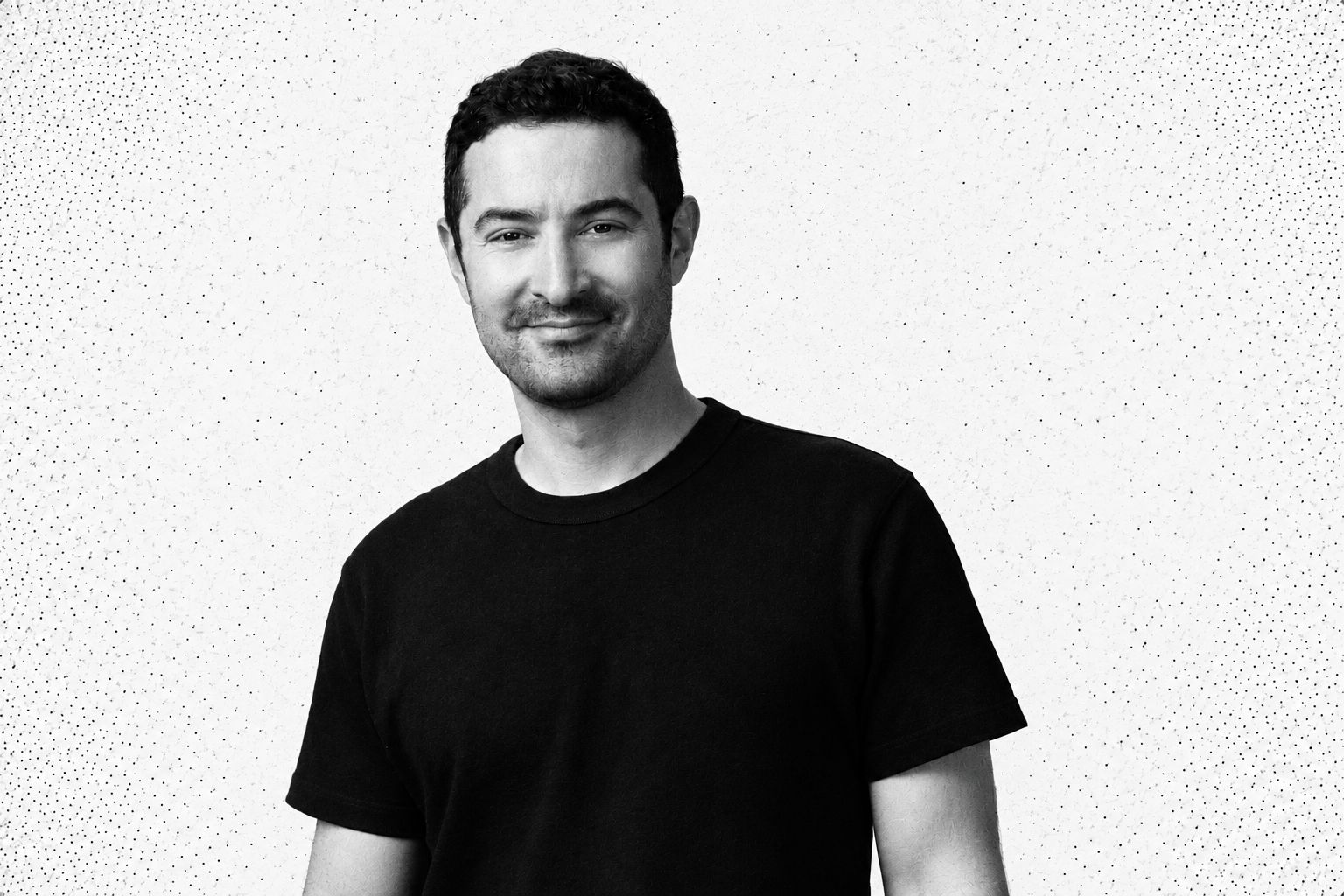
Dylan Munro, Co-Founder and COO of Spot & Tango

Before co-founding Spot & Tango, Dylan Munro was studying high-growth consumer brands at McKinsey, analyzing what separated great businesses from merely good ones. That experience gave him a front-row seat to what makes a company durable, and helped shape the blueprint for what Spot & Tango would become.

Eight years later, Spot & Tango is a profitable business generating an estimated $120–130 million in annual revenue, growing 60–70% year-over-year, with roughly 95% of sales coming through subscriptions. The company has invested tens of millions of dollars into building its own manufacturing, recently committing another $20 million to expand its Allentown facility and double production capacity, all while continuing to avoid traditional retail.

In this conversation, Munro explains why most pet food brands are really marketing companies, what it took to build manufacturing from scratch, how Spot & Tango turned a customer complaint into its flagship product, why frugality remains a core operating principle even after investing tens of millions, and how AI is beginning to reshape supply chain operations.

You were at McKinsey studying DTC brands before you co-founded one. Did that work basically show you the blueprint for what you wanted to build?

While at McKinsey, I was lucky to work both directly with DTC brands and also with investment firms who were deciding whether to invest in or acquire DTC brands. This gave me multiple perspectives into what makes a great ecommerce company across culture, execution, operations, marketing, and financial performance.

So, when I left McKinsey to co-found Spot & Tango, I knew what “good” looked like, and I’ve strived to build Spot & Tango into that kind of business. The key is to first build a product that is truly differentiated and that people love, and then build on that product-market fit to quickly prove that the unit economics — customer acquisition cost compared to the lifetime value of a customer — can work at scale.

Ultimately, by following these principles, we have been able to build a scaled, profitable business growing 60-70% year-over-year, and have made hundreds of thousands of dogs happier and healthier along the way.

This recent $20m expansion (20,000 more square feet, doubling production capacity) — walk us through what drove that decision and what it actually takes to pull something like that off.

In order to continue supporting the growing demand for our primary product, UnKibble, we had to find a way to increase production capacity. Most DTC brands (including in the pet food space) rely on 3rd-party manufacturers to scale supply, but because UnKibble is such a unique product, there isn’t enough 3rd-party capacity in the US to support our demand. Therefore, we had to expand!

In terms of what it takes — it’s easy to say we are doubling capacity over the next year or two, but it’s another thing to actually pull that off. There is an incredible amount of work going on across every function in our company. Our teams in operations, logistics, warehousing, production, quality assurance, maintenance, and supply chain are all working together to make this vision a reality.

This includes ordering millions of dollars of equipment, ensuring we have all the utilities (electric, water, etc.) to support that equipment, moving thousands of pallets and tons of steel racking, hiring dozens of employees, scheduling multiple shifts, and much, much more.

Spot & Tango's Allentown, Pennsylvania manufacturing facility

You’ve said most brands in your space are pet food marketers, but you guys are pet food manufacturers. What does that difference actually mean, and why does it matter so much to you?

Most pet food brands never actually touch the product before it arrives at the customer’s door. A 3rd party sources the ingredients, a 3rd party makes the food, and a 3rd party ships and delivers it to your door. And the same 3rd parties that make the food for one brand are making the same food for dozens of other brands.

This is true across many industries — most DTC companies don’t make their own products. And in many cases, particularly when products aren’t very differentiated, this can make sense. However, by relying entirely on 3rd parties to manufacture your product, you lose a level of visibility and control over your product quality and consistency.

At Spot & Tango, we have spent tens of millions of dollars and tens of thousands of hours building the capabilities and infrastructure to make UnKibble ourselves. This allows us to raise the bar on product quality and consistency, it ensures we can meet customer demand, and ultimately helps us earn customers’ trust, because we are actually making what we are selling (not just marketing something that someone else made for us).

What is the role of a COO? What does your actual day-to-day look like, and how has it changed as the company has grown?

The role of a COO is different at every company, and at every stage of growth. For me, I see myself as being responsible for efficient and effective execution across the company. In the early days, this meant packing boxes by hand, answering customer phone calls, and editing our first marketing assets in Photoshop. In the following years, it included building out teams and processes that could support the business as we’ve scaled.

Today, I directly oversee multiple areas, including operations, manufacturing, product, and technology, but also engage closely cross-functionally (with marketing, finance, customer service, etc.) on day-to-day execution as well as long-term strategic projects (e.g., new product development and international expansion).

You went from paying $13 a pound to make UnKibble down to around $6.50 — in-house, with better ingredients. How did that happen and what did it change for the business?

It happened for three primary reasons. First, because it is so hard to make UnKibble, the few co-manufacturers in the US who could make it for us were charging very large margins because there is such limited capacity. Therefore, by doing it ourselves, we were able to avoid paying that additional margin. Second, by owning the process ourselves, we have been able to find many efficiencies that have further reduced costs of production. Third, we started sourcing the ingredients ourselves and have scoured the country for the best suppliers who are able to give us higher quality inputs for more competitive prices.

In total, this has allowed us to continue offering our products at extremely competitive prices (over 40% less than most fresh-frozen brands), and it has allowed our business to be profitable, despite our fast growth, which has been the case for the last 3 years.

Spot & Tango UnKibble fresh dry dog food

Spot & Tango is doing $120-130M in revenue, growing 60% year-over-year, 95% subscription, zero retail shelves, and you built a $35M factory yourselves. What do you attribute this success to?

I think there are many things that have contributed to these metrics — sharp execution, a fantastic and lean team, a sense of discipline and focus, the bold decision to vertically integrate manufacturing, etc. But, at the core, I think it comes down to having highly differentiated and affordable products that really resonate with customers and their pups.

You’re using an AI tool called Didero to handle procurement and logistics automatically. What made you try it, and has it actually delivered?

It was a cold email from someone who had also worked at McKinsey (though I had never met him while we were both working there). He’s one of the co-founders of Didero, and I was interested in learning more from a fellow entrepreneur earlier in his journey. As I learned more about the platform, I was intrigued by its potential to support our lean supply chain team as we grow the business rapidly. It hasn’t revolutionized our processes, but it has empowered each of our supply chain employees to be more efficient, which has allowed us to expand the business significantly without having to grow the team at the same pace.

Beyond Didero, how are you thinking about AI in the broader operation — is there a version of this where it meaningfully changes how a factory like yours runs, or is it still early days?

Still early days. I don’t think AI will completely transform our process at our manufacturing facility, but there may be some specific useful applications that we can test in the coming months and years to support the team there and improve throughput, accuracy, and efficiency.

Frugality is one of your core values. What does that actually look like inside a manufacturing facility?

To us, being frugal doesn’t mean being cheap. Many people see it this way. We see frugality as being efficient — using resources wisely — and being scrappy and creative when solving problems. We aren’t afraid to invest when we need to (we’ve invested tens of millions of dollars in our state-of-the-art facility in Allentown).

But if there is a cheap and scrappy way to solve a problem, we will try that first. We try not to use jackhammers in situations where a hammer would do just fine.

Where did the idea for UnKibble come from, and have you been surprised by how big it’s become?

The idea for UnKibble came from our early customers. Our original product was fresh-frozen meals for dogs. Customers loved the high-quality ingredients, and their dogs went crazy for the food. But customers would also tell us things they didn’t love about the product — it takes up a ton of room in the fridge/freezer (especially for customers in urban environments), it’s hard to travel with, it’s messy to feed, it’s hard to remember to defrost the night before, and it’s expensive.

So, we set out to create a product that could solve these problems without sacrificing on quality or nutrition. That’s how we came up with UnKibble, which is the only Fresh Dry food for dogs. It’s all the nutrition and health benefits of a fresh, human-grade diet, but in a shelf-stable format. And it’s 40% less expensive than most fresh-frozen brands.

When we first launched UnKibble, we made enough that we thought would last for 3-4 months; we sold out in 4 days. Ever since then, we knew we were onto something, and it’s scaled very quickly in the years since. That said, it still surprises us how big UnKibble has become (and how quickly it’s still growing!)

You’ve built something that most people said couldn’t be done — a profitable, fast-growing, vertically integrated DTC brand. When you zoom out and look at the last seven years, what are you most proud of, and where do you think this thing goes from here?

I’m most proud of the team we’ve built (we have over 150 incredible employees, and counting!) and all the dogs that we’ve made happier and healthier along the way.

We’ve served over 200 million meals since Russell and I started Spot & Tango in 2018. From the two of us cooking the food in a commissary kitchen and shipping 12 boxes per week, to today when our factory in Allentown is making millions of pounds of UnKibble per year, and we’re shipping hundreds of thousands of boxes every month.

It’s been an amazing ride, and we feel like we’re just getting started. We recently launched a first-of-its-kind product in the dental space (PupGum), and we are developing several other new products to solve even more issues that pets and pet parents are facing today. We also recently expanded into Canada and are seeing incredible traction in that market, so we will look to continue that momentum in other geographies in the coming years.

Subscribe to newsletter

Join our newsletter to stay up to date on features and releases.

Thank you! Your submission has been received!
Oops! Something went wrong while submitting the form.

By clicking Sign Up you're confirming that you agree with our Terms and Conditions.

Pro
Keep Reading

Other Interviews

More conversations with founders, operators, and investors building the future of pet care.

Learn more
Joshua Fitzgerald | CEO, Zoomin Groomin
Services & Experiences
10 min read

Joshua Fitzgerald | CEO, Zoomin Groomin

Joshua Fitzgerald lived Zoomin Groomin as a franchisee before running it. Now, past 300 mobile grooming vans, the CEO argues operational discipline beats flashy growth, walks through the metrics every franchisee should obsess over, and explains how the Loyalty Brands umbrella turns buying power and franchising experience into a competitive edge.

Learn more
Learn more
Ivan Zak | Co-Founder, Serenity Vet
Pet Health & Wellness
6 min read

Ivan Zak | Co-Founder, Serenity Vet

After surviving burnout severe enough to nearly end his life, veterinarian Ivan Zak set out to fix the systems behind it. He bootstrapped SmartFlow and sold it to IDEXX, built the employee-owned group Galaxy Vets, and now co-leads Serenity Vet to tackle veterinary medicine's least-managed cost: labor. A candid conversation on burnout, ownership, private equity, and operational discipline.

Learn more
Learn more
The New Frontier of Preventive Pet Care
Pet Health & Wellness
8 min read

The New Frontier of Preventive Pet Care

Three founders building the early-detection layer of pet health sit down with The Underbite: Rhett Rumery of Tether (wearable pain monitoring for dogs), William von der Pahlem of DeepScan Diagnostics (cell-free DNA cancer screening), and Fayzan Chaudry of Everfur (metabolomics fur testing plus a pet health app). They explain why veterinary medicine stays reactive, how long disease hides before symptoms appear, and why continuous longitudinal monitoring could move pet-care spend earlier over the next decade.

Learn more
View all interviews