
Subscribe
Pet Health & Wellness
8 min read

The New Frontier of Preventive Pet Care

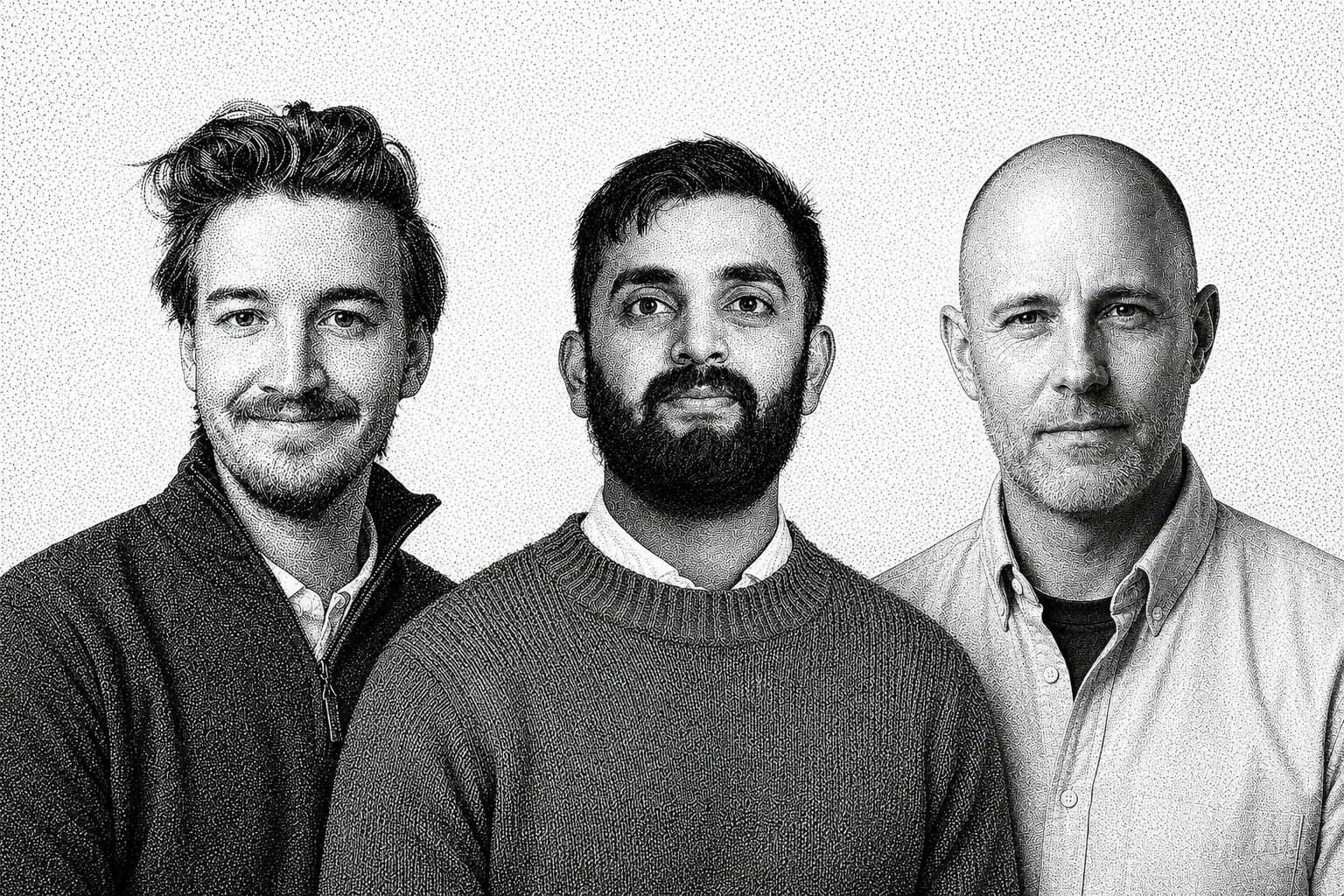
Three founders building the early-detection layer of pet health sit down with The Underbite: Rhett Rumery of Tether (wearable pain monitoring for dogs), William von der Pahlem of DeepScan Diagnostics (cell-free DNA cancer screening), and Fayzan Chaudry of Everfur (metabolomics fur testing plus a pet health app). They explain why veterinary medicine stays reactive, how long disease hides before symptoms appear, and why continuous longitudinal monitoring could move pet-care spend earlier over the next decade.
Written by
The Underbite
Published on
June 24, 2026
Three founders on the new frontier of preventive pet care

For decades, veterinary medicine has largely operated reactively. A dog limps, stops eating, develops visible symptoms - and only then does treatment begin. But a new wave of founders believes the biggest opportunity in pet health isn't treating disease later. It's detecting it earlier. Much earlier.

In this conversation, the founders of Tether, DeepScan Diagnostics, and Everfur break down how wearables, biomarkers, AI, metabolomics, and longitudinal health tracking could fundamentally reshape pet care over the next decade. From silent cancers and chronic pain to metabolic changes hidden beneath the surface, these companies are building tools designed to catch what owners and even veterinarians often cannot see — until it's too late.

Rhett Rumery - co-founder & CEO at Tether

Rhett Rumery, co-founder and CEO at Tether

For readers unfamiliar with Tether, what exactly does the company do, and what problem in pet health are you trying to solve?

Rhett Rumery, Tether: My dog Söze was diagnosed with degenerative myelopathy too late to intervene. After his diagnosis, I went back through everything, the videos, the photos, the way he had been moving for months, and I realized he had been in pain long before I caught it. I missed it. He hid it the way dogs do, so I couldn't see the drift. That's the moment Tether started.

Tether is a preventive health intelligence company for dogs. We built a wearable called the Ruff that monitors a dog's vitals, movement, and behavior in the background and surfaces patterns related to pain. Dogs hide pain and decline, and most owners and vets only catch it once the underlying disease is already advanced. The Ruff detects pain, contextualizes it against the dog's own personal baseline, breed, age, and environment, then tells the owner and the vet what to do next. Recommendations, not raw numbers. That intelligence layer is something neither pet parents nor vets have ever had.

Do you believe preventive monitoring can become one of the biggest shifts in pet care over the next decade? Why?

Rhett Rumery, Tether: Yes. Pet care economics are broken. Owners spend more reactively at the end of a dog's life than they would have proactively across the whole life. Continuous monitoring and intelligence flips that. It moves spend earlier, where intervention actually works, and it gives vets baselines instead of one snapshot a year. The same shift already happened in human health with wearables and CGMs. Dogs are arguably a stronger case because they can't tell you what hurts.

Your wearable tracks thousands of data points daily through sensors and AI. What have you learned about how often pet owners miss early warning signs in their dogs, and what kinds of conditions tend to go unnoticed the longest?

Rhett Rumery, Tether: The conditions that go undetected the longest are the slow ones. Osteoarthritis, early renal decline, cognitive dysfunction in seniors, and subtle pain that shows up as a small change in gait or sleep posture. Owners aren't negligent. They live with the dog day to day and can't see drift. By the time the limp is obvious, or the appetite is off, you're months past the window where you could have changed the trajectory cheaply. A continuous baseline is what makes drift visible.

Human health has increasingly shifted toward biomarkers, routine screening, and preventative tracking. Do you think pet care is heading in the same direction? What are the major barriers holding the industry back?

Rhett Rumery, Tether: It's heading there, slower than it should. The barriers are structural. Vet visits are episodic, and there's no longitudinal record that follows the animal. Insurance penetration in the US is still around 5%, so there's no payer pushing prevention. And the data that does exist is locked inside individual clinics and companies. The wedge is the wearable paired with a shared health record that the owner controls. Once you have continuous data tied to outcomes, the rest of the ecosystem has something to plug into.

William von der Pahlem - Co-founder, CEO at DeepScan Diagnostics

William von der Pahlem, co-founder and CEO at DeepScan Diagnostics

For readers unfamiliar with DeepScan Diagnostics, what does the company do, and what gap in veterinary medicine are you focused on solving?

William von der Pahlem, DeepScan Diagnostics: DeepScan is building a precision diagnostics platform for veterinary medicine based on cell-free DNA (cfDNA). When cells in the body are damaged or die, they release DNA fragments into the bloodstream. Our CFD® biomarker measures that signal from a small blood sample, giving veterinarians an objective indication of abnormal cell destruction happening in the animal.

The gap we are solving is that veterinary medicine still has very limited tools for detecting serious disease early. Routine blood panels were designed primarily to assess organ function, inflammation, and infection, not to flag cancer or chronic disease before symptoms appear. As a result, many serious conditions in dogs are diagnosed late, when treatment options are narrower, and outcomes are worse.

We want to change that by creating a sensitive cfDNA-based screening layer that can integrate into routine bloodwork, while building toward more disease- and cancer-specific liquid biopsy tests over time.

More broadly, we believe the future of veterinary medicine is moving toward longitudinal health tracking, where the real value comes not only from a single abnormal result, but from understanding how a dog's biology changes over time. A dog's “normal” is often highly individual, and tracking biomarker trends across years may ultimately become far more powerful than isolated snapshots taken only once symptoms appear.

Cancer is one of the biggest causes of death in dogs, yet detection still often happens late. Why has early detection remained such a difficult problem in veterinary medicine?

William von der Pahlem, DeepScan Diagnostics: A few factors compound the problem.

Dogs cannot describe symptoms, and they have evolved to mask weakness. By the time an owner notices something is wrong, the disease has often been progressing silently for months.

The diagnostic toolkit was also not designed for early detection. Standard CBC and chemistry panels measure things like blood cells, electrolytes, and liver and kidney values. They are extremely valuable tools once a clinician suspects disease, but they are often not sensitive to the early biological changes that precede many cancers. A dog can have a developing tumour while routine bloodwork still appears largely unremarkable.

On top of that, the economics of screening are more challenging in veterinary medicine than in human healthcare. Any new diagnostic has to be affordable, easy to integrate into existing workflows, and actionable enough to justify follow-up testing or intervention. That is a very high bar, and most early-detection technologies have struggled to meet it.

Your work is centered around identifying disease earlier through advanced diagnostics. What have you learned about how long serious conditions can silently progress before dogs show visible symptoms?

William von der Pahlem, DeepScan Diagnostics: Often far longer than owners realise.

In our largest longitudinal study to date, involving nearly 4,000 dogs across five countries, we followed 390 clinically healthy adult dogs with quarterly blood draws. In a subset of those dogs, we observed elevated cfDNA signals months before clinical presentation, in some cases approaching a year prior to diagnosis, across conditions ranging from several different types of cancer to chronic inflammatory disease.

One case that stayed with us was a nine-year-old Belgian Groenendael enrolled in DeepScan's follow-up study. Over the course of nearly 12 months, his CFD® scores kept rising consistently. Routine diagnostics and imaging showed nothing remarkable, and clinically, he appeared well. Only once the CFD® score became high enough did the owner decide to proceed with a CT scan, which revealed widespread lymphoma. The underlying biology had likely been shifting the whole time.

That is one of the most important lessons we have learned: by the time a dog visibly seems “off,” the disease process is often already well underway. We believe diagnostics should operate much earlier in that window. Increasingly, we also think the future lies in longitudinal monitoring, understanding how biomarkers evolve over time rather than relying solely on one-off measurements taken after symptoms emerge.

Human health has increasingly shifted toward biomarkers, routine screening, and preventative tracking. Do you think pet care is heading in the same direction? What are the major barriers holding the industry back?

William von der Pahlem, DeepScan Diagnostics: Yes, and likely faster than many people in the industry realise. Pet owners increasingly think about their dogs the same way they think about their own health, and they are starting to expect the same kind of proactive, data-driven care from veterinary medicine.

The barriers are real, though. Veterinary diagnostics has historically been built around reactive medicine, so workflows, pricing structures, and even clinical training largely assume the patient is already symptomatic. Moving toward preventive screening requires tools that integrate into routine workflows, strong peer-reviewed evidence that earlier detection improves outcomes, and clinical confidence around how to interpret and act on the signal.

That is exactly the transition we are trying to support. Our CFD® validation work is currently undergoing peer review, we are running multiple clinical studies with veterinary groups across the US and Europe, and we are deliberately positioning CFD® alongside routine blood panels rather than as a separate specialist test.

Preventive health in pets will not emerge from a single breakthrough product. It will happen when sensitive, validated biomarkers become a routine part of annual care, similar to how screening and longitudinal health tracking evolved in human medicine. Over time, we believe veterinary medicine will move increasingly toward continuous health baselining, where changes in an individual dog's biomarkers may become as clinically important as whether a value falls inside or outside a population reference range.

Fayzan Chaudry - Co-founder & CEO of Everfur

Fayzan Chaudry, co-founder and CEO of Everfur

For readers unfamiliar with Everfur, can you explain what the company does and how your testing platform works?

Fayzan Chaudry, Everfur: We're a pet health intelligence company. Our app just shipped on the App Store, free. Three things in v1: an AI chat trained on peer-reviewed veterinary research and built with practicing vets, a single place to store your pet's health history that gets more useful the more you add to it, and one-click generation of clean, comprehensive vet reports.

The app is the starting point. Our at-home fur test for dogs comes this summer. You'll send in a small fur sample, we'll run metabolomics analysis across hundreds of molecules, and surface patterns that correlate with disease risk before symptoms appear. The app and the test work together - the app is where you live with your pet's health day to day, the test is the diagnostic layer that feeds into it.

Why do you think so much of pet healthcare today is still reactive rather than proactive, despite owners spending more on their pets than ever before?

Fayzan Chaudry, Everfur: A few things stacked on top of each other. Vets are overloaded, and visits are short, so the default is to treat what's in front of you, not screen for what's coming. There aren't great consumer tools that connect to anything diagnostic, so most of what owners track lives in their heads. And the systems don't talk to each other. What an owner notices, what a vet records, and what a test shows rarely connect. Spending on pets has gone up dramatically, but most of it flows to treatment, not prevention. Owners want to be proactive. They just haven't had the tools.

Your platform analyzes biological signals through fur samples. What have you learned about how early health issues or imbalances can begin showing up before owners notice physical symptoms?

Fayzan Chaudry, Everfur: The body leaves a trail. Metabolic shifts tend to show up well before behavior changes. Skin and coat biology in particular, sit downstream of a lot of internal systems, inflammation, allergies, metabolic stress, and dietary issues. In the research underpinning our fur test, we've seen signals that correlate with conditions owners and vets often catch much later, when the dog is already itching, limping, or off its food.

The interesting question isn't whether the signals are there. It's how to translate them into something an owner can actually act on without panicking. That's where the app side matters - giving owners a place to interpret what they're seeing and turn it into a conversation with their vet.

Human health has increasingly shifted toward biomarkers, routine screening, and preventative tracking. Do you think pet care is heading in the same direction? What are the major barriers holding the industry back?

Fayzan Chaudry, Everfur: Yes, and faster than people expect. Wearables for pets are taking off, telemedicine cleared a lot of regulatory hurdles, and owners under 40 already apply the same wellness logic to their pets that they apply to themselves. The barriers are cost (US pet insurance penetration is still around 5%), data fragmentation across vets, owners, and labs, and a vet workforce stretched too thin to bolt a new screening layer onto acute care. The companies that figure out how to make prevention easy, affordable, and not another thing on the owner's to-do list will define what pet health looks like over the next decade.

Subscribe to newsletter

Join our newsletter to stay up to date on features and releases.

Thank you! Your submission has been received!
Oops! Something went wrong while submitting the form.

By clicking Sign Up you're confirming that you agree with our Terms and Conditions.

Pro
Keep Reading

Other Interviews

More conversations with founders, operators, and investors building the future of pet care.

Learn more
Joshua Fitzgerald | CEO, Zoomin Groomin
Services & Experiences
10 min read

Joshua Fitzgerald | CEO, Zoomin Groomin

Joshua Fitzgerald lived Zoomin Groomin as a franchisee before running it. Now, past 300 mobile grooming vans, the CEO argues operational discipline beats flashy growth, walks through the metrics every franchisee should obsess over, and explains how the Loyalty Brands umbrella turns buying power and franchising experience into a competitive edge.

Learn more
Learn more
Ivan Zak | Co-Founder, Serenity Vet
Pet Health & Wellness
6 min read

Ivan Zak | Co-Founder, Serenity Vet

After surviving burnout severe enough to nearly end his life, veterinarian Ivan Zak set out to fix the systems behind it. He bootstrapped SmartFlow and sold it to IDEXX, built the employee-owned group Galaxy Vets, and now co-leads Serenity Vet to tackle veterinary medicine's least-managed cost: labor. A candid conversation on burnout, ownership, private equity, and operational discipline.

Learn more
Learn more
Dylan Munro | Co-Founder & COO, Spot & Tango
Pet Food & CPG
10 min read

Dylan Munro | Co-Founder & COO, Spot & Tango

Spot & Tango grew from 12 boxes a week to 200 million meals served and an estimated $130M in revenue — 95% subscription, zero retail. Co-founder and COO Dylan Munro on why the company spent tens of millions building its own factory, how vertical integration cut UnKibble's cost nearly in half, and why frugality still governs a business investing at scale.

Learn more
View all interviews