
Subscribe
Pet Food & CPG
10 min read

Fawad Farrukh | VP of Feline Nutrition, Mars Pet Nutrition

July is National Pet Hydration Awareness Month, but inside Mars Pet Nutrition it reads as a multi-year strategic bet, not a seasonal campaign. Fawad Farrukh, who runs the North America feline portfolio, explains why the world's largest pet food company thinks moisture-rich feeding is the category's next structural shift. The tell: dog and cat toppers are up 129% and 138% since 2018, and Mars is building products to ride that behavior rather than fight it.

Written by
The Underbite
Published on
July 9, 2026
Fawad Farrukh, Vice President of North America Feline Nutrition at Mars Pet Nutrition

July is National Pet Hydration Awareness Month, but inside Mars Pet Nutrition, hydration isn't being treated as a seasonal awareness campaign. It's becoming a long-term strategic priority. As more pet parents focus on proactive health and personalized nutrition, the world's largest pet food company believes moisture-rich feeding could become one of the biggest shifts the category has seen in years. From wet food and broths to gravies and toppers, hydration is increasingly moving from an afterthought to a core part of everyday nutrition.

To better understand where the industry is headed, we sat down with Fawad Farrukh, Vice President of North America's Feline Nutrition Portfolio at Mars Pet Nutrition. He explains why Mars believes hydration is emerging as one of the most important functional benefits in pet nutrition, what decades of research are revealing about dietary moisture, and why the future isn't kibble versus wet food but helping pet parents build more personalized feeding routines.
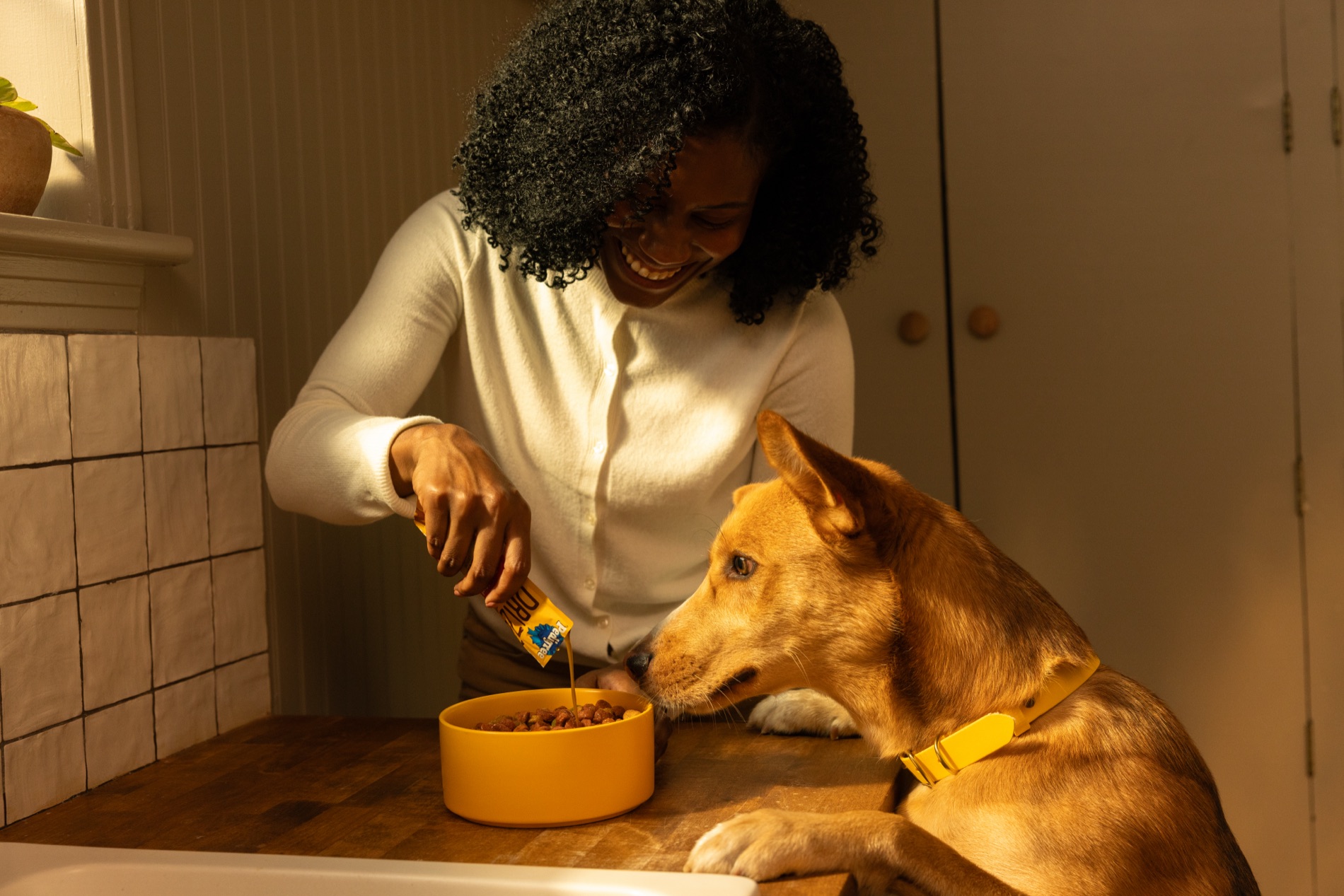
PEDIGREE DRIZZLERS moisture topper served over a dog's meal

Mars research ranks hydration as one of the top emerging priorities in pet nutrition, ahead of digestive care, healthy development, and weight management. What finally made hydration impossible to ignore as a strategic priority?

Today's pet parents are increasingly focused on proactive wellness. Three-quarters actively seek products that support their pet's health and wellbeing, and our insights from pet parents suggest that ensuring proper hydration remains a constant challenge for many of them.

At the same time, research from the Waltham Petcare Science Institute — Mars Petcare's science center, whose work has helped establish global standards for pet nutrition, growth, and wellbeing — continues to deepen our understanding of how dietary moisture supports overall wellness, particularly urinary health.

We're also seeing broader consumer trends reinforce this shift. Human hydration products have become one of the fastest-growing segments in health and wellness, and pet parents increasingly apply those same proactive wellness behaviors to their pets. What's changing is that hydration is no longer viewed simply as access to water; it's increasingly being understood as an important component of a pet's overall nutritional strategy.

Waltham research shows that diets with around 73% moisture or higher are key to supporting a pet's urinary health. How did the Institute establish this threshold, and in plain terms, what should a pet parent actually do differently at mealtime?

The simplest takeaway is to think about hydration as something that can be supported through food, not just through the water bowl.

Waltham's research found that once dietary moisture reaches roughly 73%, pets naturally consume more water overall, creating a more dilute urinary environment that can help reduce the likelihood of crystal and stone formation. Those findings helped establish an important connection between dietary moisture, total water intake, and urinary health.

For pet parents, one of the practical ways to act on that science is through mixed feeding. They can incorporate moisture-rich foods, broths, gravies, or toppers alongside their existing feeding routine. Many of these formats contain 70-80% moisture and can be an easy way to increase dietary moisture while maintaining the nutritional consistency pets need.

The important point is that hydration doesn't have to be a separate wellness routine. It can be built directly into mealtimes.

You mentioned that pets evolved to receive up to 80% of their hydration directly from food, yet most dogs today are still primarily kibble-fed. How big is the gap between what modern pets are actually getting and what their bodies are designed for?

I think it's less helpful to think about it as a gap and more helpful to think about it as an evolution in our understanding of pet nutrition.

Complete and balanced dry and wet-format pet foods have been one of the most important advances in pet health over the last century. Pets need more than 40 essential nutrients in the right balance every day, and that's where modern nutrition has had a transformative impact, helping pets live longer, healthier lives than ever before.

What we're learning now is that hydration deserves a place in that broader nutrition conversation. That doesn't diminish the importance of fresh water or complete and balanced nutrition; it expands our understanding of the different ways we can support pets' health.

For us, the opportunity isn't to recreate an ancestral diet. It's to apply the latest science to modern feeding practices. That's why we're seeing growing interest in mixed feeding approaches that combine the nutritional foundation of complete and balanced dry foods with the hydration benefits of moisture-rich formats, either as complete and balanced wet food or complementary products such as gravies and toppers.

Mixed feeding has increased significantly over the last couple of years, with more pet parents incorporating multiple food types into each meal. Is Mars actively designing products to meet that behavior, or are those habits mostly consumer-driven?

It's very much a combination of both.

Pet parents are increasingly looking for personalized feeding routines that support multiple wellness goals, and hydration is becoming an important driver of that behavior. We're already seeing evidence of that shift, with multi-format feeding on the rise and dog and cat toppers growing 129% and 138%, respectively, since 2018.

Our role is to make those choices easier. We know integrating hydration into existing feeding practices is far easier than asking pet parents to adopt entirely new routines. That's why we're investing in products designed specifically to complement existing feeding behaviors — from complete and balanced wet meals to broths, gravies, and other meal complements that make it simple to add moisture to the bowl.

In many ways, mixed feeding reflects where the category is headed: not toward one format replacing another, but more personalized, more flexible, and increasingly focused on supporting multiple aspects of health and wellness through nutrition.

Are there dog products currently in development that are being built from the ground up with hydration as the primary functional benefit — not just a secondary perk?

Absolutely.

One of the clearest trends we're seeing is that pet parents increasingly want nutrition solutions that deliver specific functional benefits, and hydration is emerging as one of the most important.

Our innovation focus is about helping pet parents incorporate moisture-rich nutrition into routines they already have. On the cat side of the business, SHEBA Perfect Portions was born from a simple observation: traditional 3-ounce cans often provided more food than a cat would eat in a single sitting. That left pet parents with an uncomfortable choice — serve the leftovers later, often straight from the refrigerator, or throw food away. Because many cats prefer food served at room temperature, leftover refrigerated food frequently created a less-than-ideal feeding experience. Perfect Portions solved that challenge with single-serve trays that deliver the right-sized meal every time, eliminating waste while making it easier to incorporate wet food into a daily feeding routine.

The goal for dog is the same: make hydration more intuitive, more accessible, and easier to incorporate into everyday feeding routines — a commitment brought to life through Mars' pet innovations such as PEDIGREE DRIZZLERS and CESAR wet food pouches.

Ultimately, we see hydration becoming a more deliberate part of product innovation, not simply an added benefit.

What does Mars' consumer education strategy around hydration actually look like — and who are you trying to reach first?

Our strategy is focused on replacing confusion with clarity.

As interest in pet nutrition grows, so does the amount of information — and misinformation — available to pet parents. Around 70-80% of pet-related searches are problem-focused, increasing the need for trusted, science-backed guidance that helps them understand not just what to feed, but why.

We start with veterinarians and nutrition professionals because they remain among the most trusted sources of pet health information. From there, we work to translate the science into practical guidance for pet parents through educational content, community engagement, social platforms, and partnerships that help make complex nutrition topics easier to understand.

Importantly, our goal isn't to tell pet parents there's only one right way to feed. It's to help them understand the role different formats can play within a broader nutrition strategy and empower them to make informed decisions based on their pet's individual needs.

Consumers are already making chicken broth popsicles for their dogs on their own. What does that kind of DIY behavior tell Mars about where the category is heading, and does it signal an unmet product need the industry hasn't formally addressed yet?

The best innovation starts by listening to pet parents. It's a powerful signal that pet parents are bringing the same wellness mindset they apply to themselves to their pets.

An overwhelming majority of pet parents increasingly view their pets as family members — and are looking for ways to personalize nutrition and proactively support health.

The popularity of homemade broth treats, bowl-building content, and hydration-focused recipes suggests pet parents are actively looking for simple ways to incorporate functional benefits into everyday feeding routines. It also signals demand for solutions that make those benefits easier, more convenient, and more consistent to deliver.

For us, it's yet another indication that hydration is becoming a much bigger part of the nutrition conversation. And that is important, as water is the most important essential nutrient.

Mars is clearly paying close attention to the startup space around hydration. Are there specific product formats or delivery mechanisms you're watching most closely right now?

We're especially interested in formats that make hydration easy to incorporate into existing feeding habits.

The growth we're seeing in meal toppers, gravies, broths, and complements reflects a broader shift toward more customized feeding routines. Pet parents want solutions that fit seamlessly into their lives while delivering clear nutritional benefits.

The winning formats won't require consumers to completely rethink how they feed their pet — they'll be products that help add moisture to the bowl in intuitive ways like PEDIGREE DRIZZLERS or SHEBA Jelly. These formats of the future will transform hydration from a separate task into a natural part of daily nutrition.

The wet food category is still growing, but kibble remains dominant. What's the realistic timeline for wet food — or high-moisture feeding more broadly — to move from a topper or occasional addition to a true staple of how most dogs and cats are fed in the U.S.?

The future isn't wet food versus kibble — it's a more holistic approach to nutrition. Pets need more than 40 essential nutrients in the right balance every day, and complete and balanced foods have been foundational to pet health for decades. Consumers increasingly evaluate pet food ingredient by ingredient, but nutrition science looks at the complete diet and the health outcomes it delivers.

That's particularly important in today's environment, where conversations around ultra-processed foods have created confusion. The reality is that all pet foods undergo some form of processing — whether they're fresh, frozen, freeze-dried, raw, wet, or dry. The more important question is whether they deliver complete and balanced nutrition and support positive health outcomes.

What's changing is our understanding of hydration and the role dietary moisture can play in supporting overall wellness. That's why we believe mixed feeding will continue to grow over the next three to five years. Rather than replacing one format with another, pet parents are increasingly combining formats to meet different nutritional needs — from complete and balanced nutrition to hydration, variety, and enjoyment.

As awareness of hydration grows, moisture-rich feeding will increasingly move from an occasional addition to a routine part of many pets' nutrition plans. Not because one format wins, but because pet parents increasingly recognize that different formats can work together to support different nutritional needs.

Hydration awareness in cats started earlier and has moved faster than in dogs. Why is the dog side of the market so much harder to crack, and what's the unlock?

Cats led the hydration conversation because urinary health has long been top-of-mind for veterinarians and cat owners. Cats also naturally have a lower thirst drive, which has made the connection between hydration and nutrition more visible over time.

Dogs are different. Many dog owners see their dogs drinking from a bowl and assume hydration needs are fully addressed. The opportunity is helping pet parents understand that hydration isn't just about what's in the water bowl — it's also about what's in the bowl at mealtime.

The unlock is education. As more science emerges and awareness grows, we believe dog owners will increasingly embrace feeding approaches that combine complete and balanced dry kibble with moisture-rich formats that help support hydration.

Trusted guidance is especially important because today's pet parents are navigating an increasingly complex information environment. We've spent the last 90 years focused on science, evidence, and nutritional expertise, and we're committed to helping pet parents make informed decisions about their pets' health for the next 90 years and beyond.

Subscribe to newsletter

Join our newsletter to stay up to date on features and releases.

Thank you! Your submission has been received!
Oops! Something went wrong while submitting the form.

By clicking Sign Up you're confirming that you agree with our Terms and Conditions.

Pro
Keep Reading

Other Interviews

More conversations with founders, operators, and investors building the future of pet care.

Learn more
Joshua Fitzgerald | CEO, Zoomin Groomin
Services & Experiences
10 min read

Joshua Fitzgerald | CEO, Zoomin Groomin

Joshua Fitzgerald lived Zoomin Groomin as a franchisee before running it. Now, past 300 mobile grooming vans, the CEO argues operational discipline beats flashy growth, walks through the metrics every franchisee should obsess over, and explains how the Loyalty Brands umbrella turns buying power and franchising experience into a competitive edge.

Learn more
Learn more
Ivan Zak | Co-Founder, Serenity Vet
Pet Health & Wellness
6 min read

Ivan Zak | Co-Founder, Serenity Vet

After surviving burnout severe enough to nearly end his life, veterinarian Ivan Zak set out to fix the systems behind it. He bootstrapped SmartFlow and sold it to IDEXX, built the employee-owned group Galaxy Vets, and now co-leads Serenity Vet to tackle veterinary medicine's least-managed cost: labor. A candid conversation on burnout, ownership, private equity, and operational discipline.

Learn more
Learn more
The New Frontier of Preventive Pet Care
Pet Health & Wellness
8 min read

The New Frontier of Preventive Pet Care

Three founders building the early-detection layer of pet health sit down with The Underbite: Rhett Rumery of Tether (wearable pain monitoring for dogs), William von der Pahlem of DeepScan Diagnostics (cell-free DNA cancer screening), and Fayzan Chaudry of Everfur (metabolomics fur testing plus a pet health app). They explain why veterinary medicine stays reactive, how long disease hides before symptoms appear, and why continuous longitudinal monitoring could move pet-care spend earlier over the next decade.

Learn more
View all interviews