Most Pet Brand Marketing Fails. Here's What Actually Works.
Most pet marketing advice is useless tactics from agencies. This guide covers what actually matters: channel economics with real numbers, stage-appropriate strategy, and honest analysis of what BarkBox, The Farmer's Dog, and Chewy did that you can (and can't) replicate.
The average pet brand spends $56.11 to acquire a customer through Google Search. Facebook gets it done for $18.68. That gap represents thousands of dollars in wasted spend for brands that never thought to measure which channels actually work.
Most pet brand marketing advice is useless. It's listicles about "trying influencer marketing" or "building a content strategy" written by agencies who want your business. None of it answers the questions that actually matter: What should marketing cost? When should your strategy change? Which success stories can you actually replicate?
This is the guide that answers those questions. Not tactics. Strategy. The frameworks that separate pet brands that scale from pet brands that stall.
The Numbers Nobody Shares
Pet brand marketing strategy begins with economics most brands never see. The industry's overall conversion rate sits at 13.41%, the highest across all industries measured. But that headline number hides massive variation by channel.
Facebook delivers a 9.21% conversion rate at $18.68 cost per acquisition. Google Search converts at 4.40% but costs $56.11 per customer. Google Shopping falls to 1.07% at $26.01.
Traffic attribution tells another story. 67.9% of pet ecommerce traffic comes from paid search, with direct at 28.3% and email at just 3.6%. Mobile dominates with 71.6% of ecommerce sales.
What does this mean for your budget? If you're spending equally across channels without measuring CAC by channel, you're almost certainly wasting money. The brands that win track every acquisition source and reallocate ruthlessly.
Email deserves more attention than it gets. Pet care email campaigns see a 37.14% open rate, and the animal/veterinary niche reaches 45.84%. For a channel that represents just 3.6% of traffic, those engagement numbers suggest most brands are underinvesting.
What Actually Works Depends on Where You Are
Pet brand marketing strategy isn't static. What works at launch will break at scale. The brands that stall are usually running a playbook designed for a different stage.
Pre-revenue to $1M: Performance marketing, founder-led content, and word-of-mouth. At this stage, you're testing channels and finding what resonates. Paid social (especially Facebook) lets you iterate quickly on creative and targeting. Founder-led content on LinkedIn or TikTok can punch above its weight because authenticity matters more than production value. The Farmer's Dog grew its early customer base entirely through word-of-mouth from its Brooklyn kitchen phase before spending a dollar on paid acquisition.
$1M to $5M: Channel diversification, influencer testing, and email infrastructure. You've found what works. Now you're scaling it while testing adjacent channels. This is when influencer marketing enters the picture. 63% of pet owners follow at least one pet influencer, and pet-focused creators achieve roughly 5% engagement rates compared to the 2.4% general influencer benchmark. But influencer spend without attribution is a black hole. Build the tracking before signing deals.
$5M and beyond: Brand building, retail marketing, and attribution complexity. Performance marketing hits diminishing returns. CAC rises as you exhaust your warmest audiences. This is when brand investment starts to matter. It's also when many brands enter retail, which requires an entirely different marketing playbook (more on that below). Attribution becomes genuinely hard because customers touch multiple channels before converting.
The signals that tell you it's time to shift: rising CAC despite stable creative quality, frequency caps limiting your reach on paid channels, and customer surveys showing "I saw you everywhere" before purchase. When customers can't name where they first heard about you, brand is working.
Three Brands That Actually Figured It Out
Every pet marketing article name-drops BarkBox, The Farmer's Dog, and Chewy. None of them explain what's actually transferable versus what required conditions you probably don't have.
BarkBox built on emotional storytelling and virality. The brand positioned around "celebrating the joy of having a dog" rather than product features. User-generated content became their flywheel: customers share photos of their dogs with the monthly box, which provides social proof and free creative simultaneously. BarkBox grew to roughly three million social followers through humor and community rather than direct selling.
What's transferable: UGC strategy, emotional positioning, treating social as entertainment rather than a sales channel. What isn't: BarkBox works because it's a subscription gifting model where the "surprise" element creates natural shareability. Commodity products (food, supplies) won't generate the same organic sharing.
The Farmer's Dog won through hyper-personalization and performance marketing. Every package is customized based on individual dog characteristics like activity level, age, weight, and breed. This personalization creates both product differentiation and marketing ammunition. Their Facebook strategy significantly outperformed competitors because testimonial and before/after content works better when the product is genuinely personalized.
What's transferable: building data collection into the product, leveraging personalization for marketing, investing in one channel deeply before diversifying. What isn't: The Farmer's Dog required premium positioning ($5-10/day feeding cost) to make the unit economics work. Lower-margin products can't sustain their CAC.
Chewy dominated through convenience and selection at scale. Their subscription model worked because 53% of Goody Box subscribers reduced physical store shopping, with 11% eliminating it entirely. PetSmart acquired them for $3.35 billion in 2017 because they'd cracked the logistics and customer experience problem.
What's transferable: subscription as retention strategy, convenience as positioning for commodities. What isn't: Chewy required massive capital (over $350M raised before acquisition) to subsidize shipping and inventory. This playbook requires resources most brands don't have.
The honest takeaway: each brand succeeded by picking a specific psychographic and serving it completely. BarkBox serves the "I spoil my dog" gifter. The Farmer's Dog serves the "health-conscious, data-appreciative" owner. Chewy serves "convenience above all else." Pick one. You can't serve all three.
The Channels You Have to Know
Pet marketing channels aren't unique, but pet-specific dynamics change how they perform.
Social media matters more than in most categories. 63% of pet owners follow at least one pet influencer on Instagram or TikTok. Pet-focused creators see engagement rates around 5%, more than double the general benchmark. But engagement doesn't equal sales. Track influencer partnerships to actual conversions before scaling spend.
Video is growing fast. YouTube usage for pet product discovery grew from 35% to 45% within four years. Instagram grew from 21% to 32% in the same period. Short-form video (TikTok, Reels, Shorts) is where discovery increasingly happens, but attribution remains messy.
Email is underrated. With open rates above 37% and the lowest CAC of any owned channel, email should be a larger part of most pet brand strategies. The brands treating email as an afterthought are leaving money on the table.
Paid search still dominates traffic (67.9%), but rising CPCs and increased competition mean performance is deteriorating for many brands. If Google was your primary growth channel three years ago, it's probably gotten more expensive and less efficient.
Retail vs. DTC Changes Everything
Pet brand marketing strategy splits dramatically between DTC and retail. Most content assumes DTC. Many pet brands sell through retail or hybrid models.
DTC marketing is direct attribution, performance focus, and customer data ownership. You know exactly which ad drove which sale. You own the customer relationship and can market to them again. Margins are higher per unit but CAC keeps rising.
Retail marketing is trade spend, shopper marketing, and longer feedback loops. You're marketing to buyers, not consumers. Slotting fees, promotional calendars, and retailer relationships matter more than Facebook creative. You don't own the customer data. Feedback on what's working takes months, not days.
The omnichannel reality is that most brands end up doing both. DTC establishes the brand and proves demand. Retail provides scale and mainstream distribution. But the marketing muscle for each is different. Founders who built their brand on Instagram often struggle when retail buyers want to see trade promotion plans and co-marketing commitments.
When to lead with DTC: premium products, niche positioning, strong story, desire to own customer relationship. When to lead with retail: commodity products, price-competitive positioning, need for immediate scale.
Marketing Mistakes That Kill Pet Brands
The cautionary tales matter more than the success stories. Here's what actually kills pet brand marketing.
Emotional manipulation without substance. Some DTC pet food brands ran ads featuring visibly sick dogs with captions like "You're killing your pet with kibble." These generated clicks but destroyed brand credibility. Fear-based marketing can work in the short term but creates customers who don't trust you.
Automation without human touch. A major pet retailer's AI chatbot recommended toys to grieving customers who had just reported pet deaths. Automated emails offered cat food discounts to customers who had updated profiles to reflect pet loss. In a category built on emotional connection, tone-deaf automation is fatal.
Misaligned influencer partnerships. One luxury pet accessory brand partnered with a controversial beauty influencer known for scandal rather than animal welfare values. Despite the influencer's adorable dog, the audience mismatch caused immediate backlash from loyal customers who felt betrayed.
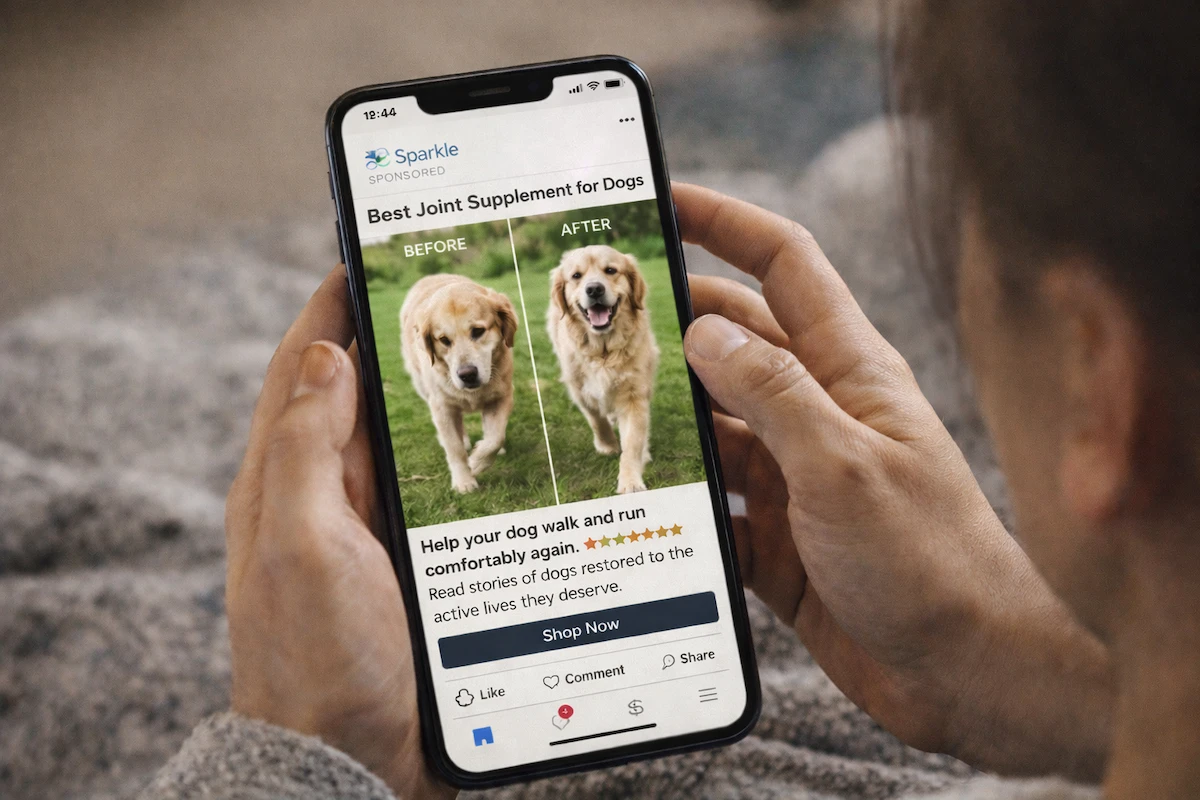
Overpromising without scientific backing. Pet supplement brands marketing "miracle" joint treatments with emotional testimonials but minimal doses of active ingredients and no clinical studies face inevitable disappointment when products underperform. Transparency and real data outperform hype.
The Pets.com lesson. The most famous pet marketing failure spent $70 million on advertising while earning only $619,000 in revenue. They paid $400 to acquire customers who averaged $55 in orders. They sold below cost to compete and ignored that shipping heavy pet supplies (dog food, cat litter) destroyed their margins.
The lesson isn't "don't spend on marketing." It's that unit economics must work before you scale marketing. A dollar of marketing spend that generates fifty cents of profit is lighting money on fire, no matter how impressive the brand awareness.
What This Means for Your Marketing Budget
Pet brand marketing strategy comes down to a few diagnostic questions.
Are you tracking CAC by channel? If not, you're probably overspending somewhere. The gap between Facebook ($18.68) and Google Search ($56.11) is real. Channel mix matters.
Does your strategy match your stage? Pre-$1M brands running brand campaigns are wasting money. Post-$5M brands running only performance marketing are hitting diminishing returns.
Can you identify which success stories apply to you? BarkBox works for subscription gifting. The Farmer's Dog works for premium personalized products. Chewy works with massive capital. If none of those describe your situation, stop copying their playbooks.
Are your unit economics positive before marketing? If marketing is the only way your product makes money, you don't have a marketing problem. You have a business model problem.
The brands that win at pet marketing aren't the ones with the biggest budgets or the cleverest creative. They're the ones who understand their economics, match their strategy to their stage, and don't copy playbooks built for different conditions.
For more insights on the pet industry landscape, explore our insights hub. Understanding who funds pet companies shapes how much runway you have to figure marketing out.
Affiliated Products
Lorem ipsum dolor sit amet, consectetur adipiscing elit. Suspendisse varius enim in eros elementum tristique. Duis cursus, mi quis viverra ornare, eros dolor interdum nulla, ut commodo diam libero vitae erat.