Your Pet Food Supply Chain Is More Fragile Than You Think
The U.S. pet food industry draws from 600+ ingredients across dozens of countries — complexity that becomes liability when something breaks. This guide maps the four failure points in pet food supply chains and the tactical fixes operators use to build resilience without killing margins.
The U.S. pet food industry produced 9.8 million tons of product in 2024, drawing from more than 600 ingredients sourced across dozens of countries. That complexity is a feature when everything works. When it doesn't, the same complexity becomes a liability that can halt production, drain margins, and kill a brand's retail relationships in a single quarter.
Most operators think about supply chain when something breaks. The ones who win think about it before anything goes wrong — and they design around the vulnerabilities instead of reacting to them.
This is the operator's map to pet food supply chain risk: where it breaks, why, and what you do about it.
Four Links, Four Ways to Break
Pet food supply chain vulnerabilities follow a predictable structure. The chain has four links — ingredient sourcing, manufacturing, packaging, and logistics — and each one fails differently.
Ingredient sourcing breaks through volatility. A single-source supplier goes offline, a trade policy shifts, or protein prices spike 20% in a quarter. The damage is slow but compounding: you can't reformulate overnight, so you absorb costs or face stockouts.
Manufacturing breaks through capacity. Co-manufacturers run at near-full utilization, and getting onto a production schedule takes months. When you finally get a slot, switching to a different facility means reformulating, retesting, and potentially losing your place in line.
Packaging breaks through scarcity. Corrugated cardboard, aluminum, and specialty pouches all have constrained supply chains of their own. A packaging delay doesn't just slow you down — it can idle an entire production run you've already paid for.
Logistics breaks through disruption. Container shortages, port delays, weather events, and carrier capacity all sit outside your control. The only question is how much buffer you've built between those disruptions and your customers.
Most operators overprotect one link and ignore another. They obsess over ingredient quality but assume packaging will always be available. They negotiate hard on manufacturing costs but don't think about what happens when their co-packer's schedule fills up. The vulnerabilities you don't see are the ones that hurt you.
Most Vulnerabilities Start Upstream
Pet food supply chain problems usually begin with ingredients — specifically, with the proteins that make up the largest share of your formulation costs and the smallest margin for error.
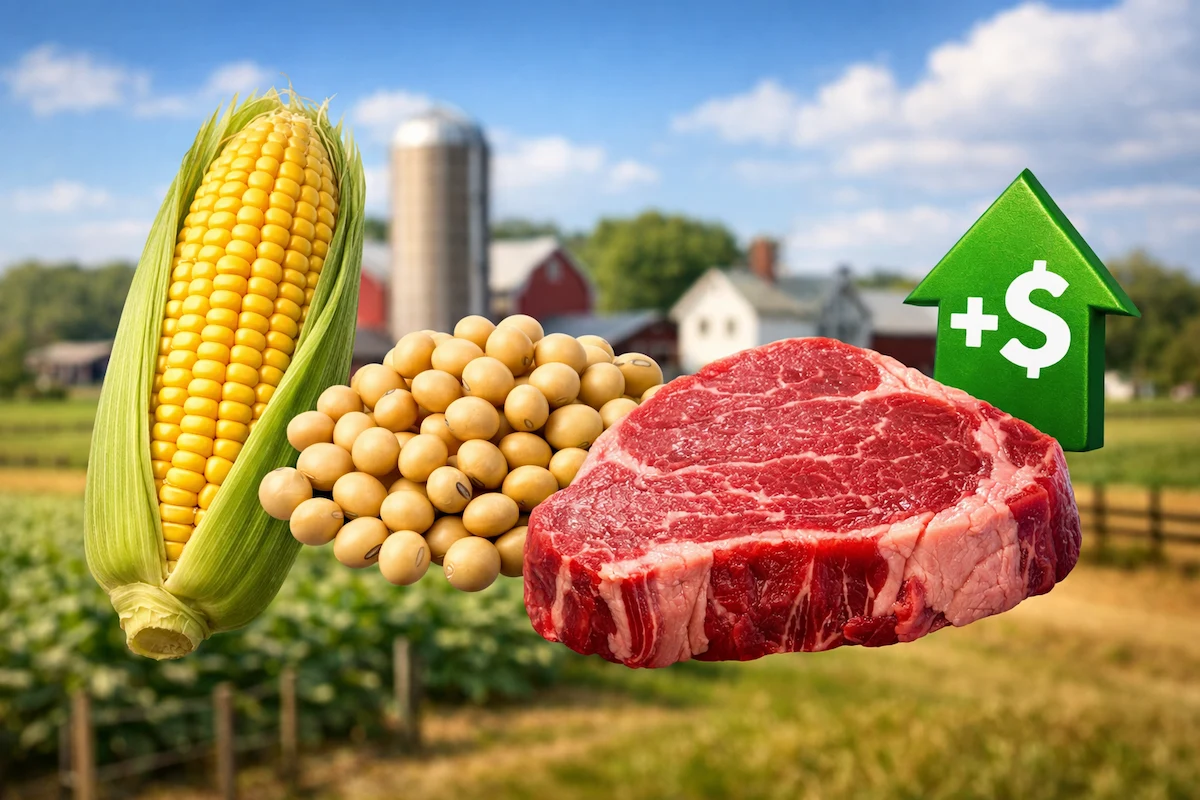
The numbers tell the story. Pet food ingredient costs have risen up to 20% since the pandemic, driven by competition for corn, soy, and meat products across human food, animal feed, and pet food markets. That pressure isn't going away. When the same chicken breast competes for space in a restaurant, a grocery store, and a kibble formula, pet food usually loses the bidding war.
The risk multiplies when you're single-sourced. If your turkey meal comes from one supplier and that supplier has a contamination event, a capacity issue, or simply decides to prioritize a larger customer, you're facing a choice between stockouts and emergency reformulation — neither of which is cheap.
Dual-sourcing is now table stakes. This means qualifying at least two suppliers for every major ingredient, even if you only use one at a time. Yes, this adds complexity to your formulation process. Yes, it requires more upfront work. But the alternative is discovering your single-source vulnerability when it's too late to fix.
The same logic applies to geography. Nearshoring — sourcing ingredients from domestic or nearby suppliers even when imports are cheaper — reduces exposure to trade policy shifts, shipping delays, and currency fluctuations. The cost premium often looks expensive until you calculate the cost of a three-month stockout.
The math on inventory buffers matters too. Industry guidance suggests maintaining 60-90 days of raw material inventory before production runs. That's not conservative; that's baseline. Operators running leaner than that are betting their supply chain never hiccups. It's a bet most lose eventually.
Different ingredient categories carry different risk profiles. Proteins are the highest-risk because they're expensive, perishable, and face the most competition from other industries. A chicken meal shortage affects your entire formula. Vitamins and minerals are lower-risk individually but can still halt production — you can't ship "complete and balanced" without the complete part. Grains and starches are generally more stable but still vulnerable to weather events and trade policy.
The operators who manage ingredient risk best don't treat all ingredients equally. They map their bill of materials by risk — what's single-sourced, what's imported, what's volatile, what would halt production — and allocate redundancy accordingly. This isn't about having backup suppliers for everything. It's about knowing which disruptions would hurt most and protecting against those first.
The Manufacturing Bottleneck Nobody Plans For
Ask a founder what's holding back their pet food brand and they'll talk about marketing, distribution, or capital. Ask them about manufacturing capacity and you'll often get a blank stare — until they've tried to get onto a co-packer's schedule.
Pet food co-manufacturing is a seller's market. Approximately 65% of pet food manufacturers have delayed, shelved, or paused new product development in recent periods, with raw material costs and supply chain constraints ranking as the second most common reason. When established brands are pulling back on innovation, co-packers aren't desperate for new customers.
The practical reality: getting into a co-manufacturer's production schedule is often measured in months, not weeks. You're not just competing with other startups — you're competing with established brands that fill those lines predictably and pay on time. If you need a 2,000-unit test run and the brand ahead of you needs 200,000 units, you know who gets the slot.
Understanding capacity helps you plan. A typical dry kibble extrusion line runs 1,000 to 15,000 kg per hour, depending on equipment and configuration. Wet food canning lines run 500 to 5,000 kg per hour. These numbers matter because they determine minimum order quantities and scheduling flexibility. A co-packer won't dedicate a line to a small run when a larger customer is waiting.
For operators considering building their own capacity — and most shouldn't, at least not initially — the capital requirements are significant. Production equipment runs approximately $350,000, with packaging equipment adding another $120,000. Lead times on that equipment have stretched in recent years, which means the decision to build has to happen long before you need the capacity.
The smarter play for most brands: treat your co-packer relationship as a strategic partnership, not a vendor relationship. That means consistent volumes, reliable forecasts, and payment terms that make you a customer worth keeping.
The relationship dynamics matter more than most operators realize. Co-packers prioritize customers who make their lives easier — predictable volumes, clean forecasts, minimal last-minute changes, prompt payment. When capacity gets tight, those customers keep their slots. The customers who treated co-packing as a commodity service find themselves at the back of the line. Supply chain resilience starts with being the kind of customer your partners want to keep.
Packaging Will Surprise You
Here's what catches most operators off guard: your packaging supply chain can fail even when your ingredients and manufacturing are running perfectly.
During the pandemic, demand for corrugated cardboard spiked approximately 300% in a single year as e-commerce volumes exploded. Pet food competes for that same cardboard with every other industry shipping products — and pet food doesn't get priority.
Aluminum and specialty packaging face similar constraints. Labor shortages at production facilities, raw material availability, and transportation bottlenecks all compound. The premium pouches and cans that differentiate your brand on shelf may have longer lead times and less reliable supply than the commodity formats you're trying to avoid.
The operational trap is timing. You've secured your ingredients. You've got your manufacturing slot. Your formula is dialed in. And then you discover your packaging supplier can't deliver until six weeks after your production date. That manufacturing slot doesn't wait — you either scramble for alternative packaging or lose the slot entirely.
Packaging-first planning inverts the usual approach. Instead of finalizing your formula and then figuring out packaging, start with packaging availability and work backward. What formats can you reliably source at your volume? What lead times do those formats require? What backup suppliers exist if your primary can't deliver?
This is especially critical for operators using custom packaging — branded pouches, unique can sizes, or specialty closures. Standard formats have more suppliers and more flexibility. Custom formats lock you into specific vendors with specific lead times. The brand differentiation of custom packaging comes with supply chain risk that most operators underestimate.
The smart approach is tiered packaging strategy. Use custom formats for your hero SKUs where differentiation justifies the risk. Use standard formats for secondary SKUs where flexibility matters more than shelf presence. And always have a fallback — a standard format you can switch to if your custom packaging can't deliver. The brand equity you built on premium packaging evaporates if the product isn't on shelf.
Getting Product From Port to Shelf
Ingredients sourced, product manufactured, packaging secured — and now you need to move it. Pet food logistics is where many operators' control ends and hoping begins.
Container scarcity remains a structural issue, not a temporary disruption. Pandemic-era port closures, the Suez Canal blockage, and ongoing congestion at major ports have created lasting capacity constraints. When you're importing ingredients or exporting finished product, those constraints translate directly to delays and costs.
Seasonal disruptions compound the baseline constraints. Winter weather delays transportation. Summer heat affects product quality in unrefrigerated shipping. Hurricane season disrupts Gulf Coast logistics. Demand surges around holidays stress carrier capacity. Each of these is predictable — and each catches operators who planned for steady-state conditions.
The distribution architecture decision matters more than most operators realize. Centralized distribution — a single warehouse serving the entire country — is efficient when it works. When that single node has a problem, your entire network has a problem.
Regional distribution is less efficient on paper. Multiple warehouses mean more inventory, more complexity, and higher fixed costs. But regional distribution also means redundancy. A weather event in one region doesn't shut down your entire operation. Carrier capacity issues in one area can be offset by capacity in another.
The right answer depends on your volume, your margin structure, and your risk tolerance. But operators who've experienced a single-point logistics failure tend to invest in redundancy afterward. The question is whether you learn that lesson before or after it costs you retail relationships.
The retail relationship angle matters more than operators realize. A retailer who runs out of your product once will note it. A retailer who runs out twice starts looking at alternatives. Three times and you're fighting to keep shelf space. Supply chain failures don't just cost you sales — they cost you distribution, which is harder to rebuild than any single quarter's revenue.
Building Resilience Without Killing Margins
Supply chain resilience costs money. Every buffer, every backup supplier, every redundant warehouse adds cost that you'd rather put toward marketing or margin. The question isn't whether resilience is free — it isn't — but whether the cost of resilience is less than the cost of failure.
Start with redundant sourcing on critical ingredients. You don't need two suppliers for everything, but you need two qualified suppliers for every ingredient that would halt production if unavailable. The cost is supplier qualification, relationship maintenance, and occasionally higher prices for smaller volumes. The benefit is not discovering your single-source vulnerability during a crisis.
Contractual flexibility matters more than contract price. A supplier agreement that locks in price but doesn't guarantee volume during shortages is worthless when shortages hit. Negotiate allocation provisions, force majeure definitions, and cancellation terms with the same attention you give to pricing. These clauses feel theoretical until they're the only thing standing between you and a stockout.
Reformulation readiness is underrated. The operators who navigated recent supply disruptions best were the ones who had pre-tested ingredient substitutions ready to deploy. They knew that if their primary chicken meal supplier couldn't deliver, they had a qualified alternative that maintained palatability and nutritional targets. Building this flexibility into your formulation process takes time upfront but pays off when you need to pivot quickly.
Geographic manufacturing diversity follows the same logic. If you're large enough to work with multiple co-manufacturers, spreading production across regions reduces the risk that a single facility issue halts your entire operation. For smaller operators, this might mean having a backup co-packer qualified and relationship-ready even if you don't use them regularly.
Visibility is the foundation for all of this. You can't manage risks you can't see. That means mapping your supply chain beyond your direct suppliers — understanding where your suppliers source their ingredients, where your co-packer sources packaging, where your logistics partner has capacity constraints. The disruptions that hurt most are often two or three tiers deep, invisible until they surface as your problem.
The common thread: resilience isn't about avoiding cost. It's about choosing where to spend money before a crisis versus spending more money during one. The operators who build resilience proactively spend less overall than the ones who scramble reactively. They just spend it on different things — and they spend it when they have leverage, not when they're desperate.
What Changes in 2026
The pet food supply chain landscape is shifting, and the operators who adapt will outcompete those who don't.
Tariff exposure is accelerating the nearshoring trend. Trade policy uncertainty makes imported ingredients and components riskier than they were five years ago. Operators who locked in cost savings through overseas sourcing are now recalculating whether those savings hold when tariffs can change with minimal warning. The trend toward domestic and near-shore sourcing will continue regardless of specific policy outcomes — the uncertainty itself drives the shift.
Pet population growth is slowing. Dog ownership has declined from 41% of households in 2019 to 38% in 2024, and overall pet population growth has decelerated from pandemic peaks. This doesn't mean the market is shrinking, but it does mean growth is harder to find. Competition intensifies when the pie stops expanding.
That competition pressure affects supply chain in two ways. First, established brands with scale advantages will push harder on costs, potentially squeezing co-manufacturer margins and making it harder for smaller brands to get priority. Second, operators will need supply chain efficiency just to maintain margin as pricing power erodes.
Both premium and value tiers demand supply chain agility. Premium brands need the flexibility to source specialty ingredients and maintain quality claims. Value brands need the efficiency to hit price points while preserving margin. Neither strategy works with a rigid, single-source, single-facility supply chain.
The operators who thrive will be the ones who stopped treating supply chain as a back-office function and started treating it as competitive advantage. They know where their vulnerabilities are. They've built redundancy where it matters. And they've accepted that resilience is an investment, not an expense.
For more analysis on pet industry operations and strategy, explore our full coverage on The Underbite Insights.
Affiliated Products
Lorem ipsum dolor sit amet, consectetur adipiscing elit. Suspendisse varius enim in eros elementum tristique. Duis cursus, mi quis viverra ornare, eros dolor interdum nulla, ut commodo diam libero vitae erat.