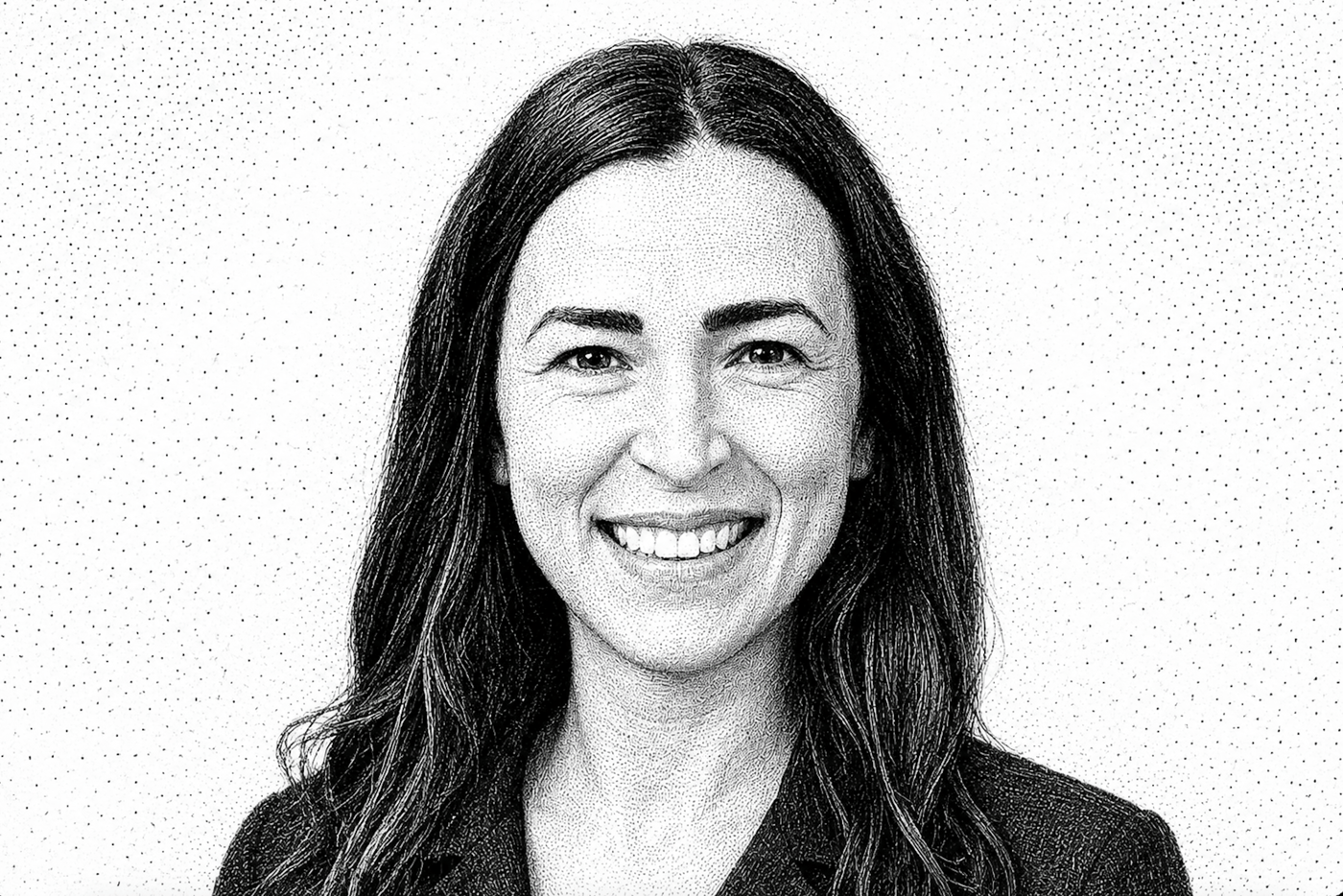
Tessa Olson | CEO, COVE Animal Health
Tessa Olson's family spent nearly 90 years building Pieper Veterinary into a Connecticut institution. She rebranded it as COVE Animal Health and scaled it into a 20-hospital network across five states, backed by Chicago Pacific Founders. She explains what she screens for before a hospital joins, and where consolidation hollows a good practice out.

Tessa Olson's family built Pieper Veterinary into a Connecticut institution. Last year, after nearly 90 years, it rebranded as COVE Animal Health — now a network of 20 hospitals spanning primary care, emergency, and specialty medicine across five states. Tessa didn't plan on running it; she spent years in film production before coming back to the family business.
In this conversation, she talks about the rebrand, what she looks for when bringing a new hospital into the network, her partnership with Chicago Pacific Founders, and where she thinks industry consolidation has helped veterinary medicine — and where it's hollowed practices out.
You grew up in a veterinary family, but was there ever a point when you considered taking a completely different path, or did you always know you wanted to be part of the family business?
Yes, for many years I had a career in California in film production. I never anticipated going into vet med. As the business grew and as I could see my parents challenged and excited about the business, I started to get more involved. My first veterinary job was at a small Cat Clinic in San Francisco. I fell in love with the industry and the people and felt I could really make an impact.
On a separate note, I have truly loved working with my family. A saying I've heard once: “family business isn't for sissies.” It's true. But it can be so rewarding to have such a dedicated, loyal team. I came back to the business because I enjoyed working with my family and I was proud of what they had built.
What are some of the biggest lessons you learned growing up in the family business that still shape the way you lead COVE today?
People matter. As the business gets bigger, it can feel more corporate, less personal. I strive to always focus on the community and the people that make up this organization – that's what makes COVE special. Truly, it's just the people here – and the bond between them, their commitment to the industry, and the bond the team has with their clients and patients.
You can learn a lot from making mistakes.
Gratitude is one of the most powerful energizers and resets for me. Finding gratitude for the people you work with, taking time to notice and reflect on them and what they've accomplished and done for the organization, is powerful. I am so proud of the people I work with and thankful they've chosen COVE for their careers.
What began as a single family-owned veterinary practice has grown into a network of 20 hospitals (and counting) across primary care, emergency, and specialty medicine. What has been the vision guiding that growth, and how has it evolved over the years?
My parents always wanted to be the best group of hospitals in CT. In their 40-year career, that's what they set out to do. Their values are still with us today:
- They believed veterinarians collaborating together, across locations, across disciplines, leading their field, would improve patient care and drive the medicine and the industry as a whole forward – this is why we continue to operate networks with GP, ER, Specialty.
- They believed in investing in education, and something we've continued with our internship, residency programs, general mentorship, and partnership with vet tech schools.
- They believed in being available to clients 24/7 – and saying yes, we can help whenever possible.
All of these things are still values for us today. Where it's evolved:
- We are now outside CT and have networks in ME, MA, PA, and OH.
- We've had to figure out how to create structure and governance in a larger organization, bring in subject matter experts and new leaders, all while still putting the veterinary leader at the center to keep focus on our patients' needs.
Last year, after nearly 90 years, Pieper Veterinary rebranded as COVE Animal Health. Why was the rebrand the right move, and what does the COVE name represent for the future of the organization?
We got a fair amount of confusion about who Pieper was – were we the CT hospitals? Were we the whole company? We felt we needed a separate name to represent the group of hospitals and owners that have come together to make COVE and let Pieper be the network in CT.
When you're evaluating a practice that could join COVE, what are you looking for beyond the financials? What makes you confident a hospital is the right cultural and strategic fit?
Number 1 always is a good partner. An owner that is dedicated to setting their team up for success in the next chapter. A say-yes culture. An engaged and dedicated team. A respect for all disciplines (ER, SP, GP). A desire to constantly improve and hold high standards.
Private equity has become one of the most debated topics in veterinary medicine. You've spoken positively about your partnership with Chicago Pacific Founders. What gave you confidence they were the right partner, and beyond capital, how have they helped COVE grow?
Honestly – same as the above. No. 1 is a good partner. You've got to look across the table and feel aligned with your partners, whether they're individuals or a separate investor. As a shareholder group, we have the same goals of building the best group of veterinary hospitals.
We all work hard. We bring a diverse set of backgrounds. Despite being a larger organization with private equity funding, it is still relationship-based, and there is still alignment across the ownership group of what we want to accomplish.
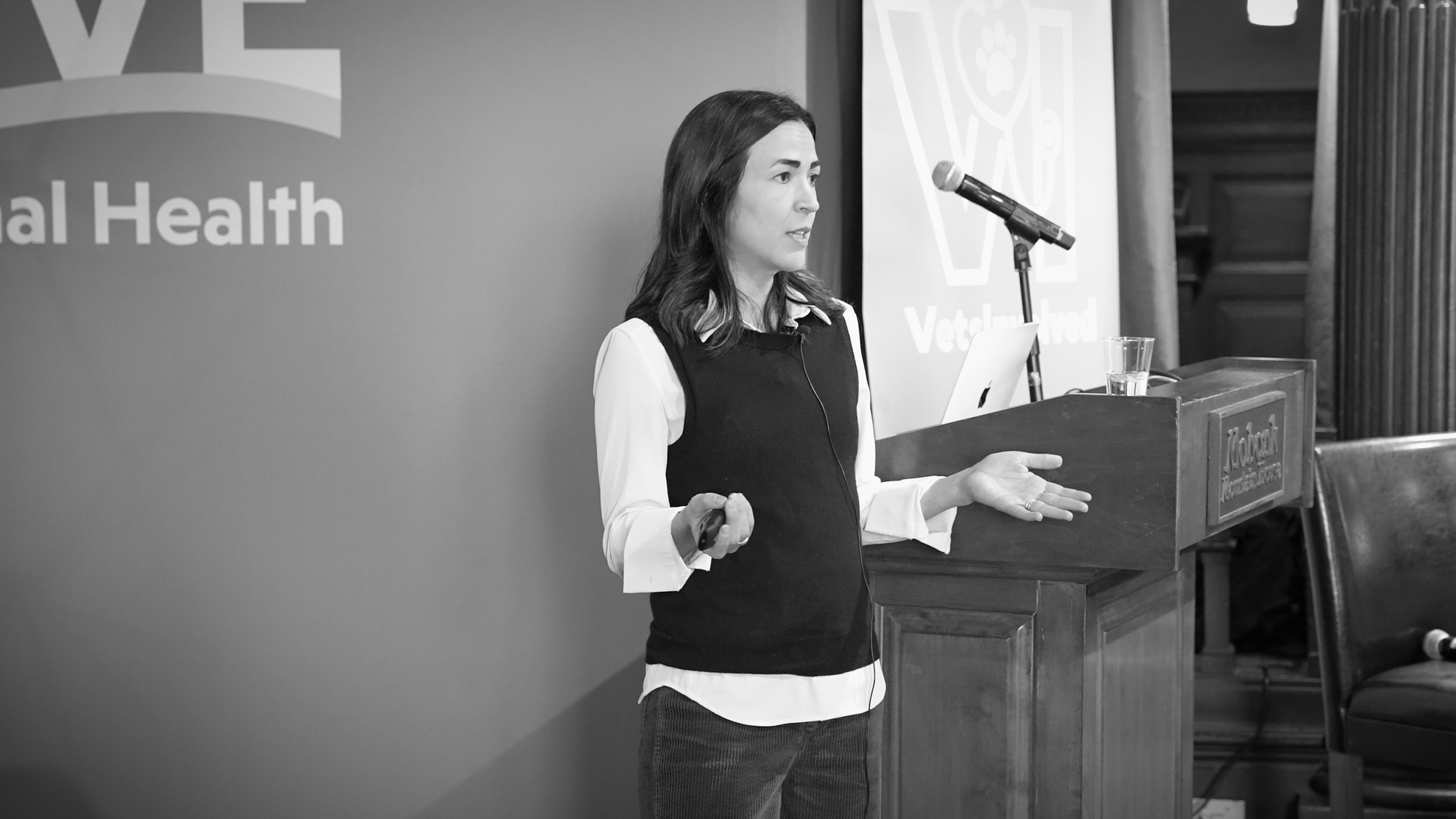
For readers who aren't familiar with COVE, can you explain your hub-and-spoke model? How does it benefit veterinarians, hospital teams, and ultimately pet owners?
We build local hospital systems where patients have access to everything they need regardless of what's going on with their pet – and the team that is providing that care is going to work together to be there for you. Disjointed care, especially when there is a complex problem, is incredibly hard to navigate. You see it in human medicine all the time – navigating a web of different offices, appointment processes, specialty, etc. It can impact the care you receive, the timeline you receive care on, and the level of stress you're under.
We work as a unit, so the hand-off and the navigation, no matter what you need for your pet, is seamless. And you can be assured that the doctors know each other – our hospital networks are big enough that we have almost every specialty available but small enough where the doctors know each other. Together, they are committed to you as a client.
For veterinarians – it provides incredible mentorship and case collaboration. You can get insights and talk through complex case management with others. You can also learn procedures, products, etc. by leveraging the great veterinary community.
For teams – it is wonderful to share some resources that as a single hospital we couldn't (recruiting, IT, HR, marketing). Additionally, there are peer manager groups to help support those individuals regarding hospital operations (workflows, equipment, medications, etc.). Lastly, career growth – even if your hospital doesn't have an open position in the next career step, another nearby one might. You can also increase exposure to different departments and services based on your professional interests.
As COVE has expanded into new markets, what's been the biggest challenge in scaling the business while preserving the culture that made the original practice successful?
- Getting tribal knowledge written down into processes and how we operate – and getting that followed by all.
- Balancing legacy hospital autonomy, different ways of doing things while also creating alignment and best practice.
- Being face to face and getting to really know people – harder the bigger and more spread out you are.
- Building alignment around who we are as a larger organization.
The veterinary industry has become increasingly consolidated over the past decade. Where do you think consolidation has genuinely improved veterinary medicine, and where do you think the industry still has room to do better?
Operating vet hospitals is complex – sharing best practices, metrics and benchmarks, ways of working, can be incredibly helpful. Standard operating procedures and not remaking the wheel can really allow hospitals to focus on the day-to-day, and I think a consolidated industry has strengthened that muscle around operational rigor.
Consolidated industry has increased access to capital, which I see in many hospitals, and specifically ours, where we can improve veterinary medicine by upgrading facilities and equipment.
Where could they do it better? We see a lot of veterinary groups seek to standardize things that help the back-end business operation, but hurt the hospital flow, function, and culture. And stripping out the local clinical judgement that makes the practice great in the first place really hollows out a good practice.
What's one piece of advice you'd give to an independent practice owner who's deciding whether to remain independent or join a larger network?
There is value to driving and building your own hospital. If that's your calling and that's where you're at, you know that, and I wouldn't second-guess that instinct at all. You can do it. Creating your own business, hospital team, etc. is amazingly valuable to you, your community, and your family.
However, if hospital ownership is feeling constraining, if you're seeking collaboration, partnership, etc. there are good partners out there. We seek entrepreneurial veterinarians whom we can build with. Selling your practice, joining a group, doesn't have to just be a succession plan; it can be taking your hospital to the next level. We truly are a tight, committed ownership team.
Start the process early and stay with your business through the transition. You'll get the best value, and you'll help your legacy remain on past you.
Other Interviews
More conversations with founders, operators, and investors building the future of pet care.

Sarah McLean | Co-Founder & CEO, Big Damn Dog Co.
A joint supplement label that stopped at 60 pounds sent Sarah McLean looking for a product that did not exist. Big Damn Dog Co. is the bootstrapped answer: giant-breed formulations, dosing built for 120-pound dogs, and a customer list the founders still call by phone. Six months after launch, its Gravy Blend already accounts for roughly 40% of joint supplement sales.
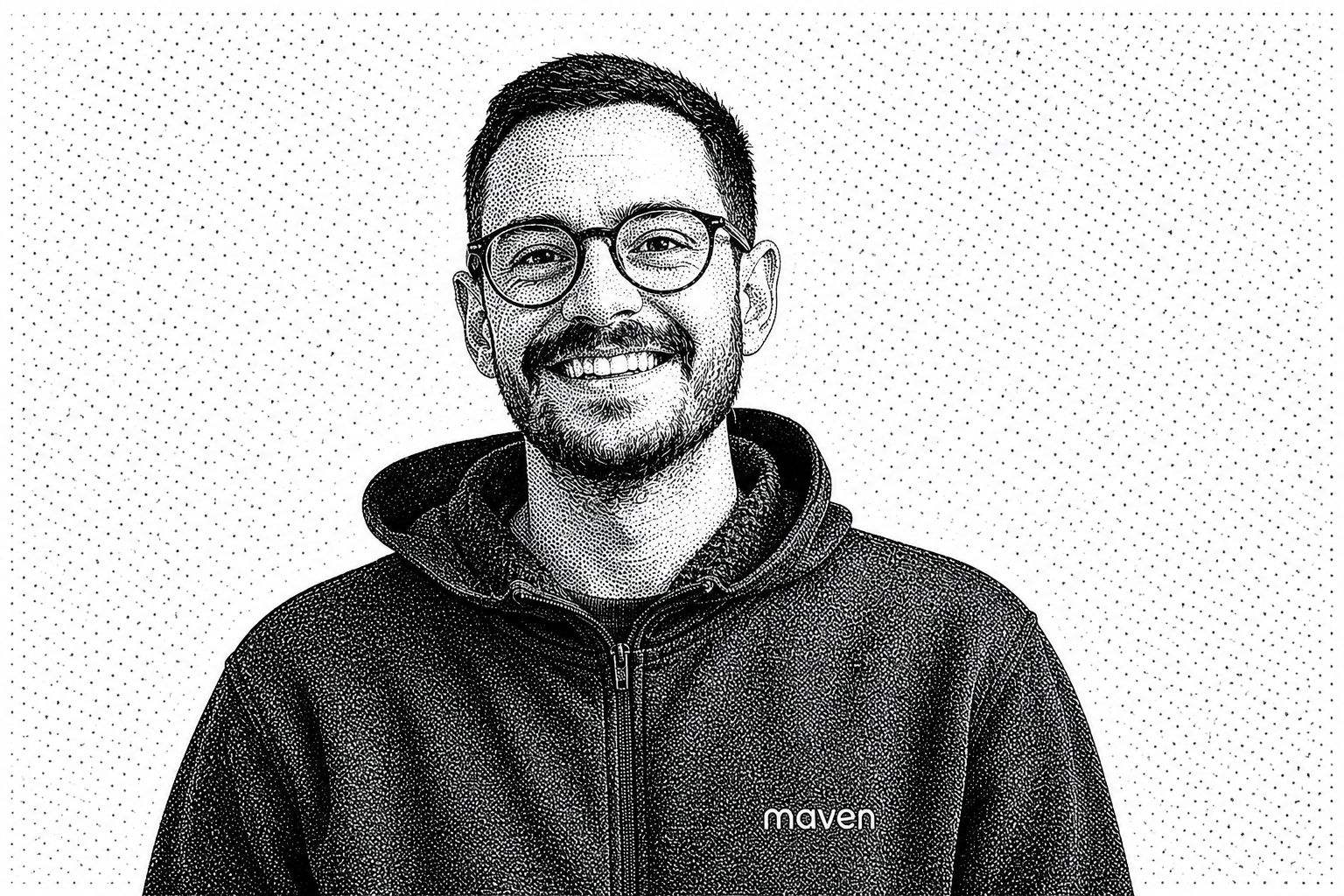
Guilherme Coelho | Co-Founder & CEO, Maven
Most owners catch a health problem only once it is visible, and by then it is usually late. Maven built its wearable around vitals instead of GPS, hired veterinarians before it shipped anything, and sells to owners rather than clinics. Guilherme Coelho on continuous monitoring, a study that set feeding portions by activity data, and why the consumer is the one who now brings the vet the data.
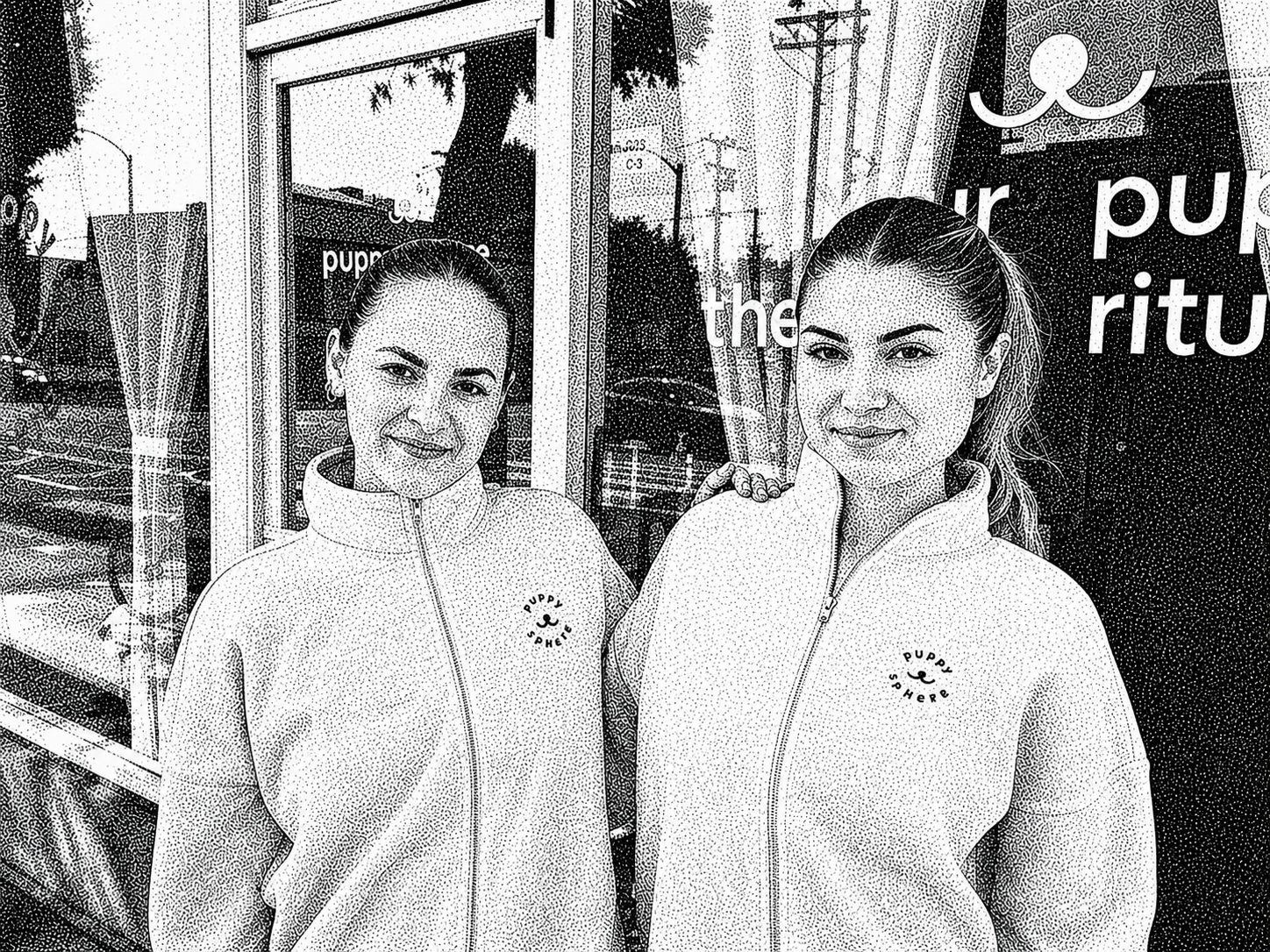
Francesca Albo & Lea Burbidge Izquierdo | Co-Founders, Puppy Sphere
Puppy yoga read as a novelty. It is now 13 corporate-owned studios, 450,000 customers, and more than $14M in revenue, built without outside capital for four and a half years. Francesca Albo and Lea Burbidge Izquierdo explain why they financed growth from cash flow, passed on VC term sheets, and kept every studio company-owned instead of franchising. The story is not the puppies. It is the operating discipline underneath them.