BARK Bets on Celebrity Content as Brand Differentiation Play
BARK is launching Who's A Good Guest?, a celebrity interview series co-produced with Josh Horowitz. The move signals that the subscription box company sees content, not product innovatio, as its next competitive moat.
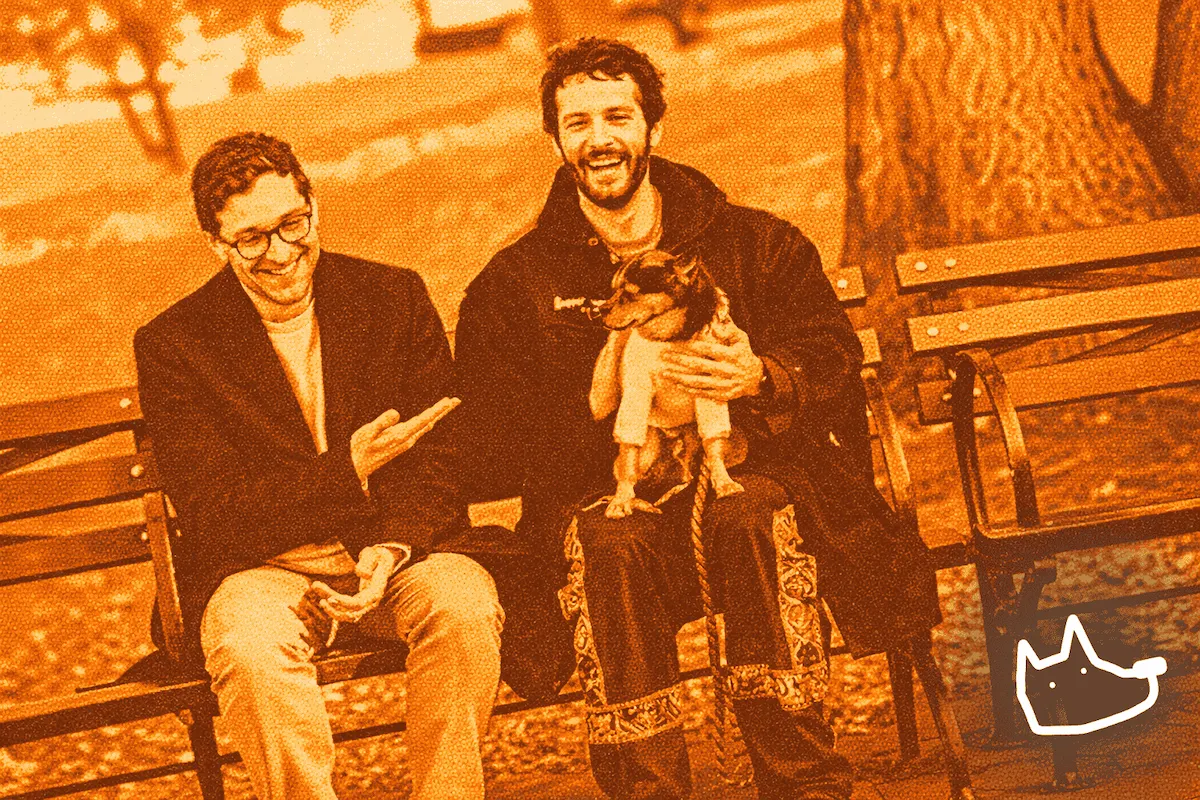
BARK is launching a celebrity interview series on YouTube and Spotify — a signal that the subscription box pioneer sees content, not product, as its next competitive moat.
What Happened
BARK (NYSE: BARK) announced Who's A Good Guest?, a weekly video series featuring celebrities alongside their dogs. The show is hosted by Josh Horowitz, creator of Happy Sad Confused, an entertainment podcast that's racked up 200 million views and 750 million impressions in the past two years.
Season one features Bob Odenkirk, Zoey Deutch, Dylan O'Brien, Johnny Knoxville, Ginnifer Goodwin, and Patrick Wilson. The first episode dropped February 4 on YouTube and Spotify.
The format: celebrities discuss life, careers, and dog parenthood while their dogs run loose on set. Each episode ends with a "thought experiment" where guests pitch hypothetical dog businesses — which BARK then builds out as satirical microsites. Engagement with these pop-up brand pages triggers meal donations through BARK In The Belly, the company's charitable food line.
BARK co-produced the series with Horowitz, with production support from HOFF Studios.
Why It Matters
This isn't a marketing campaign. It's an infrastructure bet.
BARK has spent a decade building brand equity through creative product design — the themed BarkBox, the indestructible Super Chewer line, the stunt-marketing of BARK Air. But product innovation is increasingly table stakes. Chewy, Amazon, and Target private labels can iterate on toys and treats. What they can't replicate is cultural positioning.
The Horowitz play is strategic. He's not a pet influencer — he's an entertainment journalist with credibility in Hollywood. His existing audience (film and TV fans) overlaps with BARK's demo but isn't already saturated with pet content. BARK is fishing in a different pond.
The format is engineered for engagement loops:
- Celebrity booking → press coverage
- Dog content → social virality
- Pitch segment → microsite traffic
- Microsite engagement → charitable donations → brand affinity
Each episode generates multiple content assets (clips, microsites, social posts) from a single production investment.
The distribution choice matters. BARK is publishing on YouTube and Spotify — platforms it doesn't own, but where discovery is possible. This isn't a gated BarkBox subscriber perk. It's a top-of-funnel awareness play designed to reach dog owners who've never heard of BARK or lapsed subscribers who need a reason to re-engage.
For context: BARK's total subscribers are down year-over-year, though its Q2 FY2026 earnings showed six consecutive months of improving retention and customer acquisition costs at their lowest since fiscal 2023. Content that builds top-of-funnel awareness could accelerate the turnaround — reaching new dog owners without the paid acquisition spend that's squeezed DTC margins industry-wide.
This follows a broader pattern of DTC brands investing in owned media. Glossier built Into The Gloss before launching products. Airbnb produces travel content. Red Bull is arguably a media company that sells energy drinks. BARK is late to this playbook, but the pet category is less crowded with branded content than beauty or travel.
The risk: Celebrity-driven branded content has a brutal hit rate. Most DTC shows die quietly after one season — generating launch-day press, then nothing. Casper's sleep content, Mailchimp's original series, and dozens of other branded entertainment experiments produced awards-circuit buzz but no measurable revenue lift. BARK needs Who's A Good Guest? to drive subscriber sign-ups and reactivations, not just YouTube impressions. If it can't draw a line from Horowitz's audience to the BarkBox checkout page, this becomes another expensive experiment that looked good in the marketing deck.
What to Watch
1. The charitable tie-in as engagement mechanic. According to BARK, microsite visits trigger meal donations through BARK In The Belly — a clever mechanic that gives viewers a reason to click beyond curiosity. Watch whether this model gets copied. Engagement-triggered giving could become a standard DTC playbook.
2. Creator partnerships vs. in-house production. BARK partnered with an established creator rather than building a show from scratch. This de-risks the content bet (Horowitz knows how to make interviews work) but shares the upside. Operators considering content plays should weigh the same trade-off.
3. BARK's next earnings call. Management will likely address this initiative. Listen for metrics: episode views, microsite traffic, any correlation with subscription sign-ups or reactivations. If they don't mention it, that's a signal too.
Other News
More stories shaping the pet industry this week. From funding rounds and product launches to regulatory shifts and retail strategy, stay ahead of what's driving the market.

Fera Pets launches a $49.95 weight and muscle chew for dogs
Fera Pets launched Healthy Weight & Muscles, a $49.95 soft chew for dogs sold in 90-count tubs, on October 13th, 2026. Each chew pairs myHMB, Betafin betaine and L-carnitine with ADM's PRIOME Metabolic Health postbiotic, and Fera's product page cites a study for each ingredient.

Rare Breed and Stray Project tie $4 per item to shelter dog meals
Link Snacks' Rare Breed treat brand and Denver apparel startup Stray Project launched Impossible to Ignore for National Adopt a Shelter Dog Month. The official rules commit $4.00 per item and $0.50 per email signup to Greater Good Charities through November 30th, paid by Stray Project, with signups shared by both brands.

Pets will shape travel plans for 68% of owners, Subaru survey finds
A Subaru-commissioned Talker Research survey of 2,000 pet-owning drivers, released October 13th, 2026, says 68% expect their pet to affect travel plans this year and 73% would drive instead of fly to bring the pet. New in this release, 10% may host, 10% may shorten a trip and 8% may skip gatherings. In our view, the trip-length and planning numbers are the ones sitters and kennels can use.