Chewy held its margins and cut its sales outlook in the same breath
Chewy posted a record-profit quarter but lowered its full-year sales outlook, citing a softer pet consumer and cooling premiumization. For brands that grow by trading owners up, the warning underneath the numbers matters more than the beat.

Chewy had a good quarter and still lowered its expectations for the year, which tells you more about the pet consumer than the headline numbers do. Sales grew, profit hit a record, and yet management spent the call explaining why owners are getting choosier about the premium upgrades that drive so much of the category's margin. If your brand makes its money trading customers up, that caveat is worth more than the beat.
Chewy grows sales 7.7% but trims its full-year guidance
In the first quarter of fiscal 2026, Chewy posted net sales of $3.36 billion, up 7.7% from a year earlier. Gross margin widened by half a point to 30.1%, net income came in at $94.8 million, and free cash flow jumped more than 45%. By its own measures, it was the most profitable quarter the company has reported.
Customer growth was the weak spot. Chewy added about 200,000 net active customers to reach 21.5 million, a 3.6% gain, and told investors to expect quarterly adds near the low end of its 150,000-to-250,000 range going forward.
The guidance is where the tone shifted. Management trimmed full-year sales to between $13.40 billion and $13.55 billion while leaving its profit-margin outlook untouched at 6.6% to 6.8%. The explanation was that the "consumer pet environment has become incrementally more challenged," with softer premiumization and fewer add-on purchases from the customers Chewy already has.
Analysts had braced for it. Mizuho, JPMorgan, Morgan Stanley, and Barclays all clipped their price targets going into the report while keeping bullish ratings, per Benzinga. The stock rose about 1.5% to $20.73 anyway.
Why premium brands should expect a softer trade-up
The two halves of this report point in opposite directions, and that contrast is the story. Chewy is making more money than ever on revenue it now expects to grow more slowly, and investors clearly preferred the profit half. A guidance cut that lands on the top line but spares the margin is one the market can live with, which is why the stock went up on a day full of bad-sounding news.
What should give operators pause is the reason for the cut. When the biggest pure-play in pet says premiumization and attach rates are slipping among its existing base, it is describing the exact growth lever most premium brands lean on. The whole model rests on coaxing owners toward fresh, raw, or functional food and then layering on a supplement, a topper, an insurance plan. That is where the margin comes from, and Chewy is telling you it has cooled.
It helps to be precise about what hasn't cooled. Owners aren't leaving. Active customers grew, autoship is still the steady base underneath everything, and the core spend on food and health is holding up fine. What's changed is the willingness to reach for the upgrade. People are still feeding their pets well, they're just pausing before they trade up to the premium version of well.
For anyone planning the back half of the year, that distinction is the whole game. The recession-proof reputation pet has earned is real at the bottom of the bowl and shakier at the premium edge, and a brand still penciling in the trade-up curves that worked in 2024 is counting on a tailwind the category leader just said is fading. The other side of a slower trade-up is that value tiers and private label tend to do well when owners shop sideways instead of up, so some of this demand isn't disappearing as much as moving down the shelf.
What the back half of the year will tell us
The thing to follow over the next couple of quarters isn't the sales line, it's where the spending goes within it.
Customer adds are the first tell. Chewy has already guided them to the low end of its range, so the open question is whether they settle there or keep sliding, because a steady deceleration is a very different thing from one that turns into outright shrinkage.
The premiumization commentary is the second. One soft quarter is easy to wave off as noise. A second one starts to look like a pattern, and that's the point where premium brands have to get serious about promo timing, pack sizes, and how much they're willing to pay to acquire a customer who may not reliably trade up once they're in the door.
The last thing to watch is the value end of the shelf. If private label and entry-price products pick up share through the summer, this stops being a Chewy story and becomes a category one.
None of it argues for panic. It argues for reading the consumer more carefully than usual, spending acquisition dollars with a clearer eye on who actually upgrades, and carrying enough value-tier inventory to meet owners where they're choosing to shop right now.
Source: Chewy Announces First Quarter 2026 Financial Results, via Business Wire
Other News
More stories shaping the pet industry this week. From funding rounds and product launches to regulatory shifts and retail strategy, stay ahead of what's driving the market.
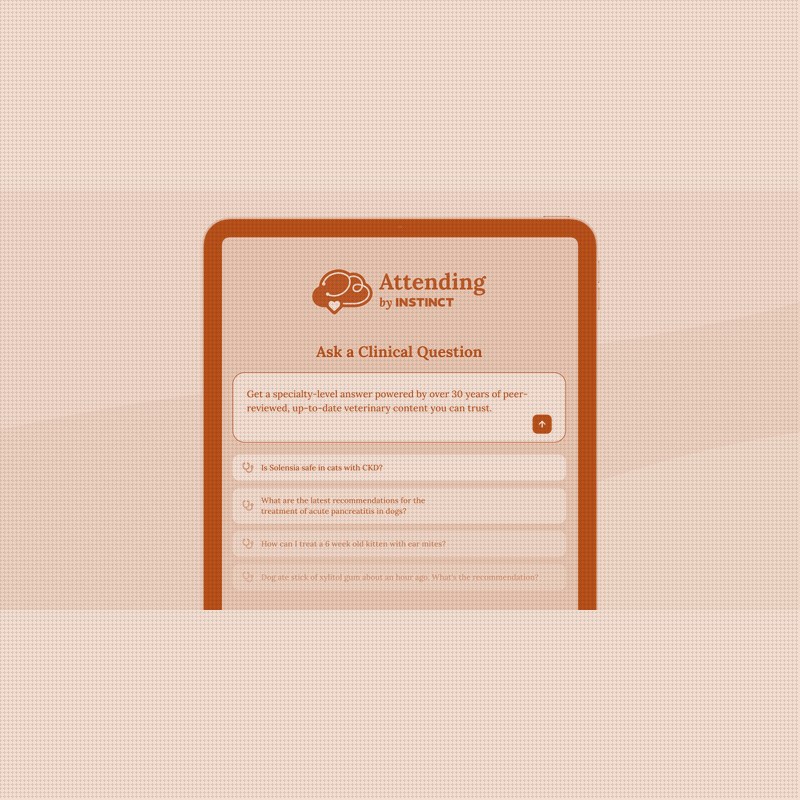
Instinct Science's New AI Bets Proprietary Content Beats ChatGPT
Instinct Science launched Attending, a clinical AI assistant that answers veterinarians' questions using only its own peer-reviewed content, including Plumb's Veterinary Drugs and Clinician's Brief. The tool is in an invitation-only preview ahead of a public showcase at IVECCS this month. It's a bet that proprietary clinical content is worth more as an AI moat than as a subscription business alone.

Temptations Opens a Cat Bodega to Buy Attention, Not Shelf Space
Temptations, Mars's top-selling cat treat brand, opened a free three-day pop-up in Manhattan built around the internet's love of bodega cats. The experiential play signals how a category leader spends on earned attention once shelf space and distribution are already won.

Can Your Dog's DNA Really Explain Its Behavior? Embark Bets $39 On It
Embark launched a $39 Behavior Insights upgrade pairing genetic markers with a year of Dogo training, extending its DNA-test business into recurring engagement. The science behind predicting individual dog behavior from genetics remains unsettled, per a November 2025 UMass Chan study.