
Cytopoint Just Got Its First Real Competitor in Eight Years
Elanco began the phased U.S. launch of Befrena on May 18, the first real competitor to Zoetis's Cytopoint in the $1.3 billion canine dermatology market in eight years. With a longer dosing interval and a dual-product stack alongside Zenrelia, Elanco's specialty execution finally has a print to defend, while Zoetis's defensive playbook is now live.
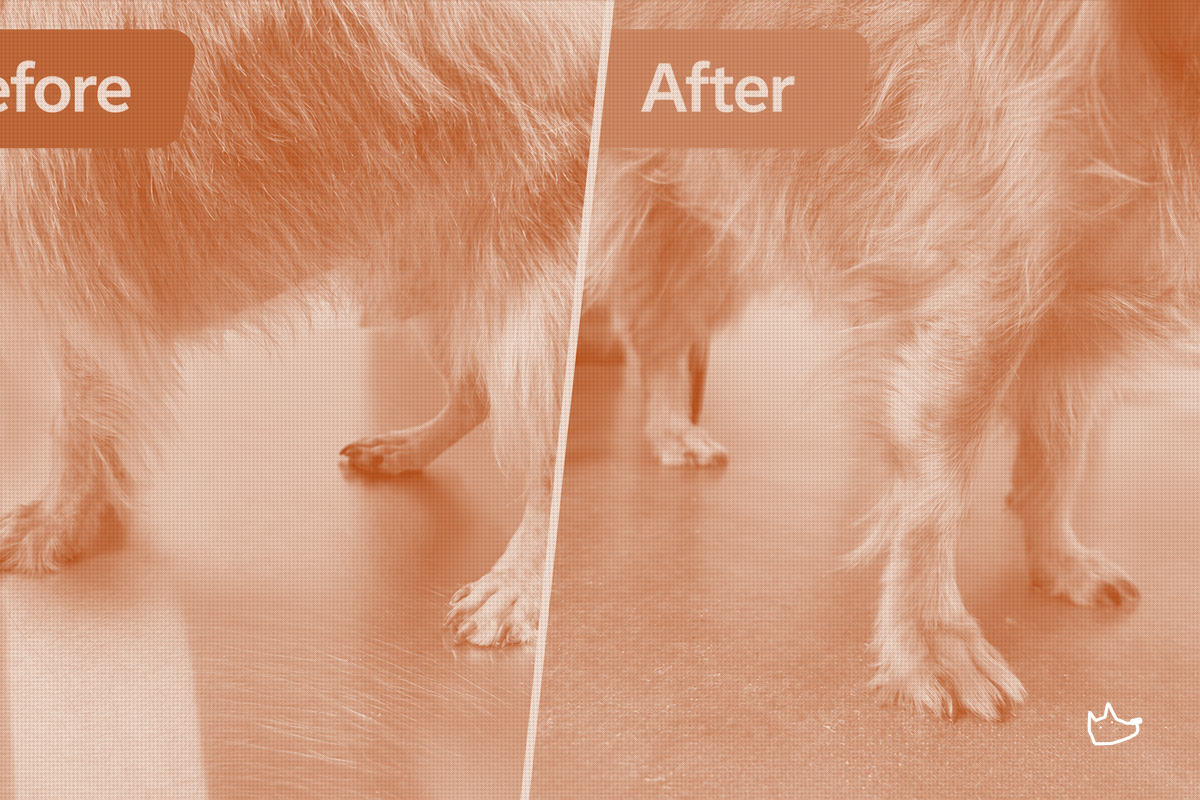
A $1.74 billion Zoetis franchise just lost its monopoly on the canine anti-IL-31 biologic shelf. Elanco began its phased U.S. launch of Befrena on Monday, a new anti-IL-31 monoclonal antibody that competes head-to-head with Cytopoint in the $1.3 billion U.S. canine dermatology market. The first product is now in clinics. For vet practice owners, distributors, and Zoetis's investor base, the dermatology category becomes a two-supplier market for the first time in eight years.
Elanco begins phased U.S. launch of Befrena anti-IL-31 monoclonal antibody
Elanco Animal Health (NYSE: ELAN) announced on May 18, 2026 the commercial launch of Befrena (tirnovetmab), an anti-IL-31 monoclonal antibody injection for canine allergic and atopic dermatitis. The launch is structured in phases: select veterinarians enrolled in Elanco's Early Experience Program are using the product in clinics now, with broader availability ramping as bioreactor capacity expands.
Befrena received U.S. Department of Agriculture approval in December 2025. Like Cytopoint, it is a biologic and falls under USDA's Center for Veterinary Biologics jurisdiction rather than FDA. The clinical profile, as Elanco describes it: itch control within 24 hours, a dosing interval of 6 to 8 weeks, no age or weight restrictions, and administration as an in-clinic injection given by or under the supervision of a licensed veterinarian.
The 6-to-8-week dosing window is the marketing centerpiece. Cytopoint's label is 4 to 8 weeks, with most clinical practice dosing at 4 to 6 weeks. If Befrena's real-world durability holds at the longer end of its range, the per-year cost-of-treatment comparison shifts in Elanco's favor.
Befrena is Elanco's second monoclonal antibody product after Trutect, a parvovirus passive-immunity treatment. It is the company's second canine dermatology launch in 18 months, following Zenrelia (ilunocitinib), an oral JAK inhibitor approved in 2024 that competes with Zoetis's Apoquel. Together, Befrena and Zenrelia give Elanco a two-product dermatology stack — biologic plus oral systemic — that mirrors Zoetis's Cytopoint-plus-Apoquel structure for the first time.
"The commercial launch of Befrena into the $1.3 billion U.S. canine dermatology market is another exciting milestone in our innovation journey," said Bobby Modi, Elanco's Executive Vice President of U.S. Pet Health and Global Digital Transformation, in the announcement. Modi flagged the bioreactor ramp explicitly, signaling supply will be the gating factor through the back half of 2026.
What a two-supplier dermatology market means for clinics, distributors, and the ELAN thesis
Cytopoint has been Zoetis's most quietly important growth driver since launch. Zoetis does not break out product-level revenue, but it does report combined revenue for its dermatology franchise: $1.74 billion in 2025, growing 6% operationally, after $1.6 billion in 2024 (17% growth) anchored by Apoquel, Apoquel Chewable, and Cytopoint. Q3 2025 alone posted $469 million in combined dermatology revenue. Cytopoint has been named by name as a key growth driver in nearly every Zoetis quarterly earnings discussion since 2022, including in international segments where it commonly outpaces U.S. growth.
The arrival of a real competitor — not a generic alternative, not an adjacent JAK inhibitor, but a same-mechanism biologic with a superior dosing label — changes four things at once.
1. Vet practice formulary decisions are open for the first time in eight years. Most clinics have run a Cytopoint-default protocol for atopic and allergic dermatitis. With Befrena in the channel, every clinic now makes a real choice. Practice managers will evaluate per-injection cost, dosing-interval economics (longer interval means fewer recheck visits, which cuts both ways on clinic revenue), and Elanco's rebate and account-management posture. Expect aggressive sales-force pressure from both companies through Q4.
2. Distributor leverage shifts. Patterson Veterinary, Covetrus, MWI Animal Health (Covetrus and MWI announced a $3.5 billion merger in February that is expected to close after September 2026), and Henry Schein Animal Health negotiated against a single dominant biologic supplier for years. Two-supplier dynamics give distributors price leverage on the most-stocked dermatology biologic on the floor, which they will use. Net wholesale pricing on Cytopoint and Befrena is the metric to watch.
3. Elanco's specialty-mix story finally has a Q2 print to defend it. The bear thesis on ELAN since the 2018 Eli Lilly spinout has been that the company cannot execute high-margin specialty launches the way Zoetis can. Zenrelia's 2024 launch was the first counterexample. Befrena is the second, and it is the higher-impact one because biologics carry better gross margins than orals and because the addressable market is larger. Q2 2026 earnings, reported in early August, will be the first quarter with material Befrena revenue. The print sets the tone for whether ELAN's multiple compresses or expands into 2027.
4. Supply, not demand, is the near-term constraint. Modi's reference to "scaling our bioreactors with the anticipated manufacturing ramp-up" is the most important line in the release. Monoclonal antibody manufacturing is capacity-limited, and Elanco's bioreactor footprint is materially smaller than Zoetis's. If clinics order more Befrena than Elanco can supply through year-end, the launch's revenue contribution gets pushed into 2027. That risk goes both ways: a constrained supply window protects pricing, but it also caps near-term share capture.
The competitive read for Zoetis is concrete. The defensive playbook in vet specialty has historically been bundle pricing — pair the threatened product with a non-competitive product the clinic also buys, and reset the contract. Zoetis can do this with Simparica Trio (parasiticide) or Librela (osteoarthritis mAb). Watch for revised Cytopoint contracts that bundle deeper across categories. The offensive playbook is to accelerate the Cytopoint label-expansion pipeline — feline atopic dermatitis remains the obvious next indication and was already in Zoetis's stated roadmap.
The read for vet-corporate consolidators — Mars Veterinary Health, NVA, Pathway Vet Alliance, AmeriVet — is that dermatology margin compression has finally arrived in a category that resisted it for a decade. That is good news on procurement and bad news on the unit-economics models that priced acquisitions in 2021-2023.
What Q3 supply data and Zoetis's response will signal
The bioreactor ramp. Elanco's Q2 earnings call in early August is the first read on whether supply can match the demand the Early Experience Program is clearly generating. Watch for explicit production-capacity disclosures, which are unusual but plausible given how prominently Modi flagged the constraint in the launch release.
Zoetis's pricing posture. Cytopoint price has been remarkably stable through eight years of single-supplier-market conditions. The first observable signal of a real competitive response will be either an explicit price adjustment or a contract-bundle restructure aimed at the clinics most likely to defect. Distributors will see it before the market does.
Real-world dosing interval data. The 6-to-8-week label is the launch's marketing centerpiece. Real-world veterinary-dermatology data — the kind that shows up in Veterinary Dermatology journal and at NAVDF — will arrive in late 2026 and 2027. If practitioners report durable response at the 7-to-8-week interval, the per-year economic comparison versus Cytopoint becomes hard to argue against. If real-world dosing collapses back to 5-to-6 weeks the way Cytopoint's often does, the differentiator narrows.
Feline label timing. Cytopoint does not have a feline indication. Whichever supplier gets there first locks up a category that operators have been waiting on for a decade. Elanco has not signaled a feline timeline. The first to disclose one moves the multi-year competitive dynamic.
Other News
More stories shaping the pet industry this week. From funding rounds and product launches to regulatory shifts and retail strategy, stay ahead of what's driving the market.

Zoom Room returns to franchising with 18.2% same-store sales growth
Zoom Room reported 12.0% and 18.2% same-store sales growth in Q2 and Q3 after pausing development in late 2025, and 15.1% for units open more than a year. It now resumes franchise sales with two quarters of operating data, and a 550-gym target that implies about 120 openings a year.
MPM Products recertifies as a B Corp under B Lab's audited new standards
The owner of Applaws, Reveal and Encore is one of 20 UK companies in the first cohort to certify under B Lab's rewritten standards, which add third-party assurance and a five-year cycle. With the EU's sustainability label rules applying from September 27th, 2026, B Lab says an assured B Corp badge now qualifies as a valid label.

Cat food owner hands North America to its marketing chief
MPM Products, the owner of Applaws, Reveal and Encore, has named global CMO Samantha Greenwood president of North America. The US brings in more than 40% of company revenue, and we read the pick as fitting Partners Group's cat-focused growth thesis in a pet food category APPA expects to grow about 2% in 2026.