
Elanco Wins Emergency Authorizations as Screwworm Reaches 62 Miles From U.S. Border
With New World screwworm cases now within 62 miles of the U.S. border, three federal agencies authorized two Elanco products for emergency use in livestock. Federal stockpile-only distribution makes this a credibility signal for ELAN's livestock franchise more than a revenue event.
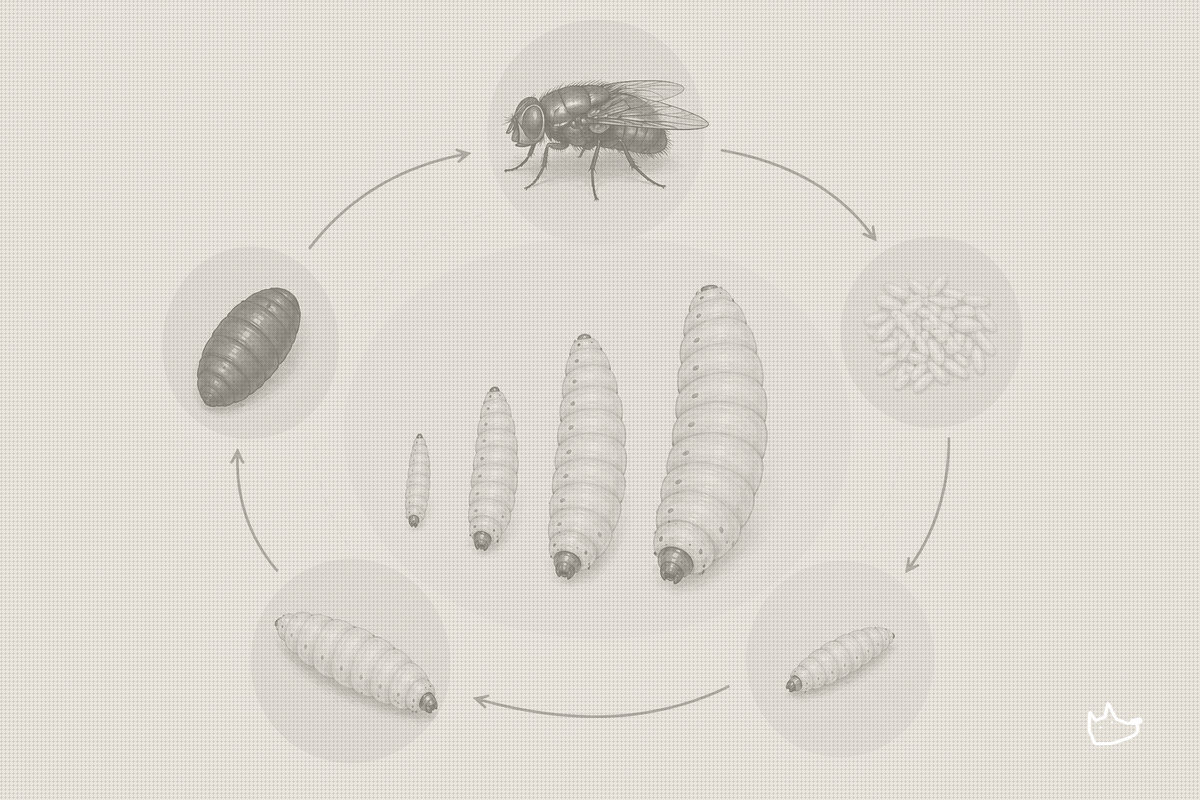
New World screwworm has reached within 62 miles of the U.S. border in northern Mexico, and three federal agencies just authorized two Elanco Animal Health products for emergency use against the parasite in livestock. The coordinated FDA, EPA, and USDA action signals that federal officials now treat a U.S. incursion as a near-term operational risk, not a contingency.
What Happened
Elanco (NYSE: ELAN) announced on April 27 that it received an Emergency Use Authorization from the FDA for Negasunt Powder, a topical formulation of coumaphos, propoxur, and sulfanilamide, and a Section 18 Emergency Exemption from the EPA, in cooperation with the USDA, for Tanidil, a coumaphos and propoxur formulation. Both products are authorized for prevention and treatment of New World screwworm infestations across multiple livestock species. The company issued a corrected version of the release on April 28.
Distribution will be controlled. Both products will be available only through the USDA Animal and Plant Health Inspection Service (APHIS) and its National Veterinary Stockpile, distributed in coordination with state animal health officials and federally recognized tribal agencies. APHIS is expected to publish requirements covering tracking, reporting, and required personal protective equipment.
The authorizations land against an escalating epidemiological picture. New World screwworm cases in Mexico now exceed 20,000, with active cases reported as close as 62 miles south of the U.S. border in Nuevo León, per APHIS surveillance data. Active cases within 400 miles of the U.S. border increased 13% between April 15 and April 22. All southern U.S. ports of entry remain closed to livestock trade.
Elanco also flagged its existing Catron IV product, an EPA-registered screwworm and ear tick spray for cattle, sheep, goats, hogs, and horses, as a complementary part of its livestock-health portfolio.
Why It Matters
For livestock operators, the practical implication is straightforward: federal authorities are positioning a treatment stockpile in advance of detection, which is the textbook signal that they expect detection. Producers along the southern tier (Texas, New Mexico, Arizona, California) should be reading APHIS guidance now, not after the first U.S.-positive case. The screwworm has not been endemic in the U.S. since the 1960s eradication campaign, which means most working veterinarians and producers under retirement age have never managed it. Institutional muscle memory has atrophied.
For Elanco, this is a credibility moment more than a revenue moment. The Street has spent two years debating whether ELAN can execute on its production-animal franchise while pivoting investment toward pet health. A coordinated FDA/EPA/USDA emergency action involving three agencies, two regulatory pathways, and one company is the kind of regulatory-trust signal that's hard to manufacture and costly to lose. The fact that Elanco was the company federal officials turned to for a ready-now stockpile says something about the production-animal franchise that the bear case on ELAN has tended to discount.
The distribution model is also worth flagging. Because product moves only through APHIS and the National Veterinary Stockpile, this is not a producer-channel sales story. There is no sell-through to feedyards, no margin question to litigate at retail. This is a federal procurement engagement, with all the predictability and pricing constraint that implies. Operators modeling Elanco's livestock segment should treat any near-term screwworm-related contribution as government-stockpile revenue with characteristics closer to a defense procurement program than a typical animal health SKU.
The pattern operators should watch, and where the bigger downstream story lives, is what happens to U.S. cattle trade and beef supply if a U.S.-positive case is confirmed. Mexico's southern ports are already closed. A confirmed U.S. detection would trigger a containment response (sterile insect releases are already running at 100 million flies per week in Texas) and potentially regional movement restrictions. That sequence has implications across the protein supply chain, from feeder cattle pricing to packer capacity utilization to retail beef prices heading into summer grilling season.
What to Watch
Three signals over the next 60 days will tell operators where this is going. First, APHIS publication of the use, tracking, and PPE requirements for Negasunt and Tanidil. The operational detail will determine how quickly the stockpile is actually deployable in a detection scenario. Second, sterile insect technique (SIT) release volume and any expansion of the Mexican containment zone. The current 100-million-fly weekly release is calibrated to a specific containment line; a northward shift would signal that the line is moving. Third, any U.S.-positive detection itself, which would trigger regional movement restrictions and reset the operating environment for southern-tier producers.
For ELAN-watchers, the next clean catalyst is the company's quarterly earnings call, where management will likely face questions on the screwworm authorizations as a directional signal for the production-animal franchise. The bigger question, whether this episode shifts analyst sentiment on Elanco's livestock segment, will play out over the next two earnings cycles, not in this quarter's reaction.
Other News
More stories shaping the pet industry this week. From funding rounds and product launches to regulatory shifts and retail strategy, stay ahead of what's driving the market.

Fera Pets launches a $49.95 weight and muscle chew for dogs
Fera Pets launched Healthy Weight & Muscles, a $49.95 soft chew for dogs sold in 90-count tubs, on October 13th, 2026. Each chew pairs myHMB, Betafin betaine and L-carnitine with ADM's PRIOME Metabolic Health postbiotic, and Fera's product page cites a study for each ingredient.

Rare Breed and Stray Project tie $4 per item to shelter dog meals
Link Snacks' Rare Breed treat brand and Denver apparel startup Stray Project launched Impossible to Ignore for National Adopt a Shelter Dog Month. The official rules commit $4.00 per item and $0.50 per email signup to Greater Good Charities through November 30th, paid by Stray Project, with signups shared by both brands.

Pets will shape travel plans for 68% of owners, Subaru survey finds
A Subaru-commissioned Talker Research survey of 2,000 pet-owning drivers, released October 13th, 2026, says 68% expect their pet to affect travel plans this year and 73% would drive instead of fly to bring the pet. New in this release, 10% may host, 10% may shorten a trip and 8% may skip gatherings. In our view, the trip-length and planning numbers are the ones sitters and kennels can use.