
Most pet food recalls start on the factory line. This one started at the disposal vendor. Mars Petcare pulled two lots of Pedigree wet dog food that it had already condemned and shipped out to be destroyed, after the cans were allegedly diverted and sold into U.S. stores instead. The foreign-material risk is real, but the more durable lesson for operators sits in the destruction contract.
Mars recalls two Pedigree lots after condemned product reached retail
On July 2, Mars Petcare US issued a voluntary recall of two lots of Pedigree Can High Protein Chopped Chicken & Duck Flavor, 13.2oz, for dogs. The affected lot codes, 613C3KKCFC and 613C1KKCFC, are printed on the bottom of the can.
Neither lot was supposed to exist in the market at all. Mars says the product failed to meet its safety and quality standards and had been sent to a third-party vendor for destruction. The company later discovered the cans appear to have been fraudulently diverted and sold into the marketplace in the United States.
The recalled product may contain sharp metal and plastic foreign material, which the company says could cause choking, lacerations, or blockages in a dog's gastrointestinal tract. Mars reported no confirmed illnesses or injuries as of the announcement, and said it is working with authorities to determine how the cans reached shelves.
No other Pedigree or Mars Petcare products are affected. Consumers who bought the recalled lots can reach Pedigree Consumer Care at 1-800-525-5273, or visit pedigree.com/update, for a replacement.
Your disposal vendor is now a product-safety liability
Read the sequence again, because it inverts the usual recall story. Mars's quality process worked. It caught the defect and condemned the product. The failure happened after that, in the part of the supply chain almost no one audits: reverse logistics, the machinery that is supposed to make bad product disappear.
That is the part operators should sit with. This is the largest pet food company in the world, running one of the most mature quality systems in the category, and the weak point was a destruction vendor it paid to solve a problem. The cans that were never meant to see a shelf ended up on one anyway, carrying the brand name, the recall liability, and the replacement cost back to a company that did everything right on the line.
Diverted-goods fraud is a known gray market in consumer packaged goods, and it runs on trust. A manufacturer hands condemned product to a disposal contractor and receives a certificate of destruction in return. The certificate is a piece of paper, not proof. If the contractor, a subcontractor, or a driver decides the product is worth more resold than shredded, the paperwork still says destroyed. Serialized manifests, weight reconciliation, and witnessed destruction exist precisely because the incentive to cheat is baked in.
For anyone building or running a pet brand, the exposure scales with volume. Every rejected batch, every expired lot, every co-manufactured run that fails spec becomes someone else's inventory the moment it leaves your dock. A single diversion turns condemned product into a branded recall you have to own publicly, even when your own plant performed exactly as designed.
The practical response is unglamorous and worth doing anyway. Audit who actually destroys your rejected product, not just who signs for it. Require verifiable proof over a trust-based certificate: video of destruction, reconciled weights, tamper-evident transport. Denature or deface product before handoff so diverted cans cannot be resold as sellable goods. Disposal has always been treated as a cost center. This recall reframes it as an attack surface.
What the diversion investigation still has to answer
The open question is where the chain broke. Mars says it is working with authorities, and the useful detail for the category will be the point of failure: the disposal vendor itself, a subcontractor, or the transport layer in between. Each implies a different fix, and each is a different hole other manufacturers should check in their own contracts.
Watch whether Mars changes its destruction protocols or pulls the function closer in-house, and whether the investigation names the vendor. A named vendor with other pet food clients would turn a single-brand recall into a category-wide sourcing problem overnight.
The broader signal is the one to file. Pet food safety scrutiny has focused on ingredients, contamination, and the factory floor. This recall points somewhere else entirely, at the assumption that condemned product stays condemned. It does not always. Operators who have never once asked how their rejected inventory actually dies now have a reason to.
Source: Mars Petcare recall notice via the U.S. Food and Drug Administration
Other News
More stories shaping the pet industry this week. From funding rounds and product launches to regulatory shifts and retail strategy, stay ahead of what's driving the market.
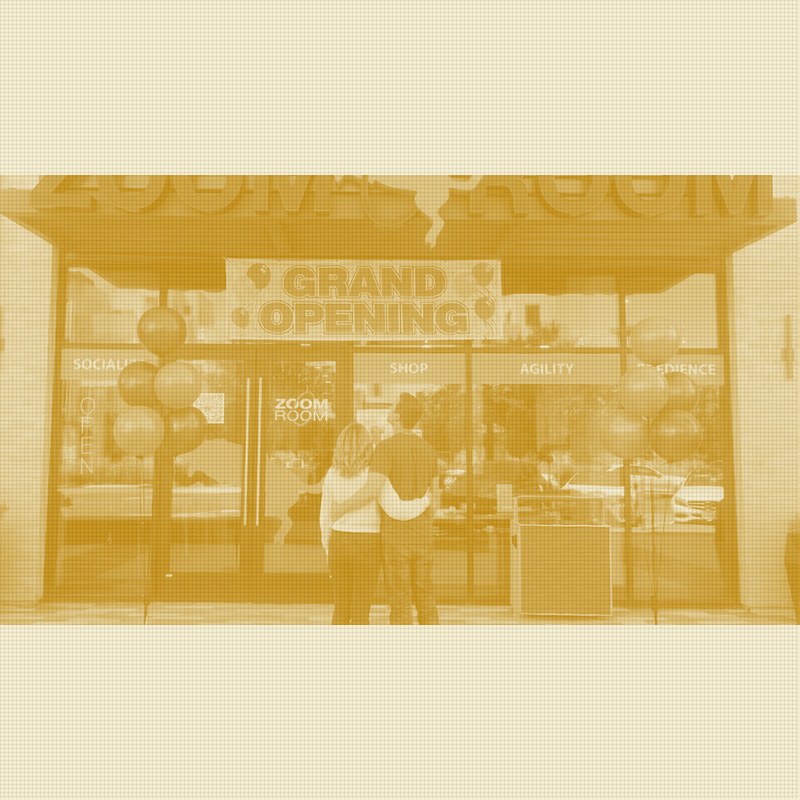
Zoom Room returns to franchising with 18.2% same-store sales growth
Zoom Room reported 12.0% and 18.2% same-store sales growth in Q2 and Q3 after pausing development in late 2025, and 15.1% for units open more than a year. It now resumes franchise sales with two quarters of operating data, and a 550-gym target that implies about 120 openings a year.
MPM Products recertifies as a B Corp under B Lab's audited new standards
The owner of Applaws, Reveal and Encore is one of 20 UK companies in the first cohort to certify under B Lab's rewritten standards, which add third-party assurance and a five-year cycle. With the EU's sustainability label rules applying from September 27th, 2026, B Lab says an assured B Corp badge now qualifies as a valid label.

Cat food owner hands North America to its marketing chief
MPM Products, the owner of Applaws, Reveal and Encore, has named global CMO Samantha Greenwood president of North America. The US brings in more than 40% of company revenue, and we read the pick as fitting Partners Group's cat-focused growth thesis in a pet food category APPA expects to grow about 2% in 2026.