
Purina and Ohio State's Litter Box Study Validates a Health-Monitoring Category
A peer-reviewed study from Nestlé Purina PetCare and Ohio State University found that a smart litter box monitor detected behavior patterns linked to chronic kidney disease in cats. It's the first outside-validated evidence behind a smart litter box health claim, with implications for every company selling passive pet monitoring.
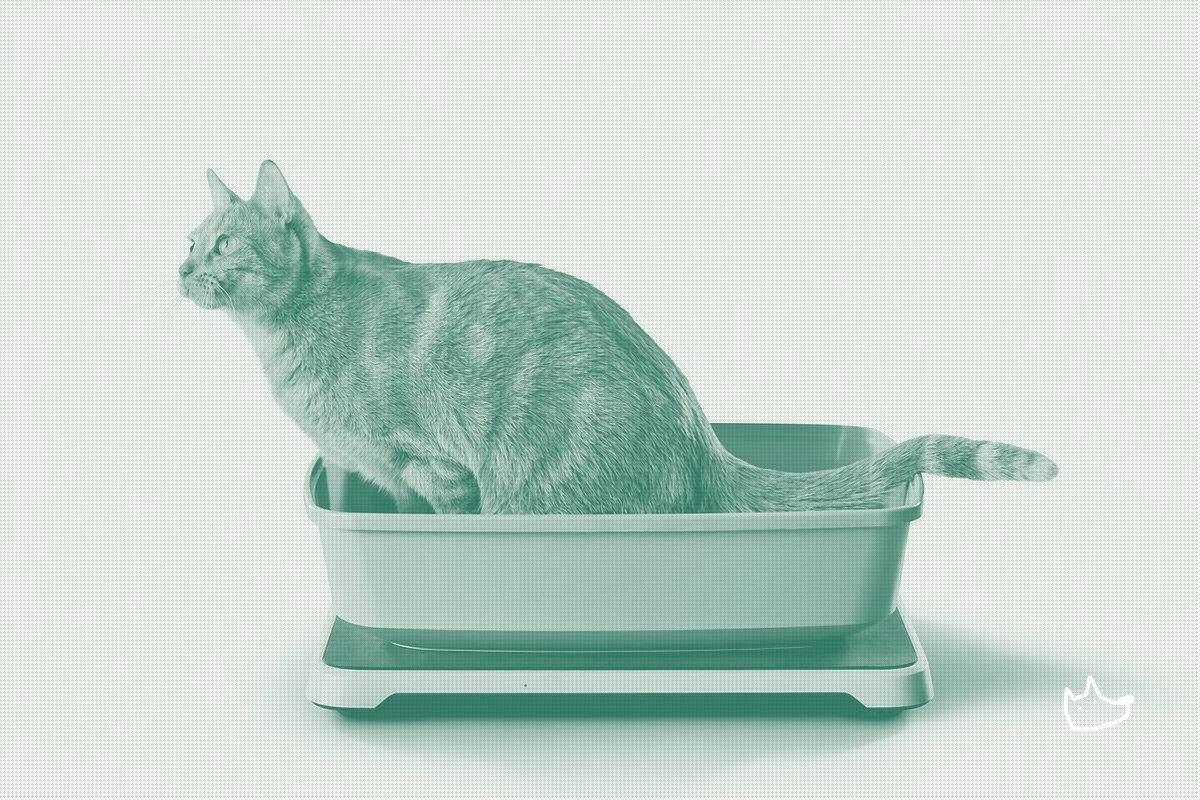
Chronic kidney disease is one of the most common conditions in older cats, and by the time an owner notices the usual warning signs, the disease has often progressed for months. A study from Nestlé Purina PetCare and researchers at Ohio State University found that a smart litter box monitor could pick up on elimination and weight changes tied to the disease before those symptoms become obvious, based on a retrospective look at monitor data from 136 cats. For companies building in the connected pet-health category, it is the first peer-reviewed evidence that this kind of passive monitoring can catch something clinically meaningful, not proof of any single product's value, but validation of the approach the whole category is built on.
Study links litter box data to kidney disease markers
The analysis came out of the Purina Institute, Nestlé Purina PetCare's research arm, working with veterinary researchers at Ohio State University. Researchers pulled retrospective smart litter box monitor data from 136 cats, some with a diagnosed case of chronic kidney disease and others with no known condition, and compared roughly two dozen measurable behaviors, including how often a cat used the box, how long it stayed, how it dug, its weight, and its entry frequency.
One subset of cats trained the model; a separate subset validated it, a basic but necessary split that keeps a model from simply memorizing the data it was built on. Across both groups, the monitor picked up behavior patterns associated with CKD. The findings were announced August 31st, 2026, and published in the peer-reviewed journal Animals (Volume 16, Issue 9).
CKD itself is not a rare finding for a study to chase. Veterinary sources put its prevalence as high as 20% to 50% in cats over 15, and it is routinely cited as one of the more common reasons older cats end up in ongoing veterinary care rather than a single acute visit. That combination, common and slow to announce itself, is exactly the profile a passive monitor is built to catch.
"By monitoring elimination behavior and body weight patterns passively in the home, we can identify trends that may signal a need for veterinary evaluation," said Ragen McGowan, PhD, of Nestlé Purina PetCare's global R&D team, in the release.
A proof point for the whole monitoring category
The smart litter box has become a real product category: Whisker's Litter-Robot line, Purina's own Petivity monitor, and PrettyLitter's color-changing crystals all sell a commodity object as a health device, mostly on their own say-so. This is the first entry in that category to clear outside peer review with an academic partner, and that matters more for the category's credibility than for any single company's roadmap.
It also exposes how differently these products monetize the same premise. Whisker gates its deeper health insights behind a paid Whisker+ membership on top of hardware that runs several hundred dollars. Petivity, by contrast, tracks weight and litter box behavior without a subscription requirement. PrettyLitter skips sensors entirely and sells a litter subscription where a color change is the health signal. Three different business models are all pointed at the same underlying claim, and until now none of them had a published, third-party-reviewed study behind it.
A peer-reviewed result behind behavior-pattern detection gives Purina a citable data point, and by extension it helps justify a monitoring premium for the category generally, not just for its own product. Investors and acquirers underwriting this space have mostly been pricing in marketing claims and app-store ratings. A study like this one is the kind of evidence that shows up in a diligence deck, and it lowers the bar for the next company trying to raise a round on a health-monitoring thesis rather than a convenience one.
The release is notably quiet on model performance. It doesn't disclose sensitivity, specificity, or accuracy figures, nor how many of the 136 cats had confirmed CKD versus none. "Detected patterns associated with" is a lower bar than "diagnosed," and the study stops short of claiming the monitor can flag disease reliably enough to substitute for a vet visit. That's appropriate: a single retrospective study built on one partnership's data isn't enough to set a screening standard.
For operators, the takeaway isn't which product to buy. It's that passive monitoring built around a mundane object is proving out as a wedge into a genuinely differentiated data asset, longitudinal behavior and weight, collected without any owner effort. Like MOVA Pets's digital-twin bet on connected litter boxes and collars, this study strengthens the case that box-based sensors, not wearables, are the more efficient way to collect health signal on a cat that can't self-report.
What would turn this into a diagnostic tool
Watch for a prospective, multi-site follow-up. A retrospective study from a single research partnership is a proof of concept; a prospective trial across multiple veterinary practices, with published sensitivity and specificity numbers, is what would let a company market this as an actual screening tool rather than a wellness feature.
Watch what Purina does with its own product next. Pet monitoring hardware isn't regulated as a medical device, so the constraint on turning this research into a marketed "CKD risk alert" is credibility with veterinarians and owners, not regulatory clearance.
Watch competitors' response. Whether Whisker, PrettyLitter, or a newer entrant like MOVA Pets publishes comparable peer-reviewed data, or keeps relying on unreviewed marketing claims, could start to matter in vet-channel sales and retail placement.
Watch the adjacent players. Pet insurers and telehealth platforms have an obvious interest in building underwriting or triage products on top of monitor-flagged behavior data, once there's a validated baseline to build on. So do veterinary practice groups deciding whether to recommend or resell a specific monitor to clients with older cats.
Watch the sample size grow. A 136-cat retrospective study from one partnership is a starting point, not a standard. The next version of this story is a larger, prospective study, ideally with more than one contributing veterinary institution, that reports how often the monitor is right and how often it is wrong.
Source: Nestlé Purina PetCare and The Ohio State University study via PR Newswire
Other News
More stories shaping the pet industry this week. From funding rounds and product launches to regulatory shifts and retail strategy, stay ahead of what's driving the market.

Fera Pets launches a $49.95 weight and muscle chew for dogs
Fera Pets launched Healthy Weight & Muscles, a $49.95 soft chew for dogs sold in 90-count tubs, on October 13th, 2026. Each chew pairs myHMB, Betafin betaine and L-carnitine with ADM's PRIOME Metabolic Health postbiotic, and Fera's product page cites a study for each ingredient.

Rare Breed and Stray Project tie $4 per item to shelter dog meals
Link Snacks' Rare Breed treat brand and Denver apparel startup Stray Project launched Impossible to Ignore for National Adopt a Shelter Dog Month. The official rules commit $4.00 per item and $0.50 per email signup to Greater Good Charities through November 30th, paid by Stray Project, with signups shared by both brands.

Pets will shape travel plans for 68% of owners, Subaru survey finds
A Subaru-commissioned Talker Research survey of 2,000 pet-owning drivers, released October 13th, 2026, says 68% expect their pet to affect travel plans this year and 73% would drive instead of fly to bring the pet. New in this release, 10% may host, 10% may shorten a trip and 8% may skip gatherings. In our view, the trip-length and planning numbers are the ones sitters and kennels can use.