Royal Canin Diets Hit Amazon, Vet Channel Feels It
Royal Canin has begun selling its veterinarian-exclusive therapeutic diets through Amazon's stores, adding Prime delivery and subscription reordering in place of a clinic visit. Mars owns Royal Canin and several of the vet hospital networks that dispense it, which softens the disintermediation risk that would otherwise worry a standalone diet maker.

Royal Canin has started selling its veterinarian-exclusive therapeutic diets through Amazon's stores, adding Prime delivery, subscriptions and an approval check in place of a clinic visit. For a vet channel that has long treated therapeutic-diet dispensing as a recurring revenue line, the reorder no longer needs to run through the exam room.
The therapeutic diets that once required a clinic visit now ship through Amazon with a one-time approval check
Royal Canin, the pet-nutrition division of Mars, announced this week that its veterinary therapeutic product line, covering dermatology, urinary, gastrointestinal, weight management and diabetes care formulas, is now available through Amazon's stores. Pet owners get Prime-eligible delivery and subscription reordering, gated by what the company calls veterinary approval verification rather than an in-clinic purchase.
Dr. Todd East, Royal Canin North America's director of veterinary affairs, framed the move as continuity of care: "Royal Canin is committed to partnering with veterinarians to support pets throughout all stages of their lives. By expanding Royal Canin therapeutic products in Amazon's stores, we're making it easier for pet owners to learn about the diets their veterinarian recommended and maintain continuity of care."
The Amazon listing is distinct from the fresh, fully-cooked therapeutic line the company launched two weeks earlier, which remains sold exclusively through veterinarians and veterinary online-pharmacy partners. This is the dry and wet veterinary-exclusive catalog, the highest-volume part of the therapeutic business, moving onto a mass retail platform for the first time.
Vet clinics lose the reorder, but Mars owns several of the clinics that would have kept it
Therapeutic diets are one of the more durable margin lines inside a veterinary practice. A pet diagnosed with kidney disease or a food allergy typically leaves with a recommendation and, often, a bag purchased at the front desk, then returns for refills a clinic can mark up meaningfully above wholesale. Once Amazon becomes a standing subscription, some share of those refills stops routing through the clinic register at all.
What makes the timing notable is who sits on both sides of the trade. Mars owns Royal Canin, but it also owns Banfield, VCA, BluePearl and AniCura, four of the largest veterinary hospital networks in the world, along with Antech, a leading veterinary diagnostics business. A reorder that shifts from an independent clinic's shelf to Amazon is lost revenue for that clinic. A reorder that shifts from a Mars-owned hospital's shelf to Amazon is revenue Mars still touches, just booked at a different point in its own supply chain. The disintermediation risk that would worry a standalone diet maker is muted for Mars, since it collects further down the chain regardless of where the bag ships from.
That asymmetry falls hardest on the independent and non-Mars corporate practices that make up the rest of the therapeutic-diet market, groups like NVA, Thrive Pet Healthcare and the newer regional roll-ups. Many clinics already run their own auto-ship and refill-reminder programs for exactly this reason, to keep therapeutic-diet revenue in-house rather than lose it to a marketplace. Royal Canin's own fresh therapeutic line, launched two weeks earlier and still sold exclusively through vets, had reinforced that same logic. This week's Amazon listing cuts against it, at least for the legacy dry and wet catalog.
It also lands in a channel already testing the vet's hold on prescription-adjacent products. CVS Pharmacy began dispensing prescription pet medications at roughly 9,000 US locations earlier this month, and Chewy has spent years building its own pharmacy and telehealth stack. Royal Canin's Amazon expansion applies the same force to nutrition rather than pharmaceuticals: the product still nominally requires a veterinarian's involvement, but the transaction itself no longer does.
There is a case this is good for animal health outcomes even as it complicates clinic economics. Veterinary compliance research has long pointed to poor refill adherence as one reason therapeutic-diet management underperforms its clinical promise, since owners forget, run out, or default back to an over-the-counter bag rather than repeat a clinic visit. An Amazon subscription that ships before an owner runs out could raise adherence even as it moves the transaction off a clinic's books. That tension, between what helps the pet and what helps the practice's P&L, is likely to shape how veterinary associations respond to a listing that does not violate any prescription requirement and does not ask a veterinarian's permission for every refill.
Watch whether Hill's and Purina follow onto Amazon, and how loose the approval check turns out to be
Two things will tell operators how far this goes. The first is competitive response: Hill's Prescription Diet and Purina Pro Plan Veterinary Diets have so far kept their therapeutic lines inside the clinic and specialty-retail channel, and either following Royal Canin onto Amazon or holding the line will signal how much the category believes reorder convenience outweighs channel control.
The second is how strict veterinary approval verification actually is in practice. If it functions as a real check tied to a specific clinic record, the clinic retains some visibility and referral value. If it settles into a lighter self-attestation, the model looks closer to how CVS and Chewy have approached pet pharmacy, and independent practices lose both the sale and the relationship.
Watch the next round of earnings from IDEXX, Covetrus and the larger corporate vet groups for any commentary on diet-dispensing revenue, and watch whether Mars extends the same Amazon treatment to other billion-dollar brands in its portfolio beyond Royal Canin.
Other News
More stories shaping the pet industry this week. From funding rounds and product launches to regulatory shifts and retail strategy, stay ahead of what's driving the market.
Instinct Science's New AI Bets Proprietary Content Beats ChatGPT
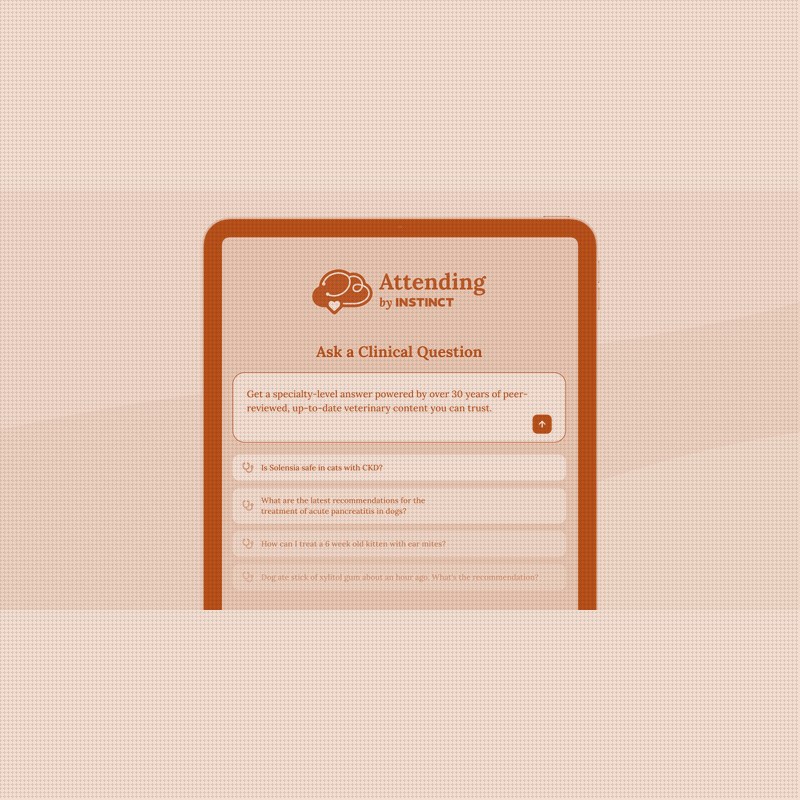
Instinct Science launched Attending, a clinical AI assistant that answers veterinarians' questions using only its own peer-reviewed content, including Plumb's Veterinary Drugs and Clinician's Brief. The tool is in an invitation-only preview ahead of a public showcase at IVECCS this month. It's a bet that proprietary clinical content is worth more as an AI moat than as a subscription business alone.

Temptations Opens a Cat Bodega to Buy Attention, Not Shelf Space
Temptations, Mars's top-selling cat treat brand, opened a free three-day pop-up in Manhattan built around the internet's love of bodega cats. The experiential play signals how a category leader spends on earned attention once shelf space and distribution are already won.
Can Your Dog's DNA Really Explain Its Behavior? Embark Bets $39 On It
Embark launched a $39 Behavior Insights upgrade pairing genetic markers with a year of Dogo training, extending its DNA-test business into recurring engagement. The science behind predicting individual dog behavior from genetics remains unsettled, per a November 2025 UMass Chan study.