
Connected cat hardware finds its international playbook in Canada
Whisker opened Canadian pre-orders today for the Litter-Robot 5, EVO, and LitterHopper 5. It's the first international expansion of the new generation, and a stress test of whether U.S.-only DTC pet hardware can travel.
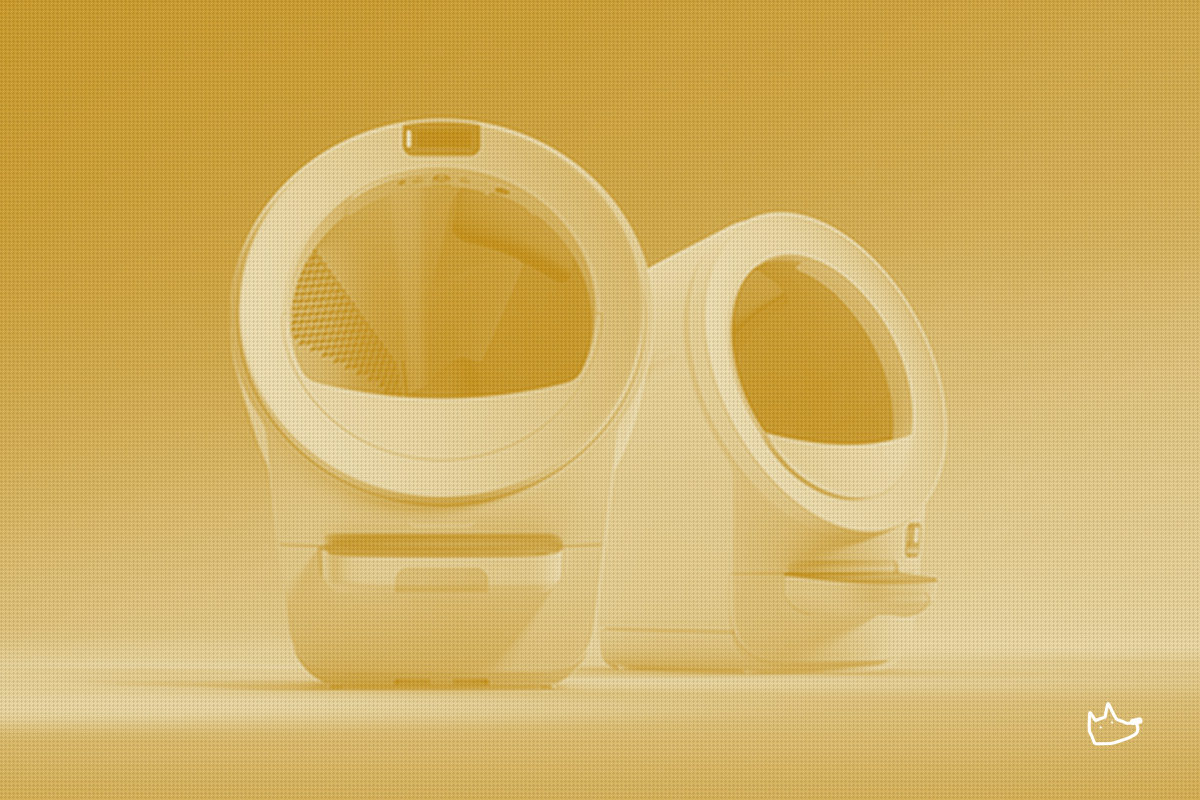
The first cross-border move for Whisker's new Litter-Robot generation is Canada, and the launch reads less like a product release than a stress test of whether a U.S.-only DTC pet hardware brand can run an app-dependent, subscription-attached business in a second country.
Whisker opened Canadian pre-orders today for the Litter-Robot 5, Litter-Robot EVO, and LitterHopper 5, with shipping set to begin June 22.
Whisker opens Canadian pre-orders for Litter-Robot 5 lineup
Whisker is selling three SKUs in Canada: the Litter-Robot 5 at $1,199 CAD, the more compact Litter-Robot EVO at $899 CAD, and the LitterHopper 5 refill accessory at $175 CAD. The full lineup launched in the U.S. in October 2025. Canada is the first international market to get it.
EVO is the volume play. It's a smaller form factor at Whisker's lowest price tier, designed for first-time buyers, apartments, and smaller homes. The LitterHopper 5 accessory holds 32% more litter than the prior generation, which extends the time between manual refills and reinforces the subscription tie-in for litter delivery.
The Auburn Hills, Michigan company manufactures in Juneau, Wisconsin and employs more than 300 people. Canadian customers reach the products through Whisker's direct channel; the announcement does not mention Canadian retail partners or marketplace listings.
There's a second piece of context worth holding in mind. In August 2024, Pondera Holdings, Whisker's controlling investor, was reported by Reuters to be exploring a sale of its stake at a valuation nearing $1 billion, per GlobalPETS coverage. That process has not closed publicly, which means an international growth narrative still reads differently to a PE buyer than to a consumer.
Why cross-border hardware lives on the service backbone
Canada is the cheapest plausible international test for a U.S. pet hardware brand. Same regulatory regime for consumer electronics. Overlapping retail landscape. A customer base that already buys from U.S. DTC sites. Manageable logistics cost from a Midwest factory.
The interesting question isn't whether Whisker can sell units north of the border. It's whether the operational tail of a connected, subscription-attached product travels well.
Three things to watch.
The app stack is the first one. Litter-Robot 5 is the connected SKU. It depends on the Whisker+ ecosystem for waste-tracking insights, camera monitoring, and behavior alerts. Localizing that for Canada is a soft version of the question: same language, same store, mostly the same firmware. The harder version lands if and when Whisker enters a non-English market.
Subscription fulfillment is the second. LitterHopper turns the offering from a hardware sale into a recurring litter business, and that only works when the cost-to-serve is in line with the basket. Cross-border subscription fulfillment is one of the quieter places DTC brands have lost margin in Canada in the past. Heavier, lower-velocity SKUs tend to make it worse.
Warranty and returns is the third, and the most expensive to get wrong. A $1,199 connected device that breaks needs a service path that doesn't route through a U.S. depot. Building a parallel Canadian one (repair partners, parts inventory, RMA labels) is the unglamorous part of any international playbook, and it tends to be the line item that decides whether the rest of the launch holds together.
The takeaway for operators is more about disclosure than verdict. A three-SKU Canadian pre-order with a defined ship date is a more committed posture than a passive "we ship to Canada" line on a U.S. site. By the rough public read, the other major U.S. connected pet hardware names (Petlibro, Catit, Whistle, the smaller smart-feeder brands) have leaned closer to the passive version so far. What Whisker actually invests in Canadian service infrastructure will say whether the more committed posture comes with the operational backing to match.
The wider context is that U.S. premium-connected pet hardware appears to have slowed enough that international starts to look like a more interesting line of growth than incremental domestic share. That doesn't mean cross-border is easy, or that the brands that try it will all clear it. It means it's a more crowded question than it was a year ago, and a more legible one to operators trying to model where the next leg of category growth comes from.
What this launch leaves unresolved
A press release announces a ship date. It doesn't disclose intent. There are a few places to look for whether Whisker is sequencing international markets or just adding one.
The first is what Whisker actually spends on Canadian service infrastructure. Routing returns and warranty work through Wisconsin is cheap. Standing up a Canadian repair partner network, in-country parts inventory, and a Canadian RMA address is not. How that investment shapes up over the next few quarters says more about the commitment than today's pre-order page does.
The second is LitterHopper attach. Recurring litter is what turns the unit economics from hardware margin to consumables margin, and it only works if Canadian fulfillment doesn't eat the contribution. The Canadian attach rate, if Whisker discloses it, would be a more telling read than the launch press itself.
The third is Pondera. Reporting on a potential stake sale went quiet after 2024. International proof points are the kind of growth narrative PE sponsors lean on when a process picks back up. If a sale conversation re-emerges later in the year, Canada will read in hindsight as part of that pitch.
None of those answers are knowable from where the launch sits today, which is part of what makes them worth tracking. Connected pet hardware has been a U.S.-only DTC story for most of the brands that built the category. Whether others follow Whisker's playbook abroad, and how quickly, is a more useful question than whether Canada itself was the right first market.
Source: Whisker Launches Litter-Robot 5, Litter-Robot EVO, and LitterHopper 5 in Canada via Business Wire
Other News
More stories shaping the pet industry this week. From funding rounds and product launches to regulatory shifts and retail strategy, stay ahead of what's driving the market.

Fera Pets launches a $49.95 weight and muscle chew for dogs
Fera Pets launched Healthy Weight & Muscles, a $49.95 soft chew for dogs sold in 90-count tubs, on October 13th, 2026. Each chew pairs myHMB, Betafin betaine and L-carnitine with ADM's PRIOME Metabolic Health postbiotic, and Fera's product page cites a study for each ingredient.

Rare Breed and Stray Project tie $4 per item to shelter dog meals
Link Snacks' Rare Breed treat brand and Denver apparel startup Stray Project launched Impossible to Ignore for National Adopt a Shelter Dog Month. The official rules commit $4.00 per item and $0.50 per email signup to Greater Good Charities through November 30th, paid by Stray Project, with signups shared by both brands.

Pets will shape travel plans for 68% of owners, Subaru survey finds
A Subaru-commissioned Talker Research survey of 2,000 pet-owning drivers, released October 13th, 2026, says 68% expect their pet to affect travel plans this year and 73% would drive instead of fly to bring the pet. New in this release, 10% may host, 10% may shorten a trip and 8% may skip gatherings. In our view, the trip-length and planning numbers are the ones sitters and kennels can use.