
Gamgee Raises $4M for AI-Designed Dog Cancer Vaccines
Gamgee, founded after entrepreneur Paul Conyngham built a computationally-designed mRNA cancer vaccine for his own dog, has raised a $4M seed round led by Founders Fund. The company is betting personalized manufacturing, not a single approved drug, is the moat in veterinary oncology.
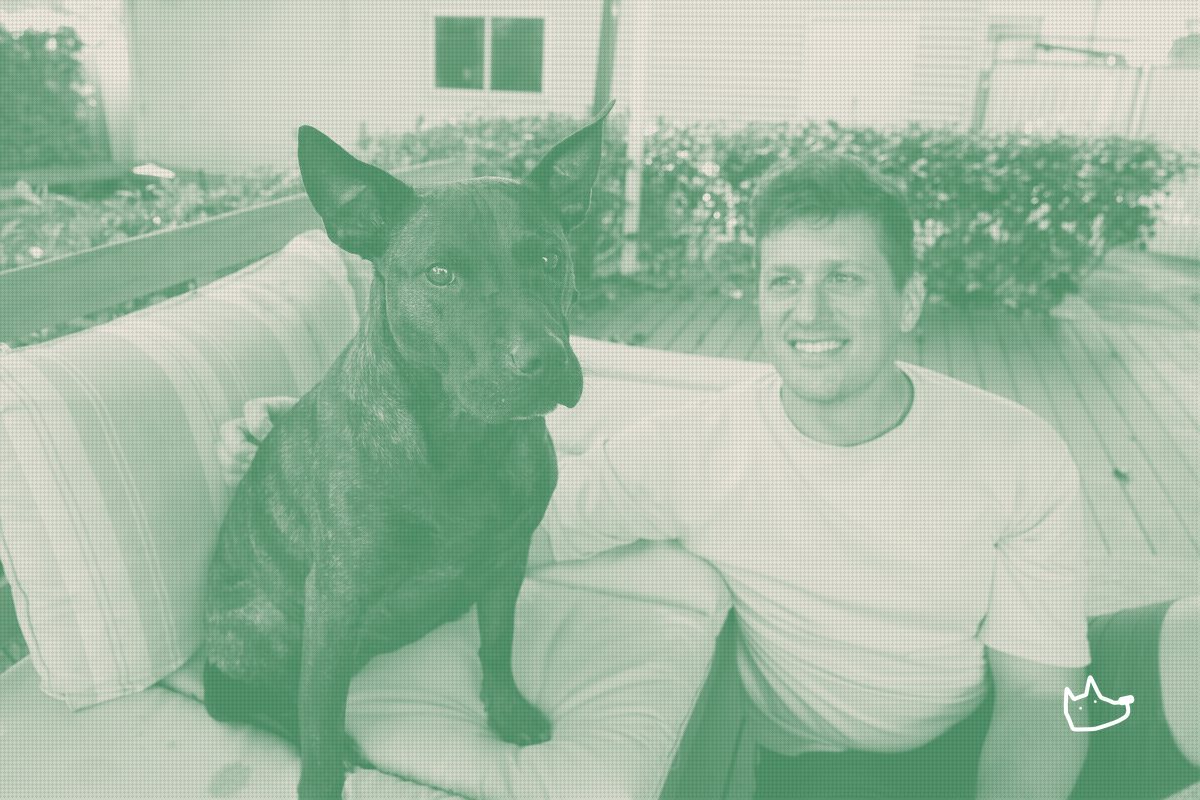
Six million dogs are diagnosed with cancer in the US every year, and it remains the leading cause of death in adult dogs. The vaccine one entrepreneur built for his own terminally ill dog, using ChatGPT and AlphaFold instead of a pharmaceutical pipeline, is now Gamgee. A startup that just raised a $4M seed round led by Founders Fund.
Gamgee raises $4M seed led by Founders Fund
Gamgee closed a $4M seed round led by Founders Fund, with participation from Celine Halioua of longevity biotech Loyal, Steve Eidelman of Modern Animal, Dropbox co-founder Arash Ferdowsi, and Gokul Rajaram. The round was announced August 17th alongside the company's launch out of Y Combinator's Summer 2026 batch.
The company's founding story is also its clinical origin story. Paul Conyngham's rescue dog Rosie was given a terminal cancer diagnosis after chemotherapy and surgery failed. Conyngham, a self-taught machine learning engineer with 17 years in the field, spent two years teaching himself genomics and bioinformatics and working with researchers at UNSW and the Garvan Institute to design a personalized mRNA vaccine for Rosie's specific tumor, using ChatGPT and AlphaFold rather than a pharmaceutical R&D process. Several of Rosie's tumors shrank 50-75%, and she reached remission before her cancer returned following a later surgery.
"Every dog deserves the same chance Rosie had," Conyngham said. Pall Thordarson, a researcher at UNSW who collaborated on the treatment, called the underlying approach an inevitability: "The intersection of genomics, AI, and RNA technology is ripe for exactly this kind of work." Amin Mirzadegan of Founders Fund pointed to Conyngham's path into the field rather than the technology itself: "That kind of determination is rare, and it's what we look for."
What N-of-1 medicine means for veterinary oncology
Gamgee's product is the industrialized version of what Conyngham built for one dog: a vet collects tumor and healthy tissue samples, Gamgee sequences both, software identifies the mutations specific to that tumor, and the company designs and manufactures a vaccine that trains the dog's own immune system to target those mutations. It is, by design, a different vaccine for every dog, delivered through veterinary oncologists rather than sold as a shelf product.
That "N-of-1" model is the real bet here, and it cuts against how animal health drugs normally reach market. A conventional therapeutic is developed once, tested in a trial population, and sold identically to every patient who qualifies. Gamgee is instead treating manufacturing personalization, not formulation, as the product, closer to how CAR-T cancer therapies work in human medicine than to how a typical veterinary oncology drug gets approved and distributed.
If that manufacturing model holds at any real volume, it reframes what "drug development" means for the roughly six million dogs diagnosed with cancer annually in the US. It also puts Gamgee in different company than most funded animal-health startups. Loyal's $100M Series C is chasing a single conditionally-approved drug for canine lifespan extension, a conventional regulatory path at a much larger check size. Gamgee is instead betting that a personalized-manufacturing pipeline, not a single approved molecule, is the more defensible moat, and that veterinary oncology can absorb a treatment model built around bespoke production runs rather than a standardized SKU.
The investor list reinforces that this is being read as an infrastructure bet, not a single-drug bet. Halioua and Eidelman both know the operating reality of scaling a personalized or clinic-delivered animal-health model, Halioua from Loyal's drug-development path and Eidelman from building out Modern Animal's vet-clinic network, which suggests the diligence here was as much about delivery logistics through veterinary oncologists as about the underlying science.
Whether personalized vaccines can scale to millions
Gamgee says it is already running clinical work in Australia and accepting cases globally, with a 30-dog clinician-led safety and efficacy trial underway. That trial, not the funding round, is the real gate: a personalized-manufacturing model has to prove it can produce a working vaccine for a meaningfully different tumor profile in every single dog, on a timeline and at a cost a veterinary oncologist can actually work with.
Cost and turnaround time are the two variables worth watching once trial data starts coming in. A bespoke vaccine manufactured per patient is inherently more expensive to produce than a standardized drug, and veterinary oncology already has to work within what a pet owner can afford out of pocket in most cases, since a full personalized-manufacturing pipeline is a hard sell if it can't get discussed and delivered inside a clinically useful window after diagnosis.
Rosie's own outcome, remission followed by relapse after surgery, is a reminder that a first proof point is not the same as a durable therapy, and Gamgee will need trial data that moves past a single dog's story to make the case at scale.
Source: Gamgee via GlobeNewswire
Other News
More stories shaping the pet industry this week. From funding rounds and product launches to regulatory shifts and retail strategy, stay ahead of what's driving the market.

Zoom Room returns to franchising with 18.2% same-store sales growth
Zoom Room reported 12.0% and 18.2% same-store sales growth in Q2 and Q3 after pausing development in late 2025, and 15.1% for units open more than a year. It now resumes franchise sales with two quarters of operating data, and a 550-gym target that implies about 120 openings a year.
MPM Products recertifies as a B Corp under B Lab's audited new standards
The owner of Applaws, Reveal and Encore is one of 20 UK companies in the first cohort to certify under B Lab's rewritten standards, which add third-party assurance and a five-year cycle. With the EU's sustainability label rules applying from September 27th, 2026, B Lab says an assured B Corp badge now qualifies as a valid label.

Cat food owner hands North America to its marketing chief
MPM Products, the owner of Applaws, Reveal and Encore, has named global CMO Samantha Greenwood president of North America. The US brings in more than 40% of company revenue, and we read the pick as fitting Partners Group's cat-focused growth thesis in a pet food category APPA expects to grow about 2% in 2026.