M&S Enters Pet Food, Chasing 'Shopping List' Status
Marks & Spencer entered pet food for the first time on August 19th with its 13-line Paws & Pals range, aiming to double its category market share. The launch is part of a broader push to become a full 'shopping list' grocery destination.
Half of all pet food sold in the UK moves through a grocery aisle, not a specialty retailer. Marks & Spencer wants a bigger share of that half, and it's starting with kibble.
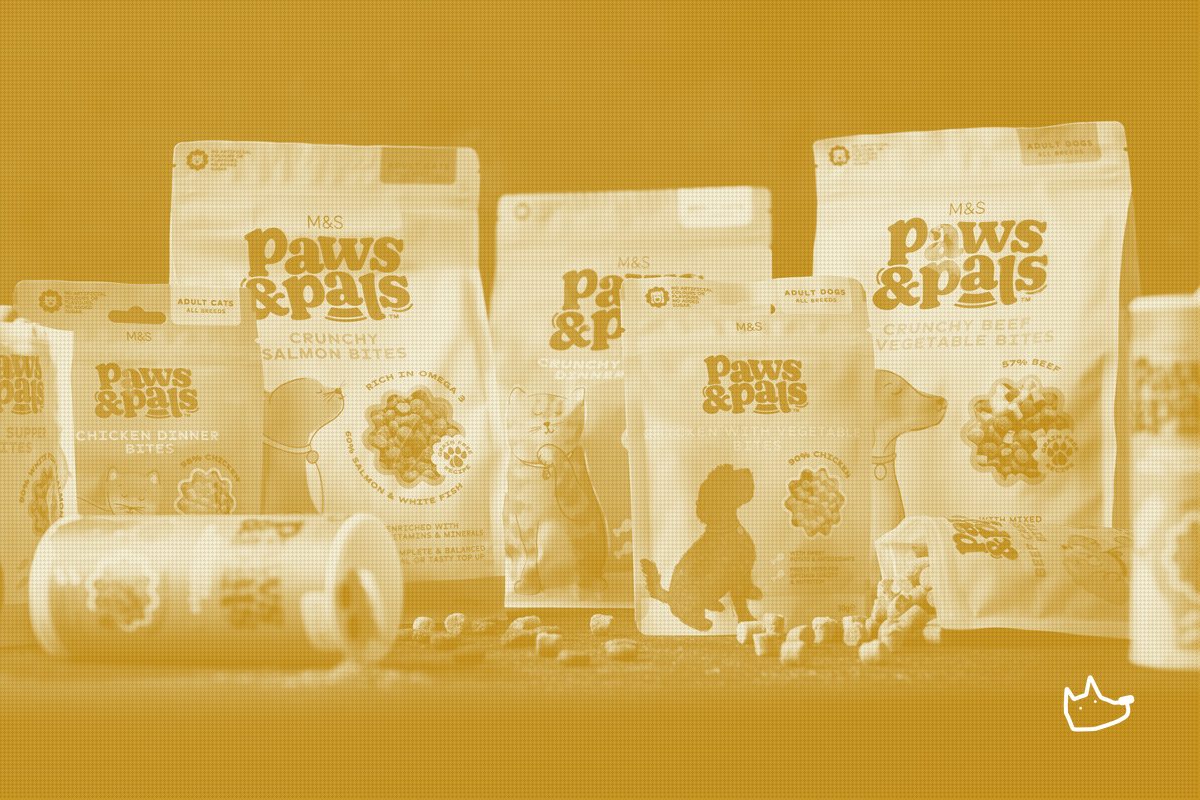
M&S launches 13-line Paws & Pals pet food range
Marks & Spencer entered the pet food category for the first time on August 19th with Paws & Pals, a 13-line range spanning kibble, treats and toppers for dogs and cats. The company describes the products as grain-free, with high meat content, added vitamins and minerals, and "100% natural ingredients." The range went on sale in M&S Foodhalls the same day the announcement went out.
Alex Freudmann, managing director of M&S Food, framed the launch around basket completion rather than pet nutrition on its own. "We've developed Paws & Pals with the same focus on quality that sits behind every M&S Food product," Freudmann said, adding that the goal is to help "customers do more of their weekly shop with M&S."
The company's stated ambition is to double its market share in the pet category. M&S cited its own research that 60% of customers already scrutinize pet food ingredients closely when they shop, treating the category as an extension of the same quality standard they expect from M&S's human food aisles. The press release did not disclose pricing, store count for the rollout, or online availability.
The shopping-list strategy behind M&S's pet push
M&S has spent the past several years repositioning itself as what Freudmann calls a "shopping list retailer," the store a household turns to for the full weekly basket rather than a top-up trip for treats. Pet food is a logical next category for that strategy: it's a recurring, high-frequency purchase that pulls a shopper back into the store on a predictable cycle, exactly the kind of item that anchors a weekly-shop habit once a customer trusts the brand on it.
That's also why grocery retail keeps taking share from specialty pet stores rather than losing it to online-only DTC brands. A pet owner who already trusts a supermarket's quality bar on human food has a lower switching cost to also buying pet food there, especially once a private-label range signals the same ingredient standards. It's the same logic behind JustFoodForDogs hiring a grocery-aisle CEO rather than a pet specialty retail executive: the operators who understand grocery's basket economics are the ones best positioned to win share as the category migrates there.
For pet food manufacturers, an M&S private-label entry is a direct threat to branded shelf space, not just a new competitor. Grocers control the shelf, and a retailer this size launching its own range signals it intends to use that control to push a private-label product at the eye level and price point that branded competitors currently occupy. Branded pet food suppliers selling into UK grocery now have to defend shelf space against their own retail partner, not just against each other.
The UK is a useful test case because grocery's share of pet spend there already outpaces the US, where specialty retailers and warehouse clubs still hold more ground, and where Tractor Supply has leaned on same-day grocery-style delivery to defend its own pet aisle rather than cede it to online-only brands. If M&S's shopping-list framing succeeds at doubling its pet share, expect the playbook, private-label range, quality-parity messaging, basket-completion pitch, to travel to other full-line grocers watching from the sidelines.
What determines whether the pet push sticks
The open question is retention, not launch-day trial. A pet owner switching to a grocer's private-label food needs to see their pet tolerate the switch and keep buying it on the next shop, the same repeat-purchase test any DTC subscription brand faces. M&S didn't disclose a formulation partner or manufacturer, so whether Paws & Pals holds up nutritionally against established brands is still an open question that will play out in returns and repeat-purchase data, not in the launch announcement.
Watch for two signals next. First, whether M&S expands the range's SKU count or pushes it into a loyalty-tied promotion through its Sparks program, since a private-label pet range only compounds if it becomes a habitual add to the basket rather than a one-time trial. Second, whether competing UK grocers, Tesco, Sainsbury's, Asda, respond with their own range expansions or pricing moves, since a category this size rarely stays a one-retailer story once the first mover proves out the basket-completion thesis.
Source: Marks & Spencer
Other News
More stories shaping the pet industry this week. From funding rounds and product launches to regulatory shifts and retail strategy, stay ahead of what's driving the market.

Zoom Room returns to franchising with 18.2% same-store sales growth
Zoom Room reported 12.0% and 18.2% same-store sales growth in Q2 and Q3 after pausing development in late 2025, and 15.1% for units open more than a year. It now resumes franchise sales with two quarters of operating data, and a 550-gym target that implies about 120 openings a year.
MPM Products recertifies as a B Corp under B Lab's audited new standards
The owner of Applaws, Reveal and Encore is one of 20 UK companies in the first cohort to certify under B Lab's rewritten standards, which add third-party assurance and a five-year cycle. With the EU's sustainability label rules applying from September 27th, 2026, B Lab says an assured B Corp badge now qualifies as a valid label.

Cat food owner hands North America to its marketing chief
MPM Products, the owner of Applaws, Reveal and Encore, has named global CMO Samantha Greenwood president of North America. The US brings in more than 40% of company revenue, and we read the pick as fitting Partners Group's cat-focused growth thesis in a pet food category APPA expects to grow about 2% in 2026.