
An Angel Network of Vets Backs a Platform That Pays the Clinic Before the Client Leaves
PawPay has become the newest portfolio company of the Veterinary Angel Network for Entrepreneurs on undisclosed terms. Acting as an authorized collection agent, the platform verifies coverage at checkout, collects only the owner's deductible and coinsurance, pays the clinic in full within minutes, and manages reimbursement with the carrier. It is free for practices to join and targets the direct-pay experience Trupanion has largely owned.
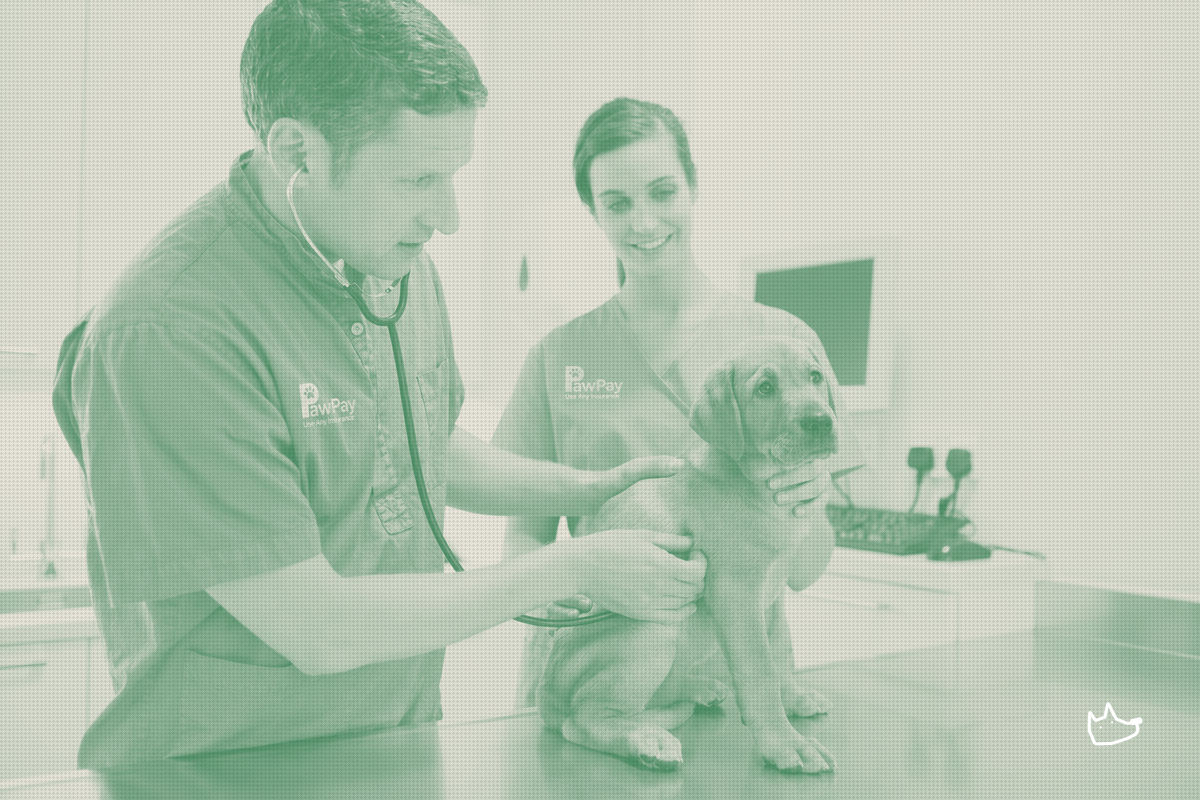
Fewer than 6% of American dogs carry insurance, and the ones that do still hand the clinic a full invoice at checkout. A Los Angeles company says it can close that gap without pushing pet owners into a financing product, and a network of veterinarian angel investors has now put money behind the claim.
The company, PawPay, has become the newest portfolio company of the Veterinary Angel Network for Entrepreneurs following investments by VANE members. Terms were not disclosed.
How PawPay settles a claim at the checkout counter
The company's own framing is that it turns any policy into pet insurance that pays the vet directly, letting insured pet owners pay only their deductible and coinsurance at the time of the visit. Instead of paying the entire invoice upfront and waiting days or weeks for reimbursement, the platform verifies coverage, collects the pet owner's portion of the bill, pays the veterinary clinic immediately, and manages reimbursement directly with the insurance carrier.
It works as an authorized collection agent, which is the mechanism that makes the sequence legal and the reason the clinic gets paid in full rather than in installments. The company says practices are paid within minutes of checkout.
The clinic-side workflow is deliberately thin. Staff upload or email an invoice and medical record out of the practice management system, and PawPay handles coverage likelihood, claims submission, payment processing, and insurer reimbursement from there. Where coverage is declined, the company works with the pet owner directly rather than sending the balance back to the practice.
The commercial terms for clinics: free to join, transaction fees lower than traditional credit cards, a digital portal, and what the company describes as rapid staff training and dedicated support. PawPay says the platform was built with clinic profitability and workflow ease in mind.
The distinction from lending is the part the company leads with. Unlike financing products that place pet owners into debt, PawPay unlocks insurance benefits that already exist.
"One of the biggest frustrations for insured pet owners is having to pay the full cost of care upfront despite faithfully paying insurance premiums," said Peter Glassman, DVM, co-founder of VANE. "PawPay has created an elegant solution that benefits everyone involved."
David Franklin, co-founder and CEO of PawPay, framed the raise around the investor base rather than the capital, citing VANE members' experience in animal health as the company expands partnerships with veterinary practices and insurance carriers.
The platform is patent-pending and, the company says, fully functional. PawPay is currently onboarding veterinary practices and building deeper integrations with insurance partners ahead of broader commercial expansion.
VANE bills itself as the only angel investment community dedicated exclusively to early-stage innovation in animal health. Members invest individually rather than through a fund, and pair capital with mentorship and industry introductions. The network has been evaluating early-stage animal health deals since 2021, sitting in the gap between bootstrapping and institutional venture money.
Glassman previously owned Friendship Hospital for Animals in Washington, D.C., the largest independent practice in the country at the time of its 2020 sale, and founded VetInsite, a veterinary client communication software sold in 2007 and now part of Covetrus.
Why direct pay has been a Trupanion moat
Direct-to-vet payment is not new. It has just been owned by essentially one company. Trupanion built proprietary software that settles claims inside the practice workflow and says it now works with more than 11,000 clinics across the U.S. and Canada, per its veterinary program.
That has been a real competitive moat. A pet owner who wants to avoid fronting a $4,000 emergency bill has had one practical answer, and it required buying a specific carrier's policy. Every other major insurer still runs on reimbursement, which means the experience at the moment of highest stress looks a lot like having no coverage at all.
A carrier-agnostic settlement layer turns that moat into something any clinic can offer, which is why a network of practicing veterinarians is the natural first check. Clinics have spent a decade watching insured clients decline recommended care because the up-front number was the number that mattered.
The market backdrop helps. Penetration is low, roughly 4% of U.S. pets, but the insured base grew from about 3.1 million pets in 2020 to more than 6.4 million at the end of 2024, on premium above $4.7 billion, per NAPHIA's state of the industry data. The pool of frustrated insured clients is small, growing fast, and concentrated in the practices most likely to pilot something like this.
Carrier names and clinic count are the next numbers
The signal to watch is a named insurance carrier integration. The model depends on insurers treating a third party as an authorized agent and settling reliably, and no carrier has been announced yet. That, more than clinic signups, is what turns a working platform into a durable business.
Clinic count is the other number to track, alongside transactions per clinic. Free-to-join platforms accumulate registrations easily, and the company has disclosed neither figure so far.
For practice owners, the near-term decision is small: whether to pilot a free tool that could reduce the number of insured clients who walk away from recommended care. For everyone building in pet payments, the open question is whether the reimbursement wait stays a business or becomes a feature the carriers eventually absorb themselves.
Source: VANE Announces Investment in PawPay, submitted to The Underbite. More at pawpay.com and vane.vet.
Other News
More stories shaping the pet industry this week. From funding rounds and product launches to regulatory shifts and retail strategy, stay ahead of what's driving the market.

Fera Pets launches a $49.95 weight and muscle chew for dogs
Fera Pets launched Healthy Weight & Muscles, a $49.95 soft chew for dogs sold in 90-count tubs, on October 13th, 2026. Each chew pairs myHMB, Betafin betaine and L-carnitine with ADM's PRIOME Metabolic Health postbiotic, and Fera's product page cites a study for each ingredient.

Rare Breed and Stray Project tie $4 per item to shelter dog meals
Link Snacks' Rare Breed treat brand and Denver apparel startup Stray Project launched Impossible to Ignore for National Adopt a Shelter Dog Month. The official rules commit $4.00 per item and $0.50 per email signup to Greater Good Charities through November 30th, paid by Stray Project, with signups shared by both brands.

Pets will shape travel plans for 68% of owners, Subaru survey finds
A Subaru-commissioned Talker Research survey of 2,000 pet-owning drivers, released October 13th, 2026, says 68% expect their pet to affect travel plans this year and 73% would drive instead of fly to bring the pet. New in this release, 10% may host, 10% may shorten a trip and 8% may skip gatherings. In our view, the trip-length and planning numbers are the ones sitters and kennels can use.