Elanco Turns to the Ad Regulator to Slow PetIQ's Seresto Look-Alike
The National Advertising Division sided with Elanco and told PetIQ to modify or drop four brand-superiority claims for its PetArmor Extend flea and tick collar, sparing only the claim tied to the product's active ingredients. It is the second Elanco challenge against PetIQ in under two years, and a template for how incumbents blunt cheaper look-alikes without going to court.
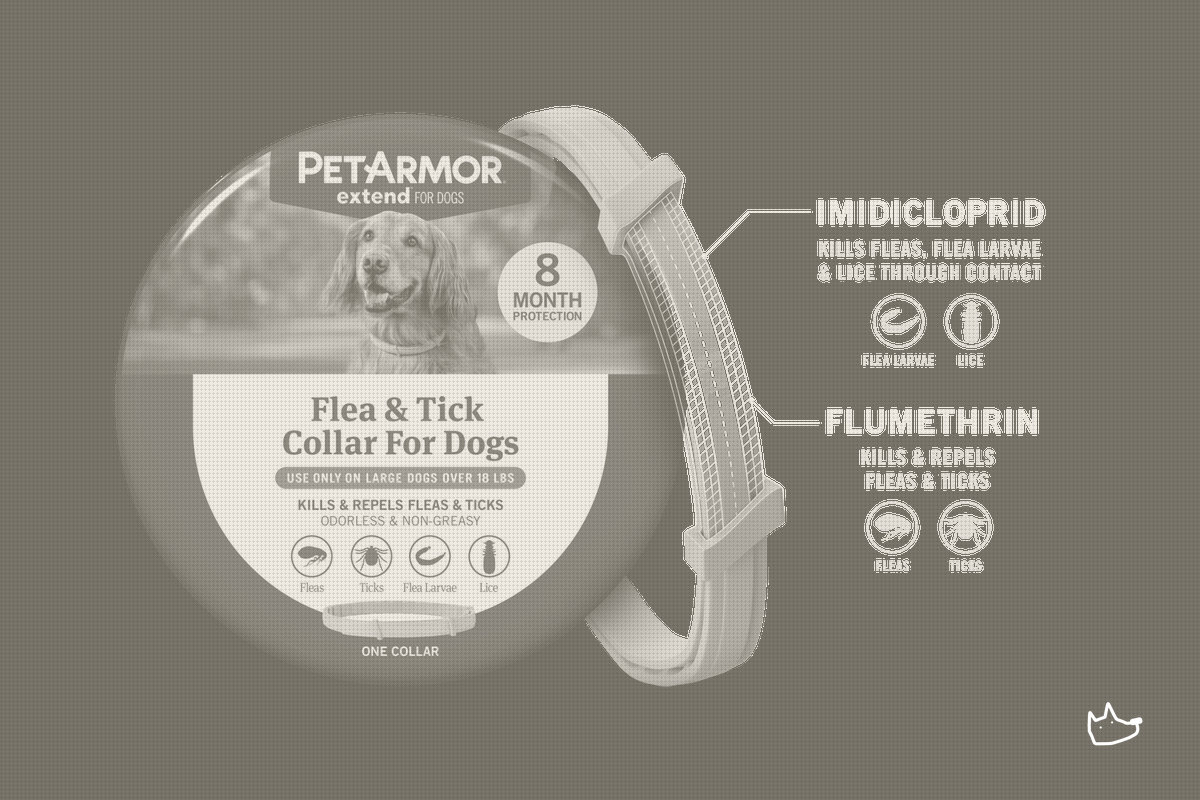
The National Advertising Division told PetIQ to drop four of its biggest marketing claims for the PetArmor Extend flea and tick collar, siding with Elanco on everything except the one claim rooted in the product's chemistry. The decision is less a marketing footnote than a playbook: how a branded animal-health incumbent slows a cheaper look-alike without ever filing a lawsuit.
NAD Backed PetIQ's Active-Ingredient Claim but Told It to Drop Four Superlative Brand Claims After Elanco's Challenge
The National Advertising Division, the advertising self-regulatory arm of BBB National Programs, issued a decision on July 16 in a case Elanco Animal Health brought against PetIQ over advertising for the PetArmor Extend Flea & Tick Collar, an eight-month over-the-counter collar for dogs and cats.
NAD found one claim adequately supported. PetIQ's assertion that PetArmor Extend uses the “#1 vet-recommended” active ingredients survived, on survey evidence that veterinarians recommend the imidacloprid and flumethrin combination more often than other collar active-ingredient pairings. That is a narrow win, and a telling one: it is a claim about the molecules, not the brand.
Everything built on top of the brand came down. NAD recommended PetIQ modify or discontinue “#1 Brand in Total Flea & Tick Solutions,” “#1 Fastest Growing Flea & Tick Brand,” and “Trusted by millions,” along with a set of duration, comparative-performance, and product-attribute claims. NAD's reasoning was consistent across the group. The market-leadership and growth superlatives lacked an adequate evidentiary basis, and the softer “trusted by millions” framing carried an implied establishment message the record did not support. PetIQ agreed to comply with the decision, the standard resolution in NAD proceedings and one that avoids any referral to the Federal Trade Commission.
The competitive backdrop is the part that matters for operators. PetArmor Extend carries the same two active ingredients, imidacloprid and flumethrin, that Elanco sells in Seresto, one of Elanco's largest and best-known consumer brands. PetArmor's whole proposition is the value version of that chemistry: the same actives and a comparable eight-month wear window at a lower shelf price. That makes the collar a direct threat to a franchise Elanco has spent years defending, including through a high-profile Environmental Protection Agency safety review that concluded in 2023 with the collar's registration confirmed.
This is also the second time in under two years that Elanco has taken PetIQ to NAD. In November 2024, an Elanco challenge led PetIQ to voluntarily discontinue “fastest-acting” and “fastest-killing” claims for its NextStar flea and tick topical. Two cases in twenty months, against the same challenger, is not a coincidence. It is a pattern.
Elanco Is Using a Fast, Cheap Self-Regulatory Channel to Strip the Marketing Edge From a Collar That Copies Seresto's Chemistry
The strategic content here is the venue, not the verdict. Elanco did not sue. It used a self-regulatory process that resolves in months, costs a fraction of litigation, and produces a public, citable decision. For an incumbent watching a private-label rival copy its chemistry and undercut its price, NAD is close to an ideal instrument.
Three implications follow for anyone operating in the parasiticide category or building a value brand against a branded leader.
- The chemistry is defensible, the superlatives are not. PetIQ kept the one claim tied to the active ingredients and lost every claim that asserted brand primacy. A challenger whose entire pitch is “same actives as the leader, lower price” can stand behind the actives. What it cannot easily stand behind, absent hard share and growth data, is language like “#1 brand” or “fastest growing.” Those superlatives are the exposed flank, and incumbents now know exactly where to aim.
- NAD is becoming a competitive weapon in animal health, not a compliance afterthought. The value proposition of a generic-equivalent product lives in its marketing, because the molecules are identical to the branded original. Strip the superlatives and you blunt the pitch without touching the product. Elanco is demonstrating that a well-timed NAD challenge can quietly reset a rival's messaging across retail shelves and e-commerce listings, and that it can do so repeatedly.
- Ownership structure raises the stakes on both sides. PetIQ went private in a roughly $1.5 billion take-private by Bansk Group that closed in 2024, delisting from Nasdaq. A private-equity owner is running PetIQ's private-label and value brands for margin and share, which means aggressive comparative marketing is a core growth lever, and also a recurring legal and regulatory exposure. Elanco, still public and still leaning on Seresto and Advantage as anchor consumer brands, has every incentive to keep the pressure on.
The reframe worth holding onto is this. In a category where the patents have expired and the actives are commoditized, the real competition is not over what is in the collar. It is over what you are allowed to say about it. NAD has become the arena where that fight plays out, and the incumbent with the bigger legal and evidentiary budget starts with an advantage.
Watch Whether PetIQ Complies Quietly and Whether Elanco Makes NAD Challenges a Standing Tactic Against Value Parasiticides
The near-term signal is compliance. PetIQ agreed to comply, so watch how fast the flagged claims disappear from PetArmor Extend packaging, retailer product pages, and paid search copy, and whether the replacement language leans harder on the surviving “vet-recommended actives” message. A clean, quick scrub says PetIQ treats this as a cost of doing business. Foot-dragging invites an FTC referral, which is the one outcome the self-regulatory route is designed to avoid.
The longer signal is cadence. If a third Elanco challenge lands against another PetIQ value product, NAD challenges have effectively become a standing tactic for policing generic-equivalent marketing, and every value brand in flea and tick should expect its superlatives to be audited. Competitors and private-label programs at the large retailers will read the same decision and adjust their own claim language pre-emptively, which is how one ruling reshapes a category's marketing without a single additional case.
Watch, finally, for the counter-move. PetIQ has a live, NAD-blessed claim in the “#1 vet-recommended actives” language, and a private-equity owner with reason to press it. The next round of PetArmor marketing will tell you whether PetIQ retreats to safer ground or rebuilds its pitch around the one superlative it is now cleared to keep.
For operators, the decision this informs is concrete. If you sell a value or private-label parasiticide, treat every market-leadership and growth superlative as a challenge waiting to happen, and keep the substantiation file current before a competitor forces the question. The chemistry will hold up. The adjectives are where you are exposed.
Other News
More stories shaping the pet industry this week. From funding rounds and product launches to regulatory shifts and retail strategy, stay ahead of what's driving the market.

Fera Pets launches a $49.95 weight and muscle chew for dogs
Fera Pets launched Healthy Weight & Muscles, a $49.95 soft chew for dogs sold in 90-count tubs, on October 13th, 2026. Each chew pairs myHMB, Betafin betaine and L-carnitine with ADM's PRIOME Metabolic Health postbiotic, and Fera's product page cites a study for each ingredient.

Rare Breed and Stray Project tie $4 per item to shelter dog meals
Link Snacks' Rare Breed treat brand and Denver apparel startup Stray Project launched Impossible to Ignore for National Adopt a Shelter Dog Month. The official rules commit $4.00 per item and $0.50 per email signup to Greater Good Charities through November 30th, paid by Stray Project, with signups shared by both brands.

Pets will shape travel plans for 68% of owners, Subaru survey finds
A Subaru-commissioned Talker Research survey of 2,000 pet-owning drivers, released October 13th, 2026, says 68% expect their pet to affect travel plans this year and 73% would drive instead of fly to bring the pet. New in this release, 10% may host, 10% may shorten a trip and 8% may skip gatherings. In our view, the trip-length and planning numbers are the ones sitters and kennels can use.