Temptations Opens a Cat Bodega to Buy Attention, Not Shelf Space
Temptations, Mars's top-selling cat treat brand, opened a free three-day pop-up in Manhattan built around the internet's love of bodega cats. The experiential play signals how a category leader spends on earned attention once shelf space and distribution are already won.
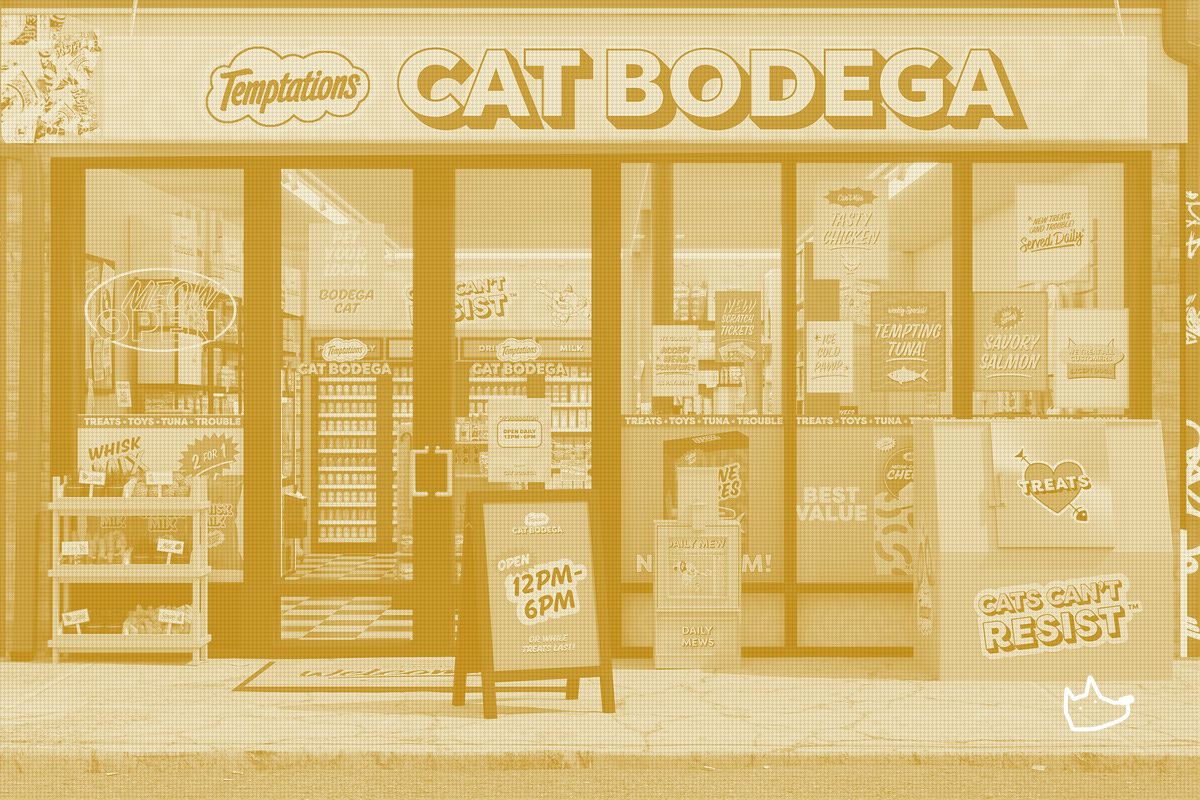
A pop-up shop dedicated entirely to bodega cats is opening in downtown Manhattan for three days, free to enter, no purchase required, the latest sign that pet CPG brands are borrowing straight from beauty and fashion's experiential-marketing playbook. Temptations, the Mars-owned treat brand and the category's top seller by Nielsen's count, built the whole thing around a meme its marketing team didn't create: the internet's enduring affection for the cats that guard corner stores.
Temptations opens a three-day cat bodega in Manhattan
Temptations opened a free pop-up called the Cat Bodega at 213 Bowery in New York City from September 17th through 19th, 2026, running 12pm to 6pm each day. A parallel virtual version runs at TemptationsTreats.com/CatBodega from September 17th through 26th.
The activation is built around bodega cats, the cats that live in and around New York corner stores and have become a durable subject of internet fandom. Visitors get games, giveaways and exclusive merchandise inside a space designed to look like a stylized corner store. Comedian and actress Heidi Gardner is the campaign's collaborator and stated cat advocate.
Temptations describes itself as America's number one cat treat brand based on 2025 Nielsen sales data, a claim that puts a category leader, not a challenger brand, behind an experiential stunt typically associated with brands trying to buy awareness they can't yet win on distribution. Lukasz Wysoczanski, Mars Pet Nutrition North America's vice president of care and treats, framed the campaign as overdue recognition: bodega cats, he said, are deserving of far more than just internet fandom.
Why a top-selling brand is spending on attention, not shelf space
Category leaders don't usually need pop-ups. Temptations already has the thing most CPG brands spend their marketing budget trying to win, the top share of a category tracked by Nielsen, distribution in essentially every grocery and pet retailer that sells cat treats, and decades of shelf presence. A three-day experiential activation in one New York neighborhood doesn't move volume in any measurable way. What it buys is a piece of earned media and social content built around a meme the brand didn't invent.
That's the same playbook beauty and fashion brands have run for years, Glossier's pop-ups being the clearest comparison, where a market leader spends on a physical, photographable, shareable moment specifically because its baseline awareness is already high enough that the incremental return on more traditional advertising is low. For a company the size of Mars, a single-city pop-up is a rounding error on the marketing budget, the same relationship a strategic-financing check has to a $300 million venture fund elsewhere in Mars's pet-care portfolio this week. The spend is a signal of intent more than a meaningful line item.
The timing lines up with how Mars is spending elsewhere in its pet-care business this week. A strategic-financing check into a grooming franchise and a three-day pop-up for a treat brand look unrelated on the surface, but both are Mars deploying capital into engagement rather than production: one bets on a physical services network, the other on a moment designed purely to be photographed and shared. Neither shows up as a new product on a shelf.
The bodega-cat framing itself is doing real work. It's an existing, beloved internet subculture Temptations didn't build and doesn't own, borrowed rather than manufactured, which is exactly why it can generate organic pickup a branded mascot or generic influencer campaign wouldn't. Leaning on a pre-existing meme is lower-risk than inventing a new one and betting on virality, and it's a tactic available to any brand willing to do the cultural homework, not just ones with Mars's ad budget behind them.
What's harder to replicate is the physical execution. A Manhattan storefront for three days is a real-estate and production cost most challenger pet brands can't justify against their revenue base. The lesson smaller operators can actually take isn't build a pop-up. It's that a well-chosen existing cultural moment, married to a low-cost digital extension like Temptations' ten-day virtual version, can substitute for physical presence when the budget doesn't stretch to Bowery Street rent.
Whether smaller brands can copy the bodega-cat playbook
The number worth tracking isn't sales, a three-day pop-up won't move a category leader's quarterly numbers, it's earned media reach and social engagement relative to the campaign's cost, the actual return metric for an experiential play like this one. If Temptations or Mars publicizes those figures later, that tells other CPG operators whether the tactic is worth budgeting for next cycle.
Source: TEMPTATIONS via PR Newswire
Other News
More stories shaping the pet industry this week. From funding rounds and product launches to regulatory shifts and retail strategy, stay ahead of what's driving the market.

Instinct Science's New AI Bets Proprietary Content Beats ChatGPT
Instinct Science launched Attending, a clinical AI assistant that answers veterinarians' questions using only its own peer-reviewed content, including Plumb's Veterinary Drugs and Clinician's Brief. The tool is in an invitation-only preview ahead of a public showcase at IVECCS this month. It's a bet that proprietary clinical content is worth more as an AI moat than as a subscription business alone.
Can Your Dog's DNA Really Explain Its Behavior? Embark Bets $39 On It
Embark launched a $39 Behavior Insights upgrade pairing genetic markers with a year of Dogo training, extending its DNA-test business into recurring engagement. The science behind predicting individual dog behavior from genetics remains unsettled, per a November 2025 UMass Chan study.
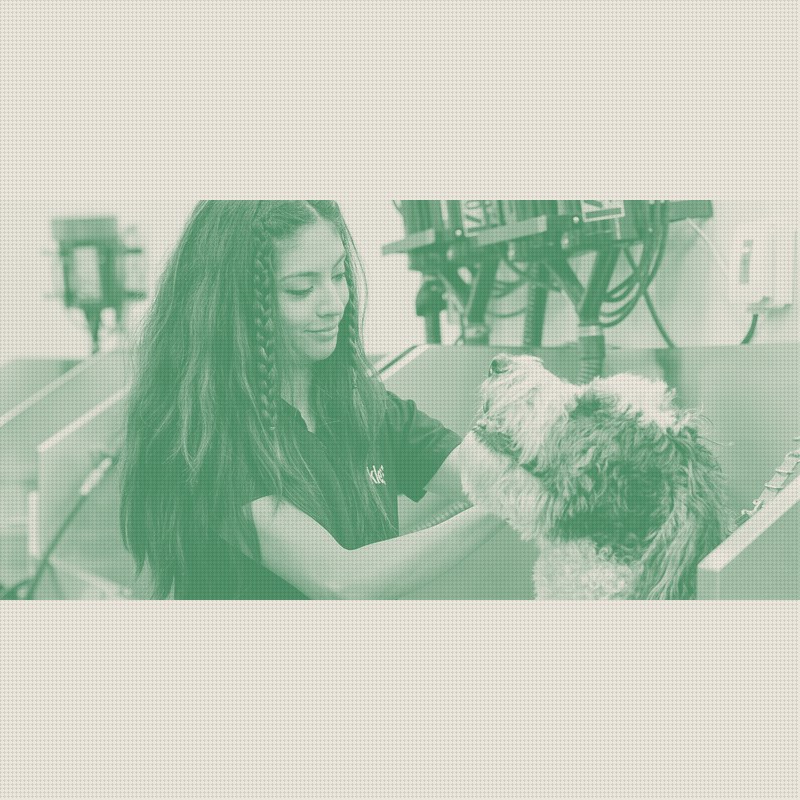
Mars' Venture Fund Bets $6M on Sparkle's Grooming Roll-Up
Sparkle Grooming Co. raised $6 million in strategic financing led by Companion Fund, the Mars Petcare-affiliated venture arm run by Digitalis Ventures. The round adds a corporate strategic investor to a franchise system that still hasn't published an open-unit count or same-store sales figure.