ZymIQ's US Patent Bets on Enzymes Over Antimicrobials in Pet Care
ZymIQ Technology AB has patented the enzyme-based, biofilm-targeting technology behind its Kalzyme pet dental, dermal and ear care line in the US. The bigger pattern: enzyme mechanisms challenging the broad-spectrum antimicrobials that still dominate preventive pet care.
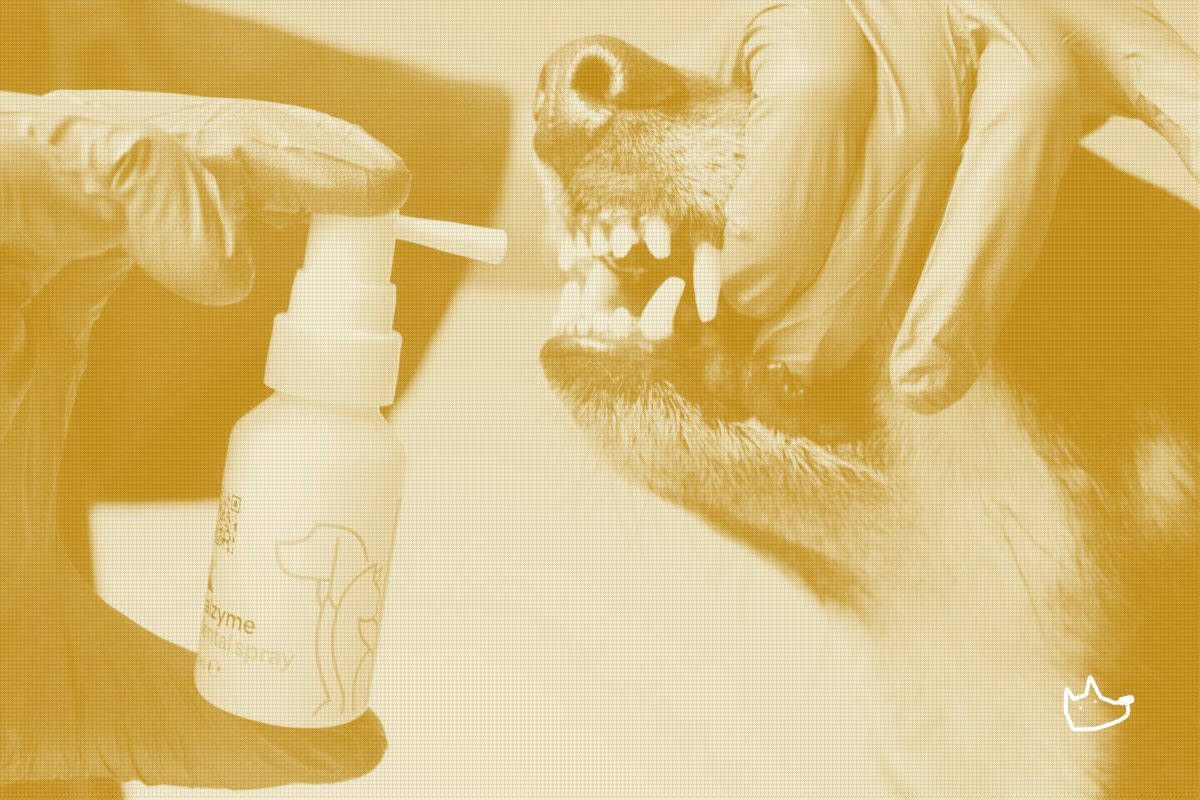
About 80% of veterinary visits are for routine, preventive care, not emergencies, and much of that time goes to dental cleaning, ear checks and skin maintenance handled with broad-spectrum antimicrobial products that kill bacteria indiscriminately. A Swedish life-science company's enzyme-based alternative just cleared its biggest regulatory hurdle for the category: a US patent covering the technology behind its Kalzyme product line.
ZymIQ patents enzyme tech behind Kalzyme in the US
ZymIQ Technology AB has been granted US Patent 12,702,632, covering the protease formulation behind its Kalzyme line of pet dental, dermal and ear care products, with protection running through 2044. The company had already secured patent protection in Europe, the UK, Hong Kong and Japan; the US grant extends that coverage into what it calls the world's largest pet market.
Kalzyme's three products, a dental spray, a dermal spray and gel, and otic drops, use hydrolytic enzymes to break down biofilm, the protective layer bacteria secrete to attach to a tooth surface, ear canal or patch of skin. That's a mechanically different approach than the antiseptics and antimicrobials that dominate the category today, which work by killing bacteria broadly rather than targeting the biofilm structure itself.
"The US is the world's largest pet market, and now we can play offense," said Michael Edelborg Christensen, ZymIQ's chief executive. "The market is dominated by old chemical products that wipe out everything, the bad along with the good. We work with the animal's own biology instead of against it."
Why enzyme-based products challenge broad-spectrum antimicrobials
A patent grant is an IP milestone, not a commercial one, and it's worth being precise about what actually changed here: ZymIQ can now defend the formulation in its largest addressable market and license or partner around it, but the grant itself says nothing about clinical superiority or retail traction against the antiseptic-dominated products already on shelf.
What makes the underlying approach worth watching regardless is the direction it points in. Broad-spectrum antimicrobial and antiseptic products are the default across pet dental, ear and skin care in large part because they're cheap, well-understood, and easy to formulate, not because they're the most targeted option available. A biofilm-specific enzyme mechanism is closer to the logic that's already reshaping human antimicrobial-adjacent categories, where indiscriminate antibiotic use has real downstream resistance costs and buyers are increasingly willing to pay for something narrower and better-targeted.
That same logic is showing up elsewhere in pet health as formulators look for ways around ingredients that carry regulatory or resistance baggage. A precision-fermented protein clearing FDA review earlier this year is a different technology solving a different problem, but it's the same underlying pattern: a novel biological mechanism using patent protection and regulatory clearance to argue its way into a category still dominated by older, blunter chemistry.
The market ZymIQ is chasing is real even if its own framing leans on generic sizing. Global pet oral care is projected to grow from $8.3B in 2024 to $12.7B by 2030, and ear care is growing faster still, with North America the largest region in both categories. The patent's scope beyond animals, covering human oral health, dermatology and wound care applications too, also gives ZymIQ a second market to license into if the pet side is slow to convert, though that optionality cuts both ways: a company spread across human and animal applications, still building out its US commercial presence, has a lot of ground to cover before "can play offense" becomes actual shelf presence.
Whether the biofilm approach gains real distribution
The real test is commercial, not legal. ZymIQ says the US patent clears the way for partnerships and a broader American commercial presence, but it disclosed no distribution agreements, retail placements or veterinary-channel partnerships alongside the patent news. Watch for whether a distributor, a veterinary product company, or a retailer picks up Kalzyme in the next few quarters, since that's the signal that separates a defensible patent from an actual go-to-market.
Also worth tracking: whether any competitor in pet dental or ear care responds with its own enzyme-based or biofilm-targeting product, which would suggest the mechanism is being read by the category as a real threat rather than a niche claim. A single small company holding a patent doesn't reroute a category on its own; a second and third entrant chasing the same mechanism would.
Other News
More stories shaping the pet industry this week. From funding rounds and product launches to regulatory shifts and retail strategy, stay ahead of what's driving the market.

Zoom Room returns to franchising with 18.2% same-store sales growth
Zoom Room reported 12.0% and 18.2% same-store sales growth in Q2 and Q3 after pausing development in late 2025, and 15.1% for units open more than a year. It now resumes franchise sales with two quarters of operating data, and a 550-gym target that implies about 120 openings a year.
MPM Products recertifies as a B Corp under B Lab's audited new standards
The owner of Applaws, Reveal and Encore is one of 20 UK companies in the first cohort to certify under B Lab's rewritten standards, which add third-party assurance and a five-year cycle. With the EU's sustainability label rules applying from September 27th, 2026, B Lab says an assured B Corp badge now qualifies as a valid label.

Cat food owner hands North America to its marketing chief
MPM Products, the owner of Applaws, Reveal and Encore, has named global CMO Samantha Greenwood president of North America. The US brings in more than 40% of company revenue, and we read the pick as fitting Partners Group's cat-focused growth thesis in a pet food category APPA expects to grow about 2% in 2026.