Subscribe
Services & Experiences
8 min read

Francesca Albo & Lea Burbidge Izquierdo | Co-Founders, Puppy Sphere

Puppy yoga read as a novelty. It is now 13 corporate-owned studios, 450,000 customers, and more than $14M in revenue, built without outside capital for four and a half years. Francesca Albo and Lea Burbidge Izquierdo explain why they financed growth from cash flow, passed on VC term sheets, and kept every studio company-owned instead of franchising. The story is not the puppies. It is the operating discipline underneath them.
Written by
The Underbite
Published on
August 21, 2026
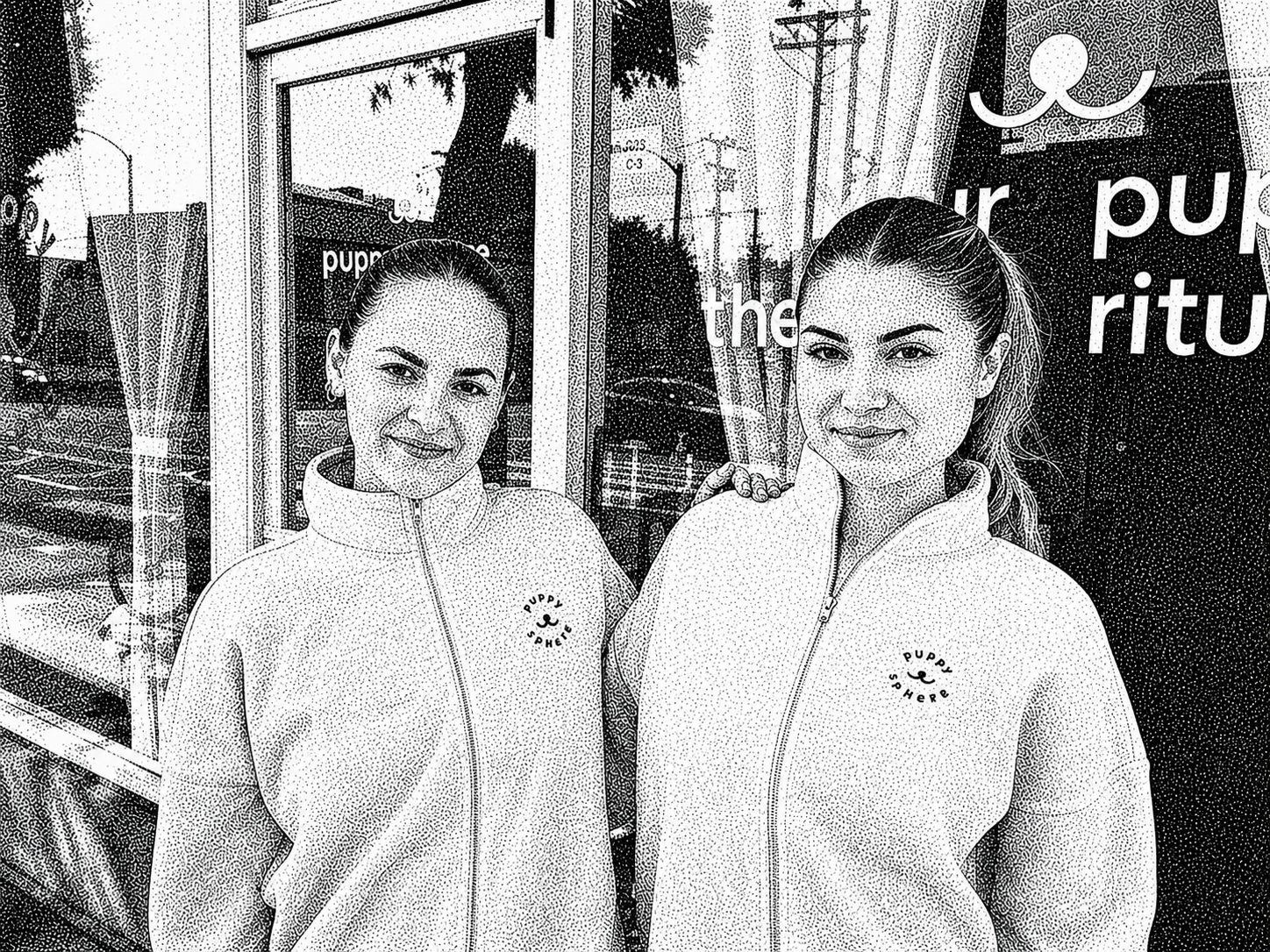
Francesca Albo and Lea Burbidge Izquierdo, Co-Founders of Puppy Sphere

When Puppy Sphere first launched, it could have easily been dismissed as a novelty, a fleeting wellness trend built more for social media than serious scale. But over the past few years, it has grown into something far more substantial.

What began as an unconventional experiment has grown into a $14M+ business with 13 studios and more than 450,000 customers. Behind that growth are founders Francesca Albo and Lea Burbidge Izquierdo, who built the company without following the typical startup playbook.

In this conversation, they reflect on what it took to get here: bootstrapping from the ground up, navigating the realities of scaling a physical business, and going 4.5 years without outside capital. They also open up about the less visible side of the journey, the financial discipline, sacrifices, and moments of doubt that came with turning a “crazy idea” into a multi-location company.
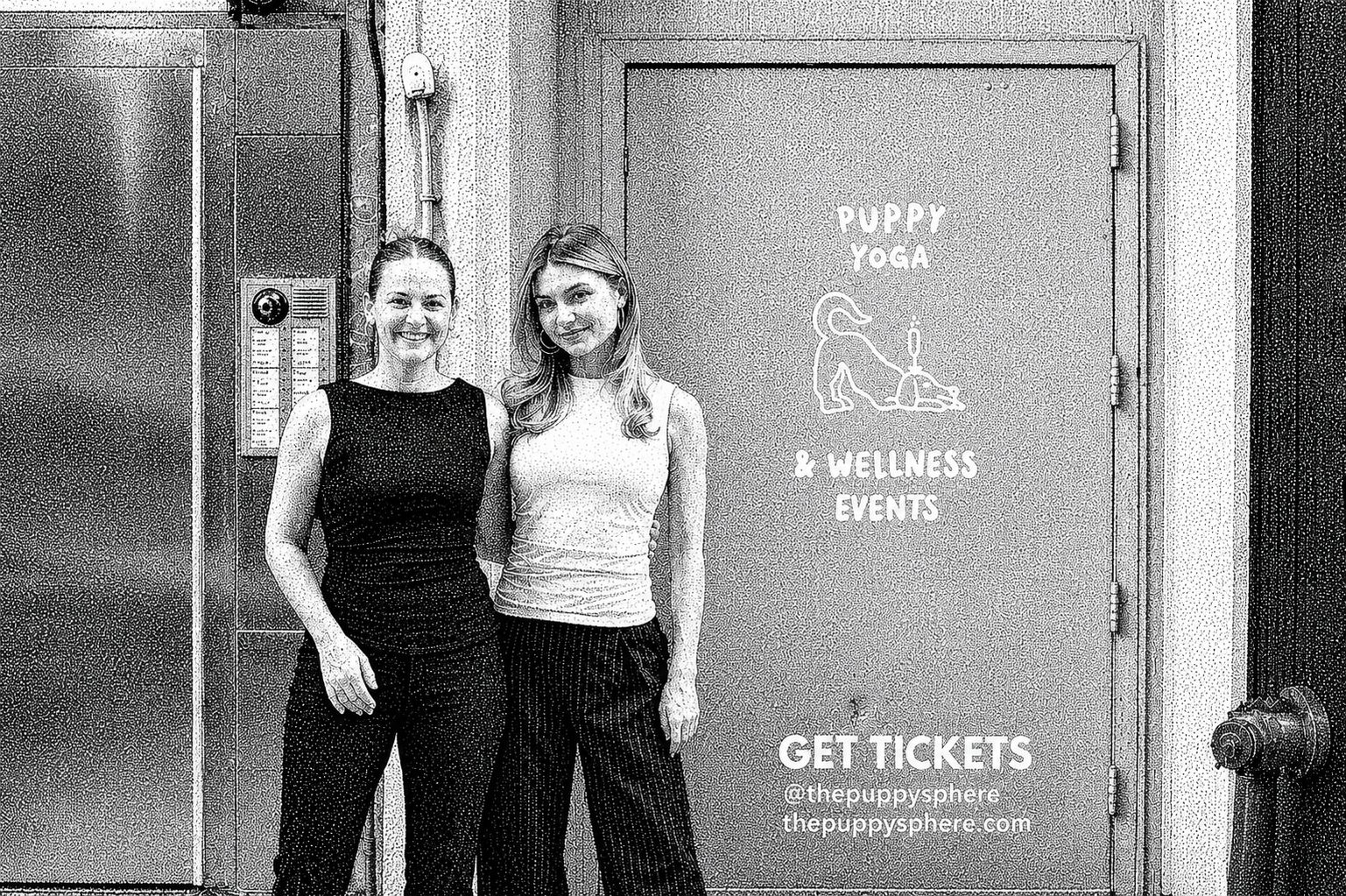
Lea Burbidge Izquierdo and Francesca Albo outside a Puppy Sphere studio entrance

Take us back to the very first Puppy Sphere event. What was the idea behind it, and when did you realize this could become a real business?

This problem is deeply personal to us. Both my co-founder Lea and I have struggled with mental health, and our dogs gave us the mood boost we needed to get through some really dark periods. We experienced firsthand how transformative spending time with dogs can be. It can increase feel-good hormones like oxytocin and dopamine, lower stress, and create this immediate sense of connection and presence.

And positive socialization can be incredibly valuable for puppies too. Our dogs genuinely helped save us at our lowest points. We wanted to create that same kind of experience for more people. Not everyone has access to a dog when they need that support most, so Puppy Sphere became our way to make those mood-boosting interactions more accessible.

Four and a half years later, we’ve done $14M+ in bootstrapped revenue, served 450,000+ people, and built 13 studios, and we’re just getting started!

You’ve said there was no master plan and you simply “followed the signal.” What customer signals convinced you to keep going?

We had no idea puppy yoga was going to become the emerging wellness category it is today! We knew we were onto something early. In the first few months, we’d make one social media post and an entire weekend of classes would sell out. Lea and I had tried a few other startups in the pet space before Puppy Sphere, and getting customers had never felt this natural. Our community couldn’t get enough, and we were constantly figuring out how to keep up. So we built the systems as we grew, and we’re still doing that now.

A big part of that has been creating the protocols, training, and animal-welfare standards needed to scale responsibly. Because when you’re helping define a new category, you also have a responsibility to define what good looks like. That’s what excites us most now: growing the category thoughtfully, with the animals first, and setting a standard we’re proud to lead with.

You’ve talked about the less glamorous, the lesser-told side of founder life, running classes, answering emails, moving furniture, doing everything yourselves, and occasionally crying in your cars. What did those early years actually look like day to day?

Those early years were chaos in the best and worst way. We were fully building the plane while flying it. Lea and I were running classes, answering emails, moving furniture, coordinating puppies, cleaning studios, posting on social, and then trying to figure out how to actually build a company somewhere in between.

There were absolutely days when one of us would cry in the car, pull it together, and walk into a sold-out class five minutes later. But I’m really grateful for that period. We learned the business from the ground up because we were in it every single day. A lot of the systems, standards, and instincts we have now came from doing every job ourselves first.

Puppy Sphere team members at a studio front desk beside a wall of press clippings

Puppy Sphere has generated more than $14 million in revenue while bootstrapping for its first 4.5 years. How did you finance that growth, and what did bootstrapping force you to do differently than if you’d taken VC money early on?

We financed the growth through our own cash flow, which sounds very disciplined now, but at the time mostly meant Lea and I saying no to ourselves a lot. We’ve never taken bonuses, and we’ve never paid ourselves big salaries. We actually have people in the company making nearly double what we do now! We’ve always been pretty aligned that if we’re going to build this, we want to build it into a global brand, and that takes sacrifice.

We were offered VC term sheets along the way, but it never felt like the right time.

Looking back, I actually think taking that money too early could have pushed us to scale before we had the systems, protocols, advisory board, and mature studio model to support it. We’re there now, and that’s what makes this moment so exciting!

You now operate 13 corporate-owned studios. Why did you choose that model over franchising?

There’s so much demand for franchising, so trust me, we’ve considered it. But we built Puppy Sphere as a corporate-owned business, and that structure has allowed us to build strong brand consistency and keep a really high level of control across both the customer experience and animal welfare. Franchising is a whole different ball game operationally.

It’s something we’d absolutely explore at the right time, but today, corporate-owned is what we know, what we’ve proven.

How do you “source” the puppies for each Puppy Sphere location? Do you primarily work with breeders, rescues, or individual caregivers?

We partner with local breeders and rescues for our classes, and then return them the same day. The experience is designed around positive socialization, helping puppies build confidence and become more comfortable around new people and environments before they head to their forever homes. And our puppy-first trained and pet-first aid certified team makes sure of that!

Our rescue classes are always fundraisers, with the added goal of helping puppies get adopted. For the last two years, we’ve also partnered with Animal Planet for the Puppy Bowl, one of the biggest televised adoption events, reaching 15.3 million viewers this year.

Puppy Sphere has received significant press and social attention. How much of your growth has come from earned media and organic virality versus paid acquisition?

We’ve been so lucky that so many celebrities, influencers, and media outlets have come into our studios and covered what we’re doing at Puppy Sphere. I would say about 90% is organic. When we invite influencers to our studios, 80% post without being paid a dollar. I truly think it’s because of the emotional experience they have in our studios.

It really comes down to the emotional experience. People walk in expecting something fun with puppies, but they leave feeling genuinely happier, lighter, and more connected, and naturally want to share that.

You’ve worked with companies like Google, Amazon, and Netflix while building a corporate wellness division. How significant has B2B become to the business?

It’s become a really exciting part of the business for us, especially because clients come back so often. Our corporate return rate is now over 60%! We become friends with our clients and really learn what’s needed when it comes to mental health in the workplace.

Our animal therapy experiences have become part of boosting morale and bringing people back into the office. Lea and I both spent years working in corporate cubicles, so in a lot of ways, we’re creating what we wish we had back then.

Two class participants lying on yoga mats with golden retriever puppies at a Puppy Sphere session

After 4.5 years of bootstrapping, you recently announced Puppy Sphere’s first outside capital. Why raise now?

There’s an opportunity to lead the emerging wellness category of animal therapy, and Puppy Sphere is positioned to do it. We’ve spent the last 4.5 years building the systems, playbook, brand, and team, and now we’re scaling Puppy Sphere into a world-renowned brand. We’re dog owners and dog lovers, so animal welfare will always be at the heart of what we do. We’re currently raising from strategic angels, and the round is filling up faster than we imagined. We can’t wait to share more.

You went from being laughed at by a bank manager for pitching “puppy yoga” to building a $14M+ business. How rewarding is that, and what advice would you give someone building an unconventional business?

It’s incredibly rewarding, but more than anything, it reminds me how little other people’s opinions matter when you’re building something new. When we started Puppy Sphere, “puppy yoga” sounded ridiculous to a lot of people. Now we’ve built a $14M+ business around something people genuinely love and need. My advice is: if you see something others don’t yet, keep going. Unconventional can look crazy right before it looks obvious.

What’s next for Puppy Sphere? What are you most excited about right now?

Santa Monica was such a big moment for us, and we have more openings coming this year and next. But what I’m most excited about is how much bigger this can get. We’re building the team, bringing incredible people alongside us, and taking Puppy Sphere into more cities, more companies, and eventually more countries. We started with puppy yoga. We’re building the global brand for animal therapy.

Subscribe to newsletter

Join our newsletter to stay up to date on features and releases.

Thank you! Your submission has been received!
Oops! Something went wrong while submitting the form.

By clicking Sign Up you're confirming that you agree with our Terms and Conditions.

Pro
Keep Reading

Other Interviews

More conversations with founders, operators, and investors building the future of pet care.

Learn more
Tessa Olson | CEO, COVE Animal Health
Pet Health & Wellness
8 min read

Tessa Olson | CEO, COVE Animal Health

Tessa Olson's family spent nearly 90 years building Pieper Veterinary into a Connecticut institution. She rebranded it as COVE Animal Health and scaled it into a 20-hospital network across five states, backed by Chicago Pacific Founders. She explains what she screens for before a hospital joins, and where consolidation hollows a good practice out.

Learn more
Learn more
Dan Nagler | Co-Founder, Your Dog Is Bored
Retail & E-Commerce
11 min read

Dan Nagler | Co-Founder, Your Dog Is Bored

Dan Nagler spent years doing fractional BD for other pet brands before building one himself: a deck of activity cards aimed squarely at the 7 pm zoomies. One lunch with SodaPup's CEO turned into a campaign that moved nearly 700 decks with no marketing spend behind it. He walks through the local-store validation, why an analog product beats another app, and the inventory math he is sweating heading into SuperZoo.

Learn more
Learn more
Three Founders. One Cohort.
Pet Tech
10 min read

Three Founders. One Cohort.

Hundreds of startups applied to Pawsible Ventures' first venture studio cohort. Three of the founders who made it explain what actually got them in. Ana Malhotra on pivoting from Rome to Tato after watching a private dog park hand-check vaccine records every day, and on 65,000 pets already in the system. Lauren Burrows on the prelaunch deposits that proved Charlie Pet Health was more than a good idea, and a four-city expansion across the US and Canada. Davide Confalonieri on bootstrapping Lab4Paws through several pivots, and why execution, not the idea, was the deciding factor.

Learn more
View all interviews