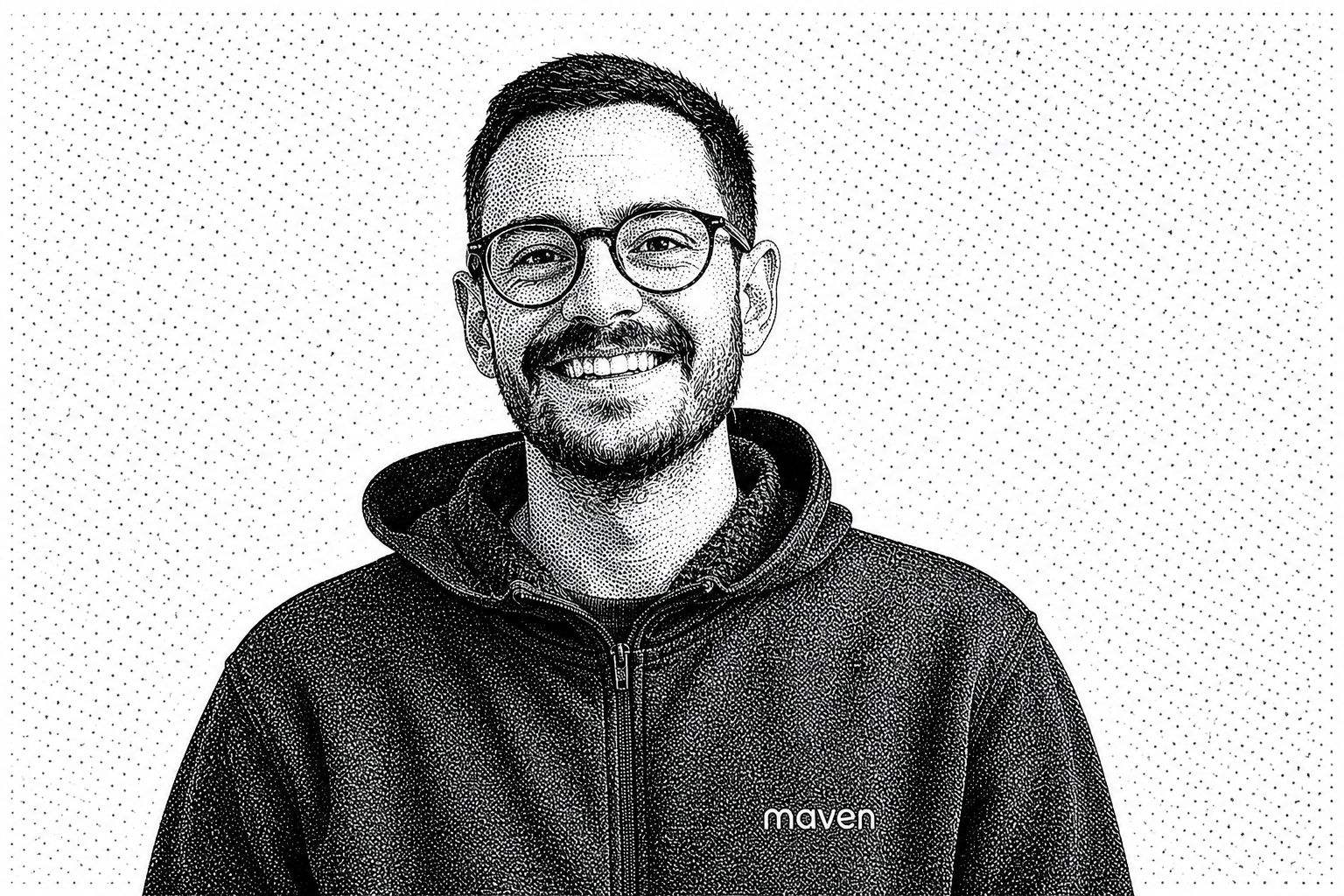
Guilherme Coelho | Co-Founder & CEO, Maven
Most owners catch a health problem only once it is visible, and by then it is usually late. Maven built its wearable around vitals instead of GPS, hired veterinarians before it shipped anything, and sells to owners rather than clinics. Guilherme Coelho on continuous monitoring, a study that set feeding portions by activity data, and why the consumer is the one who now brings the vet the data.
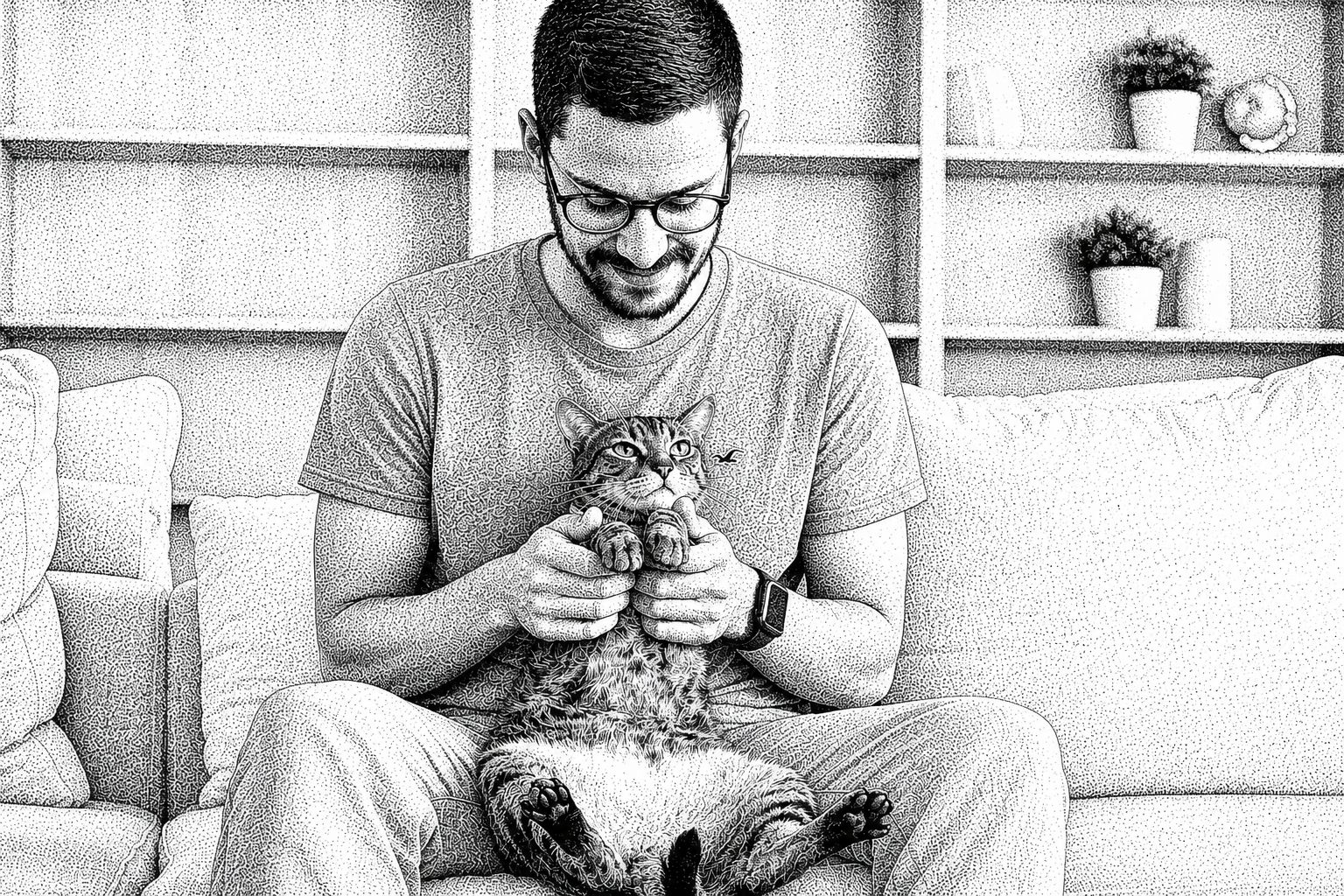
For most pet owners, realizing something is wrong often starts with a visible change: a dog stops eating, struggles to get up, or simply isn’t acting like themselves. For Maven co-founder and CEO Guilherme Coelho, that moment came when his dog Tommy suddenly couldn’t stand on his own. By the time he noticed, Tommy was already dealing with severe joint problems. The experience left him with a simple question: what if technology could catch the changes we can’t see?
That answer became Maven, a pet wearable built around health rather than GPS. Today, the company uses sensors and AI to continuously monitor activity, sleep, respiratory rate, heart rate, drinking, itching, and other behavioral signals, learning each animal’s individual baseline and turning millions of data points into information owners can actually use.
We spoke with Guilherme about building Maven, how AI is changing what pet wearables can do, the company’s research into activity-based personalized nutrition, its relationship with veterinarians, and why he believes continuous health monitoring could eventually become a normal part of pet ownership.
The idea for Maven really started with your own dog, Tommy, after a serious health issue seemed to appear almost overnight. What happened, and when did you realize pet wearables could become a meaningful health tool?
I was already in pet tech before Maven.
I understood wearables, what sensors could do, what was possible with data, and more importantly, what the modern pet parents were looking for. But like everyone else in the space, we were obsessed with GPS. Where’s my dog? Is he lost? That’s what drove the whole category.
Then Tommy happened. I only noticed something was wrong the day Tommy was barking at me because he was no longer able to stand up by himself. And of course, when I took him to the vet, Tommy was already facing severe joint problems.
And that’s the thing about pets: most of the time, when we just realize something is wrong, it’s already too late.
That’s when it hit me: I spend enormous amounts of time with Tommy. I know him better than almost anyone. Yet I missed it.
My eyes couldn’t catch the small shifts. The slightly elevated breathing at night. A gradual change in movement. I missed the signals, and that’s normal.
But technology could change that. Technology can be trained to spot patterns humans can’t.
I couldn’t get over that thought. We had the sensors. We had the ability to collect continuous data. No one was actually using it for health. Everyone was solving the GPS problem. So that’s when we decided to do something different. Build the first wearable that’s actually designed for health and 24/7 wear from the start. Not as an afterthought. Health first. Clinically validated.
Because I couldn’t be the only owner who missed the signals until it was too late.
For someone who has never used Maven, what exactly does the hardware do? What can the sensor measure today, and how has the technology evolved since V1?
V1 was honest. Deep data on activity and sleep. That was it.
We knew even just those two signals told you a lot. Rest patterns change before anything else shows up. But the more we talked to customers and vets, the more we realized we needed more.
So we went after the hard part. We pioneered continuous tracking of vitals on pets. We invested years in getting resting respiratory rate right. Published the research. Got it validated. Now we monitor that, heart rate, continuous activity, sleep quality, drinking behavior, and itching.
And there’s more in the pipeline that we’re still building. We’ve built one of the biggest labelled behavioural datasets on dogs, which we now use to train, test, and improve our algorithms.
But here’s what matters: the sensor alone is just a data collector. The real thing is what happens after. We collect millions of data points daily. The system knows everything: your pet’s profile, medications, diet, health conditions, and everything you log (a vomit, a vet visit, etc.).
The AI connects those dots in real time. It learns your specific dog’s baseline. It’s constantly looking for changes. Putting all aspects of your pet’s health into context.
And then, most importantly, it translates all that noise into something you actually understand and can act on. That’s Maven. The sensor was just the beginning.
How central is AI to what Maven does today? How are you using it to understand a pet’s health, and how has that evolved as the technology has improved?
We use AI across our entire tech stack. It runs at the sensor level, processing raw motion data and translating it into vitals and behaviours.
It runs in the cloud, learning each pet’s baseline continuously and flagging what’s different. It’s in our abnormal detection algorithms. And it’s in translating all that complexity into language that makes sense to a pet owner.
Five years ago, when we started, we couldn’t have done what we do now. The advances in large language models, that’s what changed things.
Today, we can take data that’s mathematically dense and make it human-readable. Pet owners can interact and talk with the system about their pets, instead of just staring at dashboards. That wasn’t possible before.
Maven has been a data and AI company since day one. Not because it sounds good. Because it’s the only way to make continuous monitoring actually useful. You can collect a million data points. You can build the most sophisticated algorithms in the world. But if the owner wakes up and can’t understand what it means or what to do about it, you’ve built nothing. AI is how we bridge that gap.
It’s not a feature you add on. It’s foundational to everything.

Is Maven a consumer product, a veterinary tool, or both? How closely do you work with veterinarians, and what role do you see continuous health data playing inside the veterinary clinic?
The first thing we did at Maven was hire vets. That was non-negotiable.
Clinical validation had to come before everything else. Today we have full-time veterinarians embedded across product, partnerships, data, and marketing. Every decision has clinical input. That’s what separates us from everyone else.
But we learned something hard pretty quickly: selling directly to vets is a difficult path. Vets are doing such amazing work, with so little time with each patient.
So we tried a different approach. We now sell directly to pet owners instead. And it works.
And honestly, that made sense once we thought about it. The pet owner is the gatekeeper of their pet’s health 99.99% of the time. They’re the ones who notice something’s off first. They’re the ones lying awake at night wondering if something’s wrong. They’re the ones who need the peace of mind Maven provides.
What’s happened since is actually really interesting. Vets started reaching out to us. Their clients are mentioning Maven.
Actually, the most-requested feature last year was the ability to download all Maven data and share it with their vet. The conversation at the vet visit changed. It’s no longer just observation and guessing. It’s guided by data. Maven data. So we’re becoming a tool for both. But the consumer is the driver. The consumer brings the data. The consumer enables the partnership.
This is how it works now. Pet owners have Maven monitoring their pets 24/7. They share the data with their vet when needed. The vet makes better decisions. Better outcomes. That’s the flywheel we’re building.
Your new study takes a very different approach to pet nutrition: adjusting how much a dog eats based on how active they actually are. It makes so much sense — why hasn’t pet nutrition traditionally worked this way, and what made you want to test it?
One of our full-time vets specializes in nutrition. She’s been pushing this from day one at Maven. But the real trigger came from listening to customers early on. They asked us the same question over and over: Am I feeding my dog enough? Should I change portions? The uncertainty around nutrition was constant.
And we realized we had something no one else had. Actual data on how much a dog is moving, sleeping, and burning energy every single day.
That data was sitting there unused. So we started looking into the data. A dog was more active this week because of travelling. A dog sleeping more during winter. A weekend when high-intensity activity is three times higher than on a regular weekday. A dog just diagnosed with joint problems.
We do that with ourselves, right? We adjust our nutrition to our lifestyle, the season, and how much we’re exercising. But with pets, we stick to a diet plan and feed the same amount every single day for years.
That gap between individual need and static feeding felt like something we were uniquely positioned to fix. So we built algorithms that use wearable data to estimate calories burned and make weekly or even daily feeding recommendations. It’s not complicated conceptually. It’s only complicated because no one had the data before. We did. So we started asking: what if we actually used it?
The study we published proves the concept works. Eighteen out of nineteen dogs consistently ate what was prescribed when the plan was personalized to their activity. Their body composition improved.
We now have exciting early results to keep pursuing this individualized nutrition program that Maven technology can provide and find the right partners to do so.
What surprised you most about the results? And what do they tell us about the way we feed dogs today?
The findings weren’t shocking to me. Although no one has ever done this before, we’ve been working on this for three years.
Before, no one had successfully used wearable data to drive personalized nutrition. So publishing it matters. The paper is saying: this is possible. This actually works.
The body composition trends were encouraging. Better adherence to the diet plan. Dogs trending toward ideal body condition. Feeding was more consistent.
All of that together is a clear signal that we’re onto something that works. We’ve been treating nutrition like a static problem. Feed X cups per day, all year, same amount.
We no longer need to do that. We don’t live that way. We, humans, eat differently when we’re training for a marathon. We eat differently in winter. We eat differently when we’re stressed. Pets change too. Their body needs fluctuate constantly. We just haven’t been accounting for it. This study is the first step toward fixing that.

If wearable data can help determine how much a dog should eat, what else could it eventually change about how we approach pet nutrition?
There’s a second layer to this that we’re already seeing, and honestly it’s even bigger. Once you’re feeding a dog based on their actual activity, you can use that same wearable data to measure whether specialized diets are actually working.
Say a dog has kidney disease and the vet recommends a specific diet. Right now you feed it and hope. With Maven, you monitor water intake, you track vitals, you watch activity levels over weeks and months. You can see if the dog is improving. Same with allergies: is the dog itching less? Sleeping better? Same with joint issues: is the dog reaching higher-intensity activity? Moving more? You can see the efficacy of the diet in real time, not just hope it’s working.
Most of these impacts take time. But with technology, you can see the granular changes week to week. And more importantly, you can show the pet owner. You can say: your dog’s itch behavior is down 30% since you started this diet. Your dog’s sleep quality improved. Here’s proof the diet is working. That evidence keeps owners committed, especially for long-term conditions where progress feels invisible.
So the vision isn’t just: feed your dog the right amount. It’s: feed your dog the right amount for their unique activity, health condition, and life stage, and then measure whether it’s actually working. That’s what personalized nutrition looks like.
You’ve spent years building Maven at the intersection of hardware, software, AI, and veterinary medicine. What has been the hardest part of building the company?
Building Maven is hard because of all the layers. And because there’s no playbook we can just follow.
Hardware that’s tiny and reliable. A mobile app that’s simple. Software and cloud infrastructure that scales. AI models that actually work. Rigorous clinical validation. All of that has to work together. But the real challenge is deeper than the engineering.
The hardest part is translating all of that complexity into something a pet owner can check every morning and feel confident. We can have the best sensors in the world, the most sophisticated AI, the most validated research. None of it matters if the owner doesn’t understand it, doesn’t trust it, or can’t act on it. That’s where the work really happens.
How do we take a signal that comes from a complex machine learning model running on the edge and turn it into something meaningful? How do we surface the things that matter to pet owners? How do we make an owner feel equipped instead of overwhelmed? That’s the puzzle. And it requires collaboration across every specialty: data scientists, engineers, vets, product, designers, all working toward the same goal: simplify pet ownership.
Because at the end of the day, Maven only works if it helps that specific dog with that specific owner’s unique situation. If we’re just building complexity for the sake of building, we’ve lost the thread.
Wearables have become incredibly popular with humans over the last decade. Now we’re starting to see that same shift happen with pets. What do you think needs to happen for pet wearables to reach that same level of everyday adoption?
Pet health innovation has always followed human health. It always does. We’re seeing it already with our customers.
People who wear an Apple Watch, Oura Ring, or Whoop also have Maven for their pets. They compare sleep scores; they use the data to improve both theirs and their pets’ well-being.
The difference is: until now, the technology didn’t exist. GPS solved a real problem. It still does. But modern pet owners’ actual concern is health. Can my dog live longer? Can I catch something early? Can I know my dog is okay while I’m at work?
What needs to happen for adoption to reach mainstream is the same thing that happened with human wearables. The category has to prove value beyond novelty. You have to show owners that continuous monitoring actually changes outcomes. You have to make it simple to use. You have to integrate it into daily life so checking your dog’s health is as natural as checking your phone.
What’s the ultimate vision for Maven?
In ten years, I see Maven as a normal part of pet ownership. An extension of how you care for your pet, the way a collar and a leash are extensions of it. Most pet owners want to give their dog the longest, healthiest life possible. But right now we’re working with incomplete information. Pets can’t tell us what’s wrong. We guess. We hope. We get anxious.
When we did customer research early on, we found something that stuck with me. People talk about their pets in two completely different ways. The light side: family, love, joy, connection. But there’s a dark side too. Stress. Uncertainty. Fear. What if something’s wrong and I missed it? What if I’m not doing enough? What if my dog is suffering and I don’t know? That dark side is real. It’s always there in the background.
Maven exists to fix that.
To remove all the uncertainty that comes with taking care of a pet. To give you confidence that if something’s changing, you’ll know. To let you focus on the good moments, without the background anxiety. To give you the peace of mind that you’re doing everything you can.
That’s the mission.
Because what pet owners actually want isn’t more features or more data. They want to know their dog is okay. They want to keep them that way for as long as possible.
That’s what Maven solves.
Other Interviews
More conversations with founders, operators, and investors building the future of pet care.