
The Realities of Running a Small Pet Business
Three founders running very different service businesses - dog walking, pet transportation, and dog training - break down the operating detail most founder interviews skip. Joseph Merrill on why Hamilton Bark pays walkers hourly, moved clients to prepaid subscriptions, and built its own software rather than renting margin from Rover. DeAnna Andrews on why refusing to expand beyond transport made The Pet Taxi referable, and how veterinary partnerships became 40 percent of revenue. Emily Stoddard on narrowing services and buying a brick-and-mortar facility after nearly 18 years.

Every successful pet business looks different on the surface, but beneath it are the same questions every founder has to answer: How do you win customers? How do you build efficient systems? And how do you keep growing without losing what made the business work in the first place?
This week, we speak with 3 founders with 3 very different pet businesses:
- Joseph Merrill, co-owner of Hamilton Bark - a dog walking company
- DeAnna Andrews, founder of The Pet Taxi® - a pet transportation service
- Emily Stoddard, founder of Canine Sports Dog Training - a dog training facility
They share candid insights into their daily operations, biggest growth decisions, marketing strategies, and the lessons they've learned building sustainable businesses in one of the fastest-growing industries
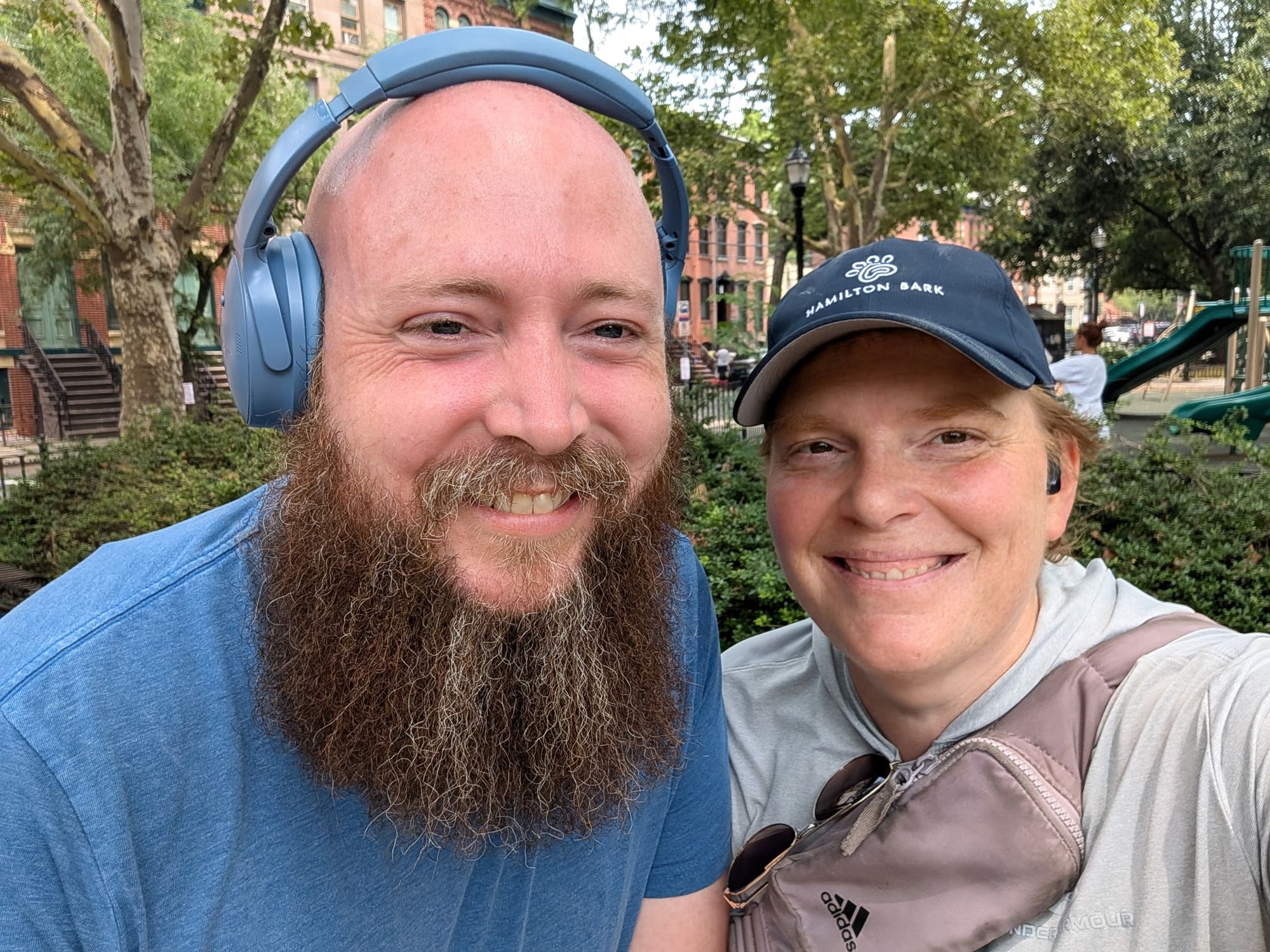
Walk us through a typical day at Hamilton Bark. From the first walk of the morning to the last, what does running the business actually look like?
We have three key racks on the wall just inside our apartment and a fleet of 6 scooters for our staff. The day usually starts with our walkers coming in to say hi and grab their scooter and keys for the day. The day ends the same way - when their shift is done, they come back, drop off their keys, and drop off their scooter for charging.
The day itself is filled with the logistics of dog walking. Sometimes walkers get behind, sometimes clients forget to leave the key in the lockbox; you never know in advance what that day is going to bring! We schedule Kerry and I to half of our capacity though. This builds in the ability to respond in real time if emergencies happen. This has saved us more than once. Last Christmas Eve I was walking a beautiful German Shepherd who started to limp badly, with a head tilted at about 30 degrees to the side - she kept vomiting. Fortunately, the vet was literally around the corner.
They weren’t emergency care, but they knew us. After contacting her family (who were in Manhattan and couldn’t come home immediately), it was agreed that I’d take her to the ER. We were able to give the rest of my walks to Kerry, and I stayed with her all day until her humans could come and take over. It turns out she had a double ear infection.
Dog walking is built on trust. How do you earn the confidence of new clients when you’re asking them to trust you with both their home and their dog?
That’s a good question. For us, we notice that trust is gained through reliability and humor. Put another way, so much of dog walking is filled by people who are between jobs, or not particularly able to follow through on their own commitments. As a mid-sized walking company, with a staff of 6 and both of us on backup, we are able to give each dog a primary and a backup walker. Word gets out. People contact us saying they heard we are reliable.
Humor really is the other side of dog care. Dogs are genuinely funny. We’ve found that sharing pictures with captions of dogs being cute with their owners goes a long way. Every dog has a certain collection of jokes that seem to follow it. We pick up on these and look for pictures and texts that lean in here.
You’ve grown Hamilton Bark to around 130 walks a week with a team of six. What have been the biggest lessons in turning dog walking into a profitable business? And if you’re comfortable sharing, what does the business look like financially today?
At first, when it was just us, we had maybe 30 clients or so, and were doing something like 40 walks a week. We had a delta of around $400 a week in possible cancellations because we collected payment after service was performed. Without a penalty for canceling, people cancel. This delta created so much instability that we couldn’t grow.
My response to this was to build a very basic app using a platform called Glide. It carried us from Sept of 2024 when I launched it, all the way through late June of 2026. Glide allowed us to charge before service was performed. Doing that and offering walk subscriptions allowed us to see real stability in revenue. Once we solved that, even at a small scale, we were able to hire our first walker.
We pay our walkers by the hour, not the walk. Our employees are W2 employees, not independent contractors. We carry small business pet insurance, and all our employees are listed on it. We pay $8 above NYC minimum wage. These do two things for us. One of course is that our walkers are not incentivised to ever try to do group walks. Each walk is one-on-one energy.
The second is that we are able to find walkers we like and offer them a position. We’ve been able to build a team of fantastic dog people that are excellent fun to work with on a daily basis. We also offer a small amount of PTO and Sick time. Not because we have to, but because we are trying to create a way of living that feels like it isn’t ‘minimum wage’ level work.
We manage the relationship with clients, and our walkers handle our relationship with dogs. That split means that when an emergency does happen, they contact us immediately, and we contact the clients. That buffer we offer our walkers, I think, helps build loyalty too.
How do most of your new clients discover Hamilton Bark today? Which marketing channels - whether word of mouth, referrals, Instagram, SEO, or something else- what has delivered the biggest ROI?
The vast majority of our new business comes from word of mouth. We are well known enough in our neighborhoods to generate about 1 to 2 referrals every couple of weeks. We also nurture relationships with concierges and leasing offices in the city. Our business cards have a QR code that leads to a form that goes directly to our intake funnel so I can reach out immediately. We also, by now, know a lot of coffee shop owners locally.
They are more than happy to let us put our business cards and flyers in their bulletin boards and checkout stations. We have an Instagram page - it’s got 455 followers… not huge by any standard, but for a client list of 146, it’s honestly not terrible. We don’t do any paid ads on a regular basis. A lot of new business is driven by on-the-street conversation - seeing a cute dog and gushing over it. Approaching a stranger with a business card is DOA. But bonding over the dog and then dropping that you are a dog walker does reliably convert.
You chose to build your own software. What made you decide to do that? How has that changed the way you run Hamilton Bark?
When we started, we were using Google Calendar and texting everyone. It worked… but not at scale. Once we reached about 30 clients, we couldn't reliably manage the walk volume. That was a threat to us because reliability is the entire business model. When I dropped the Glide app and we transitioned to it, it gave us a lot of stability. But it also started to show areas where it could be better. I started to imagine a full-service management product designed by and for dog walkers. This is a business that lives or dies on the margins. I couldn’t use Rover or Wag or any of the other big-name players because I’d lose my margins. Besides, most of those models turn you into an independent contractor of their platform. I wanted to maintain control over our growth, collect payment directly, and provide a great experience. So I built Sniffr.
Sniffr gives us time back. It’s one central location where scheduling, payment, client communication (in-app chat), walker communication, walker assignment, all live. At the beginning of the week, all 106 unscheduled walks show up in our UI. (An unscheduled walk is a walk that needs to fit in a particular window, say a 30-minute walk sometime between 3 pm and 5 pm on Wed). Each dog gets assigned to at least one walker, but usually more. Kerry has a grid for each day with one column per available walker.
Scheduling the day is a process of assigning a walker and a specific time to each walk. Once the week is scheduled, we collect payment for everything. That alerts the walkers in their app. They can go and start the walk, upload pictures, write captions, send a picture to a client live during the walk in the app, write/speak a walk report (Sniffr transcribes it), and end the walk. The client gets a delightful walk report. Each picture can be downloaded or shared to social media.
This saves us hours of Google Calendar management; we don’t have to send payment links by hand, we get paid upfront, and clients feel the reliability. They see who’s coming days in advance; they get an email after the walk with a picture and a link to the rest of the pictures in the app. Sniffr is multi-tenant. So other dog walking companies could use it. They can connect directly with their own Stripe, set their own prices, and run the business the way that makes sense to them.

Walk us through a typical day at The Pet Taxi®. From the first call to the last pickup, what does an average day look like?
No two days at The Pet Taxi® are ever the same because no two pets—or the families who love them—have the same needs.
Most days begin long before our first pickup. By the time we arrive at a client's home, we've already coordinated schedules, confirmed appointments, prepared the appropriate equipment, and communicated with both the family and the destination so every transport begins with a plan.
From there, every case takes on a life of its own. One pet may be heading to daycare for a day of fun. Another may be traveling to a specialist, rehabilitation, the groomer, or the airport. We may be waiting through an appointment, coordinating with a veterinary team, picking up medications, or helping a senior dog safely navigate the trip home after surgery.
Our day isn't built around routes or routines—it's built around adapting to whatever each pet, family, and destination requires.
Driving is actually the easy part.
The real work is anticipating needs, solving problems before they happen, and coordinating the countless details that allow pets to safely access the care, services, and experiences they depend on.
By the end of the day, we've certainly transported pets. More importantly, we've helped remove one more barrier between pets and the care—and quality of life—they deserve.
The Pet Taxi® is a unique niche business. What was the moment when you realized, “There’s a real business opportunity here”?
Throughout my career, I worked in boarding facilities, veterinary hospitals, rescues, daycare facilities, and grooming salons. No matter where I worked, I kept seeing pets miss out on the care and services they needed because no one could get them there.
Pet owners wanted the very best for their pets, but transportation often became the barrier. At the same time, I watched exceptional businesses lose appointments, leave capacity unused, and miss opportunities for growth—not because they lacked demand, but because transportation had become a business problem they weren't built to solve. They were experts in veterinary medicine, rehabilitation, boarding, grooming, training, and pet care—not logistics.
The turning point came while I was leading the adoption program at Big Dog Ranch Rescue. We were adopting senior dogs to senior citizens, and it was one of the most rewarding programs I'd ever been a part of. But I remember watching one family leave and thinking, “What happens five years from now?”
What happens when the dog can't jump into the car anymore? Or the owner can't lift them? Or the owner can no longer drive?
I couldn't shake those questions. This wasn't one family's story—it was one I had already seen repeated throughout my career. That was the moment I realized that as people and their pets lived longer together, access to pet care—not the quality of the care itself, but simply getting there—was going to become one of the greatest challenges facing pet ownership.
I realized this wasn't just a transportation problem—it was a gap in an otherwise remarkable pet care industry. While countless businesses were dedicated to caring for pets, almost no one was focused on solving the logistical challenges that determined whether pets could access those services in the first place.
I knew that if we could solve that problem well, we wouldn't just build a business—we'd create an entirely new niche within the pet industry by removing one of the biggest barriers between pets and the care they needed.
That's when I stopped thinking about transportation. I started thinking about removing barriers to care and that idea became the foundation for everything we've built at The Pet Taxi® ever since.
Looking back, what’s one decision you’ve made that had the biggest impact on the business - whether it improved profitability, efficiency, or growth?
One of the most important decisions we ever made was deciding what we would not become. From the beginning, our mission was to remove barriers between pets and the care they need—not to become everything to everyone.
We chose to focus exclusively on transportation, even though expanding into boarding, daycare, grooming, and other pet services would have been the obvious next step. Our clients regularly asked us to provide those services, but instead of competing with the businesses already doing them exceptionally well, we made a conscious decision to partner with them.
That decision changed everything.
By specializing, we became referable. Our partners knew we weren't trying to take their clients - we were helping them better serve their clients. Over time, those relationships grew into long-term partnerships, recurring referrals, and veterinary transportation programs where hospitals now rely on us as an extension of their own team.
Looking back, staying focused didn't limit our growth—it accelerated it. By choosing collaboration over competition, we created an entirely new niche within the pet industry and became known for doing one thing exceptionally well: removing barriers between pets and the care they need.
About 40% of your revenue comes from veterinary memberships. Why has that model been so successful, and what makes it work?
Our veterinary partnerships have been so successful because we're solving a problem hospitals face every day but weren't built to solve. Veterinary teams are experts at providing medical care. Our expertise is helping patients safely access that care, and our role is to anticipate everything that could stand between a pet and a successful outcome before the journey even begins.
Every patient, client, and destination requires its own plan. We coordinate schedules, multiple locations, specialty referrals, communication with families, mobility needs, specialized equipment, patient handling, discharge timing, and the countless details that allow each pet to move safely from one stage of care to the next. The drive itself is only one part of the process.
Instead of asking a hospital to purchase specialized vehicles, hire and train drivers, develop transportation protocols, and manage an entirely new operational function, they can rely on a team that has already built that expertise.
Many of our veterinary specialty partners choose to have The Pet Taxi® work directly on their behalf, allowing them to offer a seamless patient logistics solution without asking their clients to coordinate it themselves. Their clients experience an extension of the hospital's service, while the practice gains a trusted transportation partner without the overhead of building that capability internally.
The greatest compliment we receive is when a veterinary team stops thinking of us as an outside vendor and starts thinking of us as part of their team. That's when we know we've built exactly what we set out to build.
The Pet Taxi® is clearly more than just a business - it’s a passion project. What is it about working with animals that you love so much?
I've never been motivated simply by working with animals. What motivates me is helping people keep the promises they make to them.
Over the years, I've watched busy professionals, senior citizens, people recovering from surgery, and families facing unexpected challenges worry that they could no longer give their pets the care they deserved. I don't believe transportation should ever be the reason someone has to miss a veterinary appointment, stop rehabilitation, or question whether they can continue sharing life with the pet they love.
If we can remove that barrier, we've done much more than provide a ride. We've helped preserve a relationship.
To me, that's what The Pet Taxi® has always been about. Not transportation, but making it easier for people and their pets to stay together, stay healthy, and enjoy more years with one another.
That's a privilege I'll never take for granted.

Canine Sports Dog Training has been around for nearly 18 years and has grown from a mobile business to a home-based operation and now a permanent training facility. Looking back, what were the biggest turning points that allowed you to keep growing?
Moving from a broad range of services to a narrow, focused set of core offerings was a big step early on. The COVID lockdown and the boom in clients that followed gave us the opportunity to seriously consider purchasing a brick-and-mortar location. The SBA was incredibly helpful in laying out a clear path to ownership, and having investors who believed in us gave us the final push to take the leap.
On an average day, how many dogs do you train? Do you follow a consistent system with every client, or is each training plan tailored to the individual dog and owner?
We train an average of 15 dogs a day, with a facility maximum of 20. Every training program is tailored to the individual dog and owner, though we do build in a core set of obedience behaviors and manners that all dogs learn. We also take a team-based approach — dogs aren't assigned to a single trainer, but instead work with every trainer on staff throughout the program. We've found this is the best way to ensure each graduate will happily and reliably work for whoever is holding the leash.
Most local businesses depend heavily on referrals, Google, and word of mouth. How do most new clients discover Canine Sports Dog Training today, and which marketing channels have delivered the biggest ROI over the years?
We've built strong relationships with veterinary hospitals throughout Illinois, along with local pet shops and other small businesses, many of which refer clients directly to us. Google Ads has also helped strengthen our online presence. That said, our biggest source of new clients is still our own graduates — dog owners sharing their experience with other dog owners.
Dog training is a crowded industry, yet you've been in business for nearly two decades. What do you think you've done differently that has kept clients coming back and recommending you to others?
Under-promise and over-deliver has always been a guiding principle for us. Every family that trains with us becomes part of our extended family, and we stand behind our lifetime support, which gives clients real peace of mind. We're generous with our time and work hard to make sure we've met the needs of both the dog and the humans on the other end of the leash.
What are some of the everyday tools, software, or systems you rely on to maximize efficiency and keep the business running smoothly?
We recently switched to a dog-training-specific CRM called Roveio. Each owner gets a private link where we can post updates, upload photos and videos, and write daily training summaries. It's entirely web-based, so clients just bookmark the page on their phone's home screen for instant access — no third-party apps or clunky software required. We also rely heavily on Google Workspace for shared calendars, document collaboration, and email management across the team.
Other Interviews
More conversations with founders, operators, and investors building the future of pet care.