Boehringer Ingelheim Buys a Second Vaccine Startup Without Disclosing Terms
Boehringer Ingelheim acquired Evax AG, a Swiss biotech developing a therapeutic vaccine for horse allergic skin disease, without disclosing deal terms. It's the company's second unpriced vaccine-platform acquisition since 2024, a pattern that makes it harder for founders and rivals to benchmark what these deals are actually worth.

Horses with a mosquito-bite allergy have had exactly one treatment option for decades: steroids that blunt the itch without touching the underlying immune reaction. Boehringer Ingelheim just spent an undisclosed sum to change that, buying a Swiss biotech built around a vaccine platform for the condition.
Boehringer acquires Swiss equine-vaccine biotech Evax
Boehringer Ingelheim announced August 11 that it has acquired Evax AG, a University of Zurich spinout that has spent more than a decade developing therapeutic vaccines for horses. Deal terms were not disclosed.
Evax's lead program targets insect bite hypersensitivity, an allergic skin reaction to biting midges that ranks among the most common dermatological conditions in horses worldwide. The platform uses virus-like particle technology, a method that trains the immune system to neutralize a specific target protein rather than simply suppressing the resulting itch and inflammation with steroids.
Saskia Kley, Boehringer's global head of equine, said the deal gives the company "the potential to offer horse owners the first innovative therapeutic option for allergic skin diseases targeting the underlying cause." Knut Elbers, who leads animal health innovation at the company, framed it as building on "breakthrough innovation" in Boehringer's preventive and therapeutic portfolio.
No product has reached market, and neither company disclosed a development timeline or a target filing date. Evax has run the platform through proof-of-concept studies since spinning out of academic research more than ten years ago, according to the release — the acquisition buys Boehringer years of head start rather than a finished drug.
Veterinary vaccines follow a different regulatory path than the small-molecule drugs that make up most of Boehringer's equine business. In the United States, they're licensed through the USDA's Center for Veterinary Biologics rather than the FDA, and in the European Union through the European Medicines Agency's veterinary arm. That split pathway is part of why large animal health companies tend to acquire vaccine platforms rather than build them from scratch: the manufacturing and potency-testing expertise doesn't transfer cleanly from a small-molecule pipeline.
Price secrecy becomes animal health's dealmaking pattern
This is Boehringer's second undisclosed-terms purchase of an early-stage vaccine platform in under two years. In September 2024, the company acquired Saiba Animal Health, another virus-like-particle vaccine developer, that one aimed at pet therapeutics rather than horses. Terms of that deal were never disclosed either.
The pattern says something about where the money in animal health R&D is actually going. Zoetis, Elanco and Merck Animal Health have spent the past several years pushing biologics and monoclonal antibodies, the drug class behind products like Zoetis's Librela, into the clinic. Boehringer's answer has been to buy the underlying vaccine technology outright rather than license it or build it internally, twice now, from the same category of academic spinout.
For operators building in animal health, the read is less about horses specifically and more about deal structure. Two consecutive acquisitions with no disclosed price, no disclosed headcount, and no disclosed milestone terms make it hard for competing biotechs, or their investors, to benchmark what a platform-stage vaccine company is actually worth to a strategic buyer. That opacity cuts both ways: it keeps Boehringer's R&D spending off competitors' radar, but it also leaves founders negotiating similar exits with almost no public comparable to anchor a number against.
The equine health market is a smaller, less crowded corner of animal health than companion-animal therapeutics, which is likely part of the appeal. Insect bite hypersensitivity is common enough to matter commercially: the World Association for Veterinary Dermatology's clinical guidelines list it among the most frequently diagnosed equine allergic skin conditions. But the category has drawn far less biotech capital than dog and cat dermatology, where Zoetis has built a billion-dollar franchise around Apoquel and Cytopoint. The broader signal is an appetite for unproven animal-health science that extends well past horses; Loyal's $100 million raise for a canine longevity drug earlier this year drew on the same investor logic, betting on biology before a product exists to sell.
Evax becomes the 30th pet-industry M&A or funding deal The Underbite has tracked since our count began in February 2026, and the second this week alone, after VAFO's acquisition of Pets Deli on the same day. Deal velocity in the category hasn't slowed even as terms disclosure has gotten thinner.
Not every deal in that tracker has stayed quiet on price. FCPT's roll-up of veterinary hospital real estate closed at a disclosed $268 million, and Chewy named its price when it bought Modern Animal earlier this year. The silence around Evax and Saiba looks less like an industry norm and more like a deliberate choice specific to how Boehringer negotiates early-stage science acquisitions, where the asset being bought is unproven technology rather than a revenue stream that both sides have an incentive to size publicly.
The questions this leaves open for equine drug pipelines
Boehringer hasn't said whether Evax's vaccine will reach a regulatory filing, let alone when. Virus-like-particle vaccines still have to clear the same efficacy and manufacturing hurdles as any other veterinary biologic, and the Saiba deal offers a cautionary timeline of its own: two years after that acquisition closed, Boehringer has yet to announce a marketed product built on Saiba's platform.
Three things are worth watching. First, whether Boehringer discloses a development timeline or a target indication count at its next animal health pipeline update; the company has historically stayed quiet in the stretch between acquisition and launch. Second, whether the underlying vaccine technology gets extended to companion-animal allergic dermatitis, a far larger commercial market that Boehringer has so far ceded to Zoetis's Apoquel and Cytopoint franchise. Third, whether rivals answer with equine-specific tuck-ins of their own. Zoetis and Merck Animal Health both run established equine franchises, but neither has announced a comparable vaccine-platform acquisition this year.
A regulatory filing, if one comes, would be the clearest signal that the platform has cleared its scientific risk. Until then, the acquisition is a bet on a technology, not a product, and the market for insect bite hypersensitivity treatment will look exactly the same for horse owners tomorrow as it did last week: steroids, and not much else. Boehringer has now bought two vaccine-technology companies in two years without saying what it paid for either one — the next tell will be whether it starts saying anything at all.
Other News
More stories shaping the pet industry this week. From funding rounds and product launches to regulatory shifts and retail strategy, stay ahead of what's driving the market.

GoodVets Buys WellHaven's 40 Hospitals, Ending Its De Novo-Only Era
GoodVets is acquiring WellHaven Pet Health's network of more than 40 hospitals, growing its footprint from 75 to 116 locations. The deal marks a shift from the de novo strategy that defined the General Atlantic-backed platform's first decade toward the acquisition-led growth every other scaled vet consolidator already runs on.
Dechra's Oral Cancer Pill Targets the Dogs Chemo Never Reaches
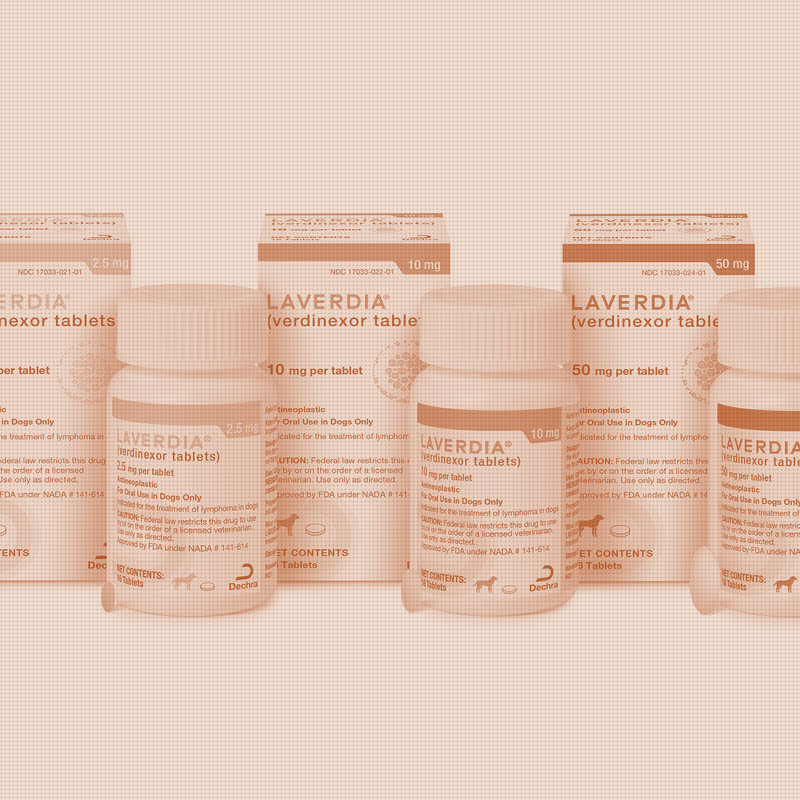
Dechra is commercially launching Laverdia, the first FDA-approved oral treatment for canine lymphoma, developed by Anivive and licensed to Dechra in 2022. The bet isn't on winning cases from oncology referral networks, but on treating the roughly 80% of diagnosed dogs who currently get no chemotherapy at all.
PetMeds Names New CEO, Rebuilds Board Amid Takeover Fight
PetMeds named Jeff Willard as its next CEO and added two new independent directors, including a Shake Shack executive as board chair, while a $3-a-share takeover bid from SilverCape Investments remains unanswered since June. None of the three new leaders has prior ties to the company, a signal the board is building outside credibility for whatever comes next.