Vet AI use hit 83.7%, and the biggest returns go to practices with a plan
AI use among veterinary professionals jumped from 39.2% to 83.7% in two years, according to a Digitail and AAHA study released October 1st. Most practices added AI without changing workflows, and the ones that built strategy and governance report six times the business outcomes.

Veterinary AI use more than doubled in two years, and the practices getting the most from it are the ones that planned for it. A new study of 1,730 veterinary professionals from Digitail and the American Animal Hospital Association found that the most structured practices report six times the business outcomes of the least mature ones.
Four in five vet professionals now use AI
The 2026 Veterinary AI Study surveyed veterinary professionals in the U.S. and Canada between July 27th and August 12th. Digitail, which makes AI-native practice management software, ran it with AAHA and released it October 1st. It repeats core measures from the pair's 2024 study of 4,031 respondents, published in the American Journal of Veterinary Research.
Adoption climbed from 39.2% in 2024 to 83.7% this year, and 88.3% of users work with AI daily or weekly. Clinical documentation, including AI scribes and SOAP notes, leads usage at 62.8% of AI users. Nearly 39% of users have tried building their own AI agent, and another 29.9% are considering it.
Planning has not kept pace with use. Roughly two in three practices (65.2%) added AI without meaningfully changing their workflows. Nearly half have no AI strategy or designated owner, and close to a third have no AI governance policy. On the study's 1-to-4 maturity index, the average practice scored 2.67.
The payoff comes from planning, not from the tool
With more than four in five professionals using AI, simply having it no longer sets a practice apart. The study's central finding is that results track maturity. The most mature practices report six times the business outcomes of the least mature, and the share reporting no measurable impact falls sharply as maturity rises.
That is useful guidance for practice owners and group operators weighing their next purchase. A scribe added to an unchanged workflow saves time on notes. A scribe connected to scheduling, records, and client communication, with a clear owner, is where the study finds the larger return.
The findings also show where teams need support. Fear of job displacement fell from 37.2% in 2024 to 20% this year, while concerns about data security and lack of training rose. For groups running many clinics, naming someone to own AI policy and training is a practical first step.
Digitail builds AI tools for practices, including more than 20 AI agents in its own system, so it has a stake in what the study finds. The responses are self-reported. The study also rests on firmer ground than most industry surveys. Its maturity index adapts HAIRA, a peer-reviewed healthcare AI governance framework published in npj Digital Medicine.
Vets building their own agents could shape what vendors build
The number to track is the 38.9% of AI users who have already tried building their own agent. That is a profession comfortable experimenting, and it gives practice management vendors a reason to make their systems easier to connect with outside tools.
AAHA's role is worth watching too. It is the only body that accredits veterinary hospitals across the U.S. and Canada, and it now has its name on an AI maturity model. That puts it in a strong position to help practices set clear standards as use keeps growing.
The full white paper includes recommendations for clinics from Adam Wysocki, founder of the independent directory VetSoftwareHub.
The tools are already in the building. The planning comes next.
Other News
More stories shaping the pet industry this week. From funding rounds and product launches to regulatory shifts and retail strategy, stay ahead of what's driving the market.
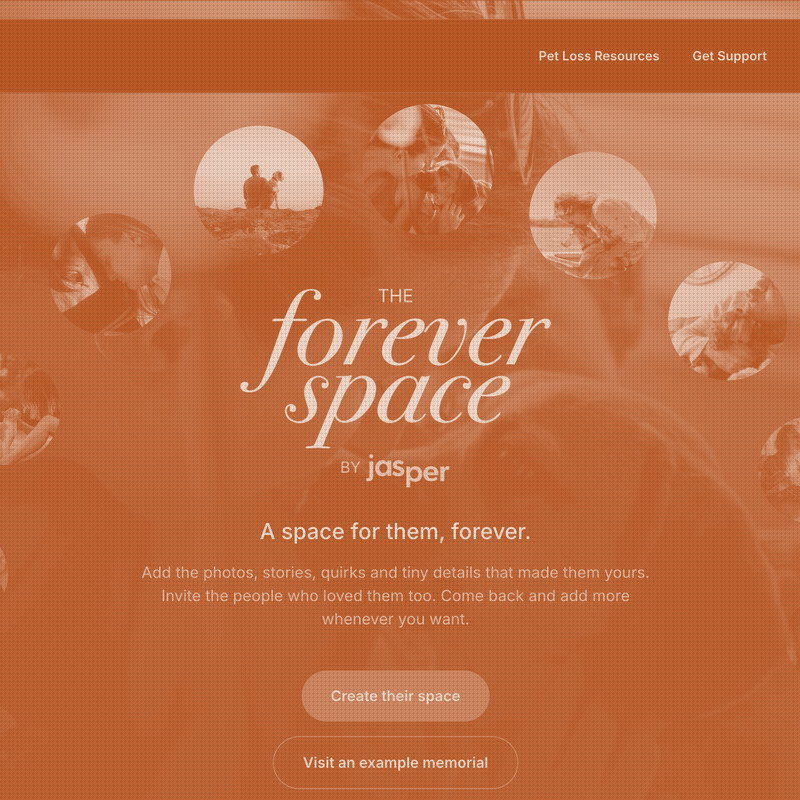
A Free Pet Memorial Builder Puts Grief Care on the Pet Industry's Map
Jasper, a pet loss grief community founded in 2024, launched The Forever Space, a free and shareable online memorial builder. With more than 1,000 members and a closely engaged community, it gives families a place to remember their pets and gives the pet industry a reason to think more carefully about the end of life.
A free vet portal brings pet insurance into the cost conversation
Clarus Technology launched a free portal that shows vets a client's pet insurance coverage and financing options at the point of care, and more than 500 U.S. practices have already planned to integrate it. The company is a subsidiary of Independence Pet Holdings, the platform behind Pets Best and Spot, and how the portal presents other carriers' coverage is the detail practices will want to see next.

Vets beat owner self-research by just six points in a supplement seller's survey
A Lillie&Lee survey of its own community finds 35.3% of pet parents pick supplements on a vet's recommendation and 29.2% decide on their own. The vendor-sponsored data suggests the vet's influence at the point of purchase is thinner than the trust numbers imply.