Years Recalls Nearly All Its Fresh Meals After 192 Dog Eye Injury Reports
Years, a UK subscription fresh dog food brand, recalled nearly its entire meal lineup after 192 customers reported dogs developing sudden dry eye. The recall lands two months after a nationwide Pets at Home rollout and a growth round from Verlinvest and Five Seasons Ventures meant to fund further expansion.
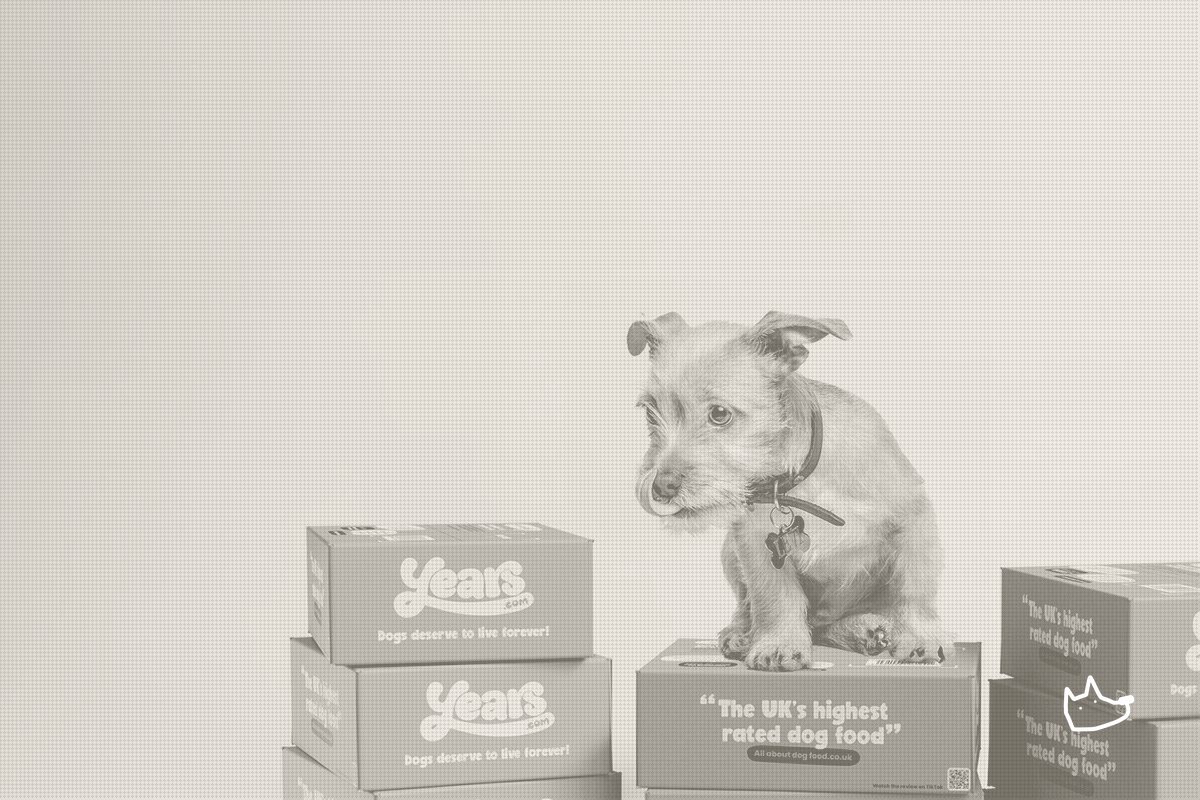
Two months after landing on shelves in every Pets at Home store nationwide, a UK subscription dog food brand pulled nearly its entire product line. Years confirmed that 192 customers had reported dogs suddenly developing dry eye, and pointed to a recent ingredient swap as the likely cause — a reminder that fresh food's supply chain risk scales just as fast as its distribution.
Years recalls nearly all fresh meals nationwide
Years issued a full voluntary recall of its fresh Signature Meals lineup on August 17th, sparing only its Chef's Collection range. The company said the decision followed a cluster of reports describing sudden bilateral keratoconjunctivitis sicca, or dry eye, in dogs eating its meals.
The timeline moved fast. Reports began emerging in late July. An independent veterinarian flagged a possible pattern on August 1st, prompting Years to open an internal investigation. By August 16th, the company had logged 57 suspected cases out of roughly 40,000 active customers, about 0.1% of its base. Two days later, at 9pm on August 18th, that count had jumped to 192.
Years said its investigation is centered on "possible contamination identified in supplier product" tied to buckwheat, an ingredient introduced into the recipe rather than the grain itself. No causal link has been established, and laboratory testing is still pending. The company is pausing subscriptions for six weeks, reformulating with quinoa in place of buckwheat, processing refunds, and routing veterinary claims through Crawford & Company, its insurer.
Years sells shelf-stable, gently steamed meals, broths, toppers and treats designed to sit in a cupboard for up to 12 months unopened, positioned against both raw and kibble competitors on convenience as much as ingredient quality. That shelf-stable format is central to its retail pitch, which makes a recipe-level contamination question more consequential than a routine spoilage or handling recall would be.
Why growth capital raises the stakes on quality control
The recall lands at an awkward moment for Years. The company, founded in 2023 by Darren Beale (previously the founder of MuscleFood.com), spent the first half of 2026 expanding hard. It rolled its shelf-stable, steamed fresh meals into every Pets at Home store nationwide in June. Weeks later, on July 2nd, it closed a growth investment from Verlinvest and Five Seasons Ventures, explicitly earmarked to fund further retail scale and a push into European markets. Both firms took board seats.
That sequence is the operator lesson here. Fresh and whole-food pet brands sell trust as much as they sell food: the entire pitch, versus kibble, is that ingredients are simpler and traceability is tighter. A recipe change that introduces contamination risk into a supplier's supply chain cuts directly against that pitch, and it arrived just as Years was asking a national retailer and two institutional investors to underwrite faster growth.
It also isn't an isolated data point. The Underbite has tracked a run of quality-control failures in the premium and fresh segments even as the category goes mass at the vet counter and scales into national retail. A raw brand that hadn't realled a product since 2015 got hit by salmonella contamination just over a week ago. The pattern operators should watch: growth in this category is now outrunning the supply chain and ingredient-sourcing controls needed to support it, and a subscription business model means a recall doesn't just cost a batch of product, it pauses billing for the entire customer base.
For any DTC or fresh-food operator courting institutional capital right now, the read is blunt. A recipe change is a supply chain event, not a marketing decision, and it deserves the same scrutiny a manufacturing line change would get. Investors underwriting retail expansion in this category are effectively underwriting supplier-qualification discipline too, whether that shows up in the term sheet or not.
What the lab results and retailer response decide next
Two things will determine how costly this gets for Years. First, whether independent laboratory testing confirms buckwheat-supply contamination as the cause, narrows it to a specific supplier lot, or fails to establish a clear mechanism at all — the last of those outcomes tends to be the most damaging, since it leaves the question of recurrence open. Years says it has been in contact with "relevant authorities," though it has not named the UK's Food Standards Agency or Trading Standards directly in its public statements; a formal regulatory notice, if one is issued, would be worth watching.
Second is what happens to the retail relationship. Years spent 2026 building toward being a Pets at Home fixture and a European retail story; a six-week subscription pause and a nationwide pull of its best-known product line is the opposite motion at the worst possible time, right after the round meant to fund that exact expansion. How the brand handles reformulation, refunds, and retailer confidence over the next six weeks will say more about its growth trajectory than the July funding announcement did.
Source: Years' recall statement
Other News
More stories shaping the pet industry this week. From funding rounds and product launches to regulatory shifts and retail strategy, stay ahead of what's driving the market.

Zoom Room returns to franchising with 18.2% same-store sales growth
Zoom Room reported 12.0% and 18.2% same-store sales growth in Q2 and Q3 after pausing development in late 2025, and 15.1% for units open more than a year. It now resumes franchise sales with two quarters of operating data, and a 550-gym target that implies about 120 openings a year.
MPM Products recertifies as a B Corp under B Lab's audited new standards
The owner of Applaws, Reveal and Encore is one of 20 UK companies in the first cohort to certify under B Lab's rewritten standards, which add third-party assurance and a five-year cycle. With the EU's sustainability label rules applying from September 27th, 2026, B Lab says an assured B Corp badge now qualifies as a valid label.

Cat food owner hands North America to its marketing chief
MPM Products, the owner of Applaws, Reveal and Encore, has named global CMO Samantha Greenwood president of North America. The US brings in more than 40% of company revenue, and we read the pick as fitting Partners Group's cat-focused growth thesis in a pet food category APPA expects to grow about 2% in 2026.